
Caltrain Electrification: $462M Overrun, On Track?
Caltrain’s ambitious electrification project has faced significant cost overruns totaling $462 million, necessitating a thorough review of financial management and future planning strategies to secure additional funding for the project.
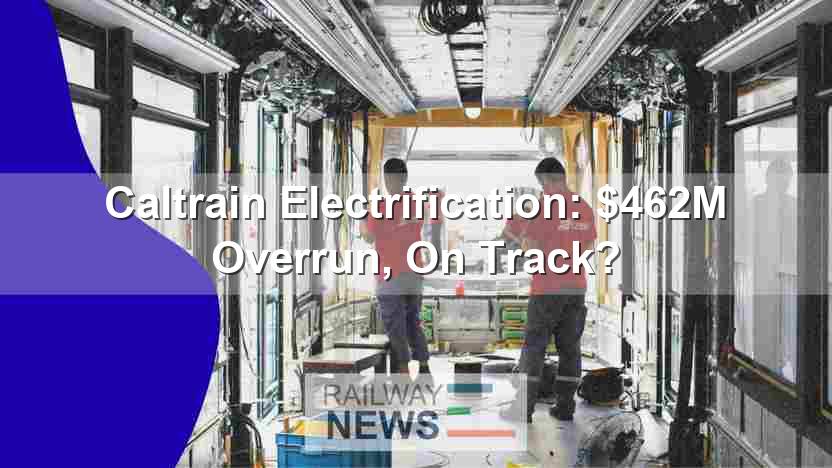
This article provides a detailed examination of the Caltrain Electrification Project, focusing on the significant cost overruns, the reasons behind them, and the current status of the project. The project, a key component of the Caltrain Modernization (CalMod) Program, aims to electrify the rail corridor between San Francisco’s 4th and King Caltrain Station and the Tamien Caltrain Station. This ambitious undertaking, while promising significant environmental and operational benefits, has experienced substantial budget increases, necessitating a thorough review of its financial management and future planning. We will delve into the causes of these overruns, the mitigation strategies employed by Caltrain, and the projected completion timeline. The analysis will also consider the broader implications of this project for future large-scale railway electrification endeavors.
Project Cost Overruns and Settlement
The initial budget for the Caltrain Electrification Project was $1.98 billion. However, due to unforeseen challenges and a settlement with the contractor, Balfour Beatty, the total cost has escalated to $2.44 billion. This represents a $462 million overrun, significantly exceeding the Federal Transit Administration (FTA)’s earlier estimate of $333 million. The settlement addressed various commercial disputes and additional expenses resulting from the project’s extended timeline to 2024. This financial gap necessitates a concerted effort from Caltrain to secure additional funding from its partners, including federal and state agencies.
Funding and Mitigation Strategies
To address the substantial funding shortfall, Caltrain has implemented several strategies. It has already secured an additional $52.4 million in federal funding. Further funding sources include $150 million in financing credit and $60 million from Measure RR capital reserves. The proactive pursuit of diverse funding streams underscores Caltrain’s commitment to completing the project despite the financial setbacks. Effective communication and collaboration with stakeholders will be crucial to secure the remaining required funds.
Project Progress and Upcoming Phases
Despite the cost overruns, the Caltrain Electrification Project is progressing. Civil works are nearing completion, with approximately 95% of foundations in place. All ten traction power facilities are expected to be finished by early 2022, and the overhead catenary system (OCS) deployment is anticipated by summer 2022. The next phase will focus on signal and system integration. Testing of the new OCS with an electric locomotive is planned for next year, preceding the commencement of electric multiple unit (EMU) services in spring 2022. This phased approach ensures a systematic and controlled implementation, minimizing further delays and unexpected costs.
Environmental Benefits and Future Implications
The electrification of the Caltrain corridor is expected to deliver substantial environmental benefits. The transition from diesel locomotives to electric EMUs (ordered from Stadler in 2018) will significantly reduce noise pollution, improve regional air quality, and minimize greenhouse gas emissions. This project serves as a model for future railway electrification projects, highlighting the importance of thorough cost analysis, risk assessment, and robust contingency planning. Successful completion of this project will demonstrate the viability and benefits of sustainable transportation solutions for commuter rail systems nationwide.
Conclusions
The Caltrain Electrification Project, while experiencing significant cost overruns reaching $462 million, remains on track for completion in 2024. The project’s escalated costs, exceeding even the FTA’s revised estimates, underscore the inherent challenges in managing large-scale infrastructure projects. Caltrain’s proactive approach in securing additional funding through various channels demonstrates its commitment to the project’s success. The near-completion of civil works, including the traction power facilities and OCS, signifies substantial progress. The upcoming integration phase, along with the planned EMU testing and service commencement, promises to deliver the anticipated environmental and operational improvements. The project’s eventual success will not only modernize Caltrain’s infrastructure but also provide valuable lessons for future railway electrification endeavors. A key takeaway is the critical need for robust cost estimation, meticulous risk management, and proactive stakeholder engagement to mitigate potential financial setbacks and ensure the timely and efficient execution of such complex projects. The project’s environmental benefits, including noise reduction, improved air quality, and decreased greenhouse gas emissions, solidify its importance as a significant step towards sustainable transportation. This case study serves as a valuable learning experience for future railway modernization projects worldwide. Careful planning, accurate cost projections, and proactive risk mitigation strategies are paramount to successful large-scale infrastructure development.

Railway infrastructure, rolling stock and transport technologies specialist focused on global rail industry developments, high-speed rail systems, signaling technologies and freight transportation. Covering railway investments, public transport modernization, rail operations and international mobility projects across Europe, Asia and North America.
RELATED POSTS

October 8, 2026 1:15 pm
Alstom secured a €1bn contract to build 13 automated trains,...

October 1, 2026 7:09 am
United States regulators confirmed a September 30 deadline for the...

October 8, 2026 12:18 pm
Siemens Mobility signed an agreement with VinSpeed to supply 350...

October 4, 2026 5:14 pm
Alstom secured a CA$4.7 billion order from VIA Rail Canada...

October 5, 2026 6:12 pm
AECOM and Jacobs secured a contract in September 2026 to...

October 4, 2026 11:08 pm
Sound Transit confirmed the September 30 opening of Seattle Pinehurst...