
Buenos Aires Metro Expansion Project: Railway Technology, Argentina
Buenos Aires Metro expands with new Lines F, G, and I, boosting capacity and improving city transport. Railway technology upgrades enhance efficiency and accessibility.
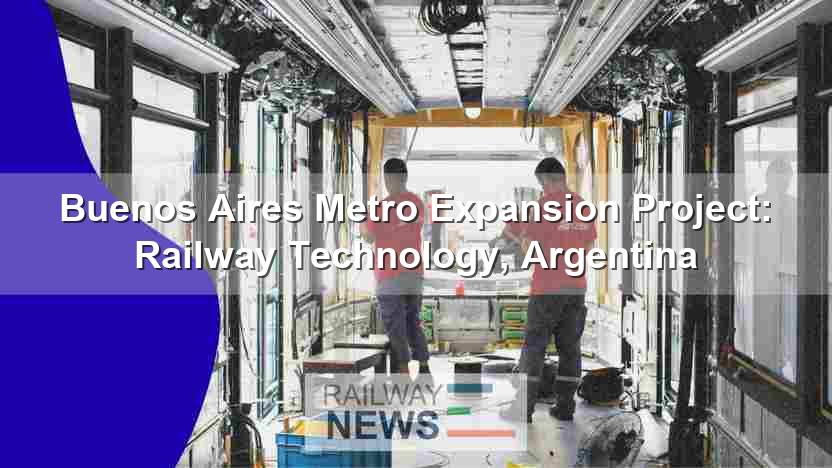
This article explores the significant expansion of the Buenos Aires Metro (Subte), focusing on the technological advancements, infrastructural improvements, and the overall impact on the city’s transportation network and economic development. The project aims to dramatically increase the Subte’s capacity, improve accessibility for a larger portion of the city’s population, and stimulate economic growth through improved connectivity and reduced congestion. This expansion represents a substantial investment in modern railway technology and sustainable urban planning, transforming Buenos Aires’ public transportation system into a more efficient and integrated network. The detailed analysis will cover the new lines’ specifications, their integration with existing infrastructure, the innovative technological solutions employed, and the anticipated socio-economic benefits for the city. The concluding section will assess the project’s success in achieving its stated goals and discuss potential future developments.
Line Extensions and New Routes
The Buenos Aires Subte’s expansion program focuses on the addition of three new lines: Line F, Line G, and Line I, significantly extending the existing network. These lines are designed to serve high-density residential and commercial areas, improving accessibility for a large segment of the population and alleviating pressure on existing lines. The project also includes Line H, already operational, showcasing the phased implementation of the broader expansion plan. Each new line incorporates modern signaling systems, advanced rolling stock, and enhanced station designs to optimize passenger flow and enhance the overall travel experience. The integration of these new lines with the pre-existing network is crucial, requiring careful planning and coordination to ensure seamless transfers and efficient route optimization.
Technological Advancements and Infrastructure Improvements
The Subte expansion project involves a considerable investment in advanced railway technology. This includes the implementation of state-of-the-art signaling systems to increase train frequency and operational efficiency. Modern rolling stock, incorporating features like improved passenger comfort, accessibility provisions, and energy-efficient technologies, is being introduced. The stations themselves are designed with accessibility in mind, featuring ramps, elevators, and clear wayfinding systems. The construction methods employed prioritize minimizing disruption to the city’s daily life, with innovative techniques used to manage the challenges of underground construction in a densely populated urban environment. These technological improvements are critical for enhancing the overall ridership experience and operational efficiency of the Subte.
Socio-Economic Impacts and Urban Development
The expansion of the Buenos Aires Subte is expected to have significant socio-economic impacts on the city. The improved accessibility provided by the new lines will create opportunities for residents in previously underserved areas, increasing employment prospects and overall quality of life. Reduced traffic congestion, a direct consequence of increased public transport usage, will translate into improved air quality and reduced commuting times. The project also serves as a catalyst for urban regeneration, stimulating economic activity and attracting investments in the areas served by the new lines. The increased connectivity will enhance the city’s competitiveness and support its continued economic growth. The overall aim is to create a more sustainable, efficient, and equitable transportation system for Buenos Aires.
Project Summary and Financing
The Subte expansion project is implemented as a series of Build-Operate-Transfer (BOT) schemes, leveraging private sector participation and expertise. The Argentine government also contributes significantly to the project’s financing. This collaboration ensures the project’s financial viability while mitigating the financial burden on the government. The project aims to integrate the subway system with other modes of transport, improving the overall efficiency of the city’s transportation infrastructure. The following table summarizes the key aspects of the project:
| Line | Route | Length (km) | Stations |
|---|---|---|---|
| Line F | Barracas to Plaza Italia | 10.8 | 16 |
| Line G | Retiro to Villa Crespo | 12.1 | 15 |
| Line I | Parque Chacabuco to Ciudad Universitaria | 12.6 | 18 |
| Line H | Corrientes to Retiro | 3.8 | 7 |
Conclusions
The expansion of the Buenos Aires Subte represents a significant undertaking in urban transportation development, aiming to modernize the city’s infrastructure and enhance its overall functionality. The addition of Lines F, G, and I, along with the already operational Line H, dramatically increases the network’s reach, adding 39.3 km of track and 56 new stations. This expansion is projected to accommodate an additional one million passengers, significantly improving the accessibility of public transport for Buenos Aires residents. The project’s success hinges on the effective integration of advanced railway technologies, including modern signaling systems, energy-efficient rolling stock, and accessible station designs.
The socio-economic benefits are substantial. Reduced traffic congestion, improved air quality, and increased accessibility to employment and commercial centers will have a ripple effect, fostering economic growth and improving the quality of life for city residents. The use of BOT schemes, involving private sector participation, is a strategic approach to financing and managing the project, distributing financial responsibilities and leveraging private expertise. However, continued monitoring and evaluation are crucial to ensure the project’s long-term success, addressing potential challenges and adapting to evolving urban needs. The ultimate aim is to create a sustainable, integrated, and highly efficient public transportation system that serves as a model for other rapidly developing urban centers.
The careful planning and execution of this project demonstrate a commitment to sustainable urban development and the creation of a transportation system that meets the demands of a growing metropolis. The successful implementation of this large-scale infrastructural project underscores the potential for public-private partnerships to deliver complex and impactful urban development initiatives.
Company Information:
Metrovías: Operates the Buenos Aires Subte under a concession agreement.
Subterráneos de Buenos Aires (SBASE): The state-owned company responsible for overseeing the Subte’s expansion projects.

Railway infrastructure, rolling stock and transport technologies specialist focused on global rail industry developments, high-speed rail systems, signaling technologies and freight transportation. Covering railway investments, public transport modernization, rail operations and international mobility projects across Europe, Asia and North America.