
Alstom Mark V SkyTrain Enhances Vancouver Rail: Capacity & Tech
Vancouver’s SkyTrain gets upgraded with Alstom’s Mark V, boosting capacity and passenger experience.
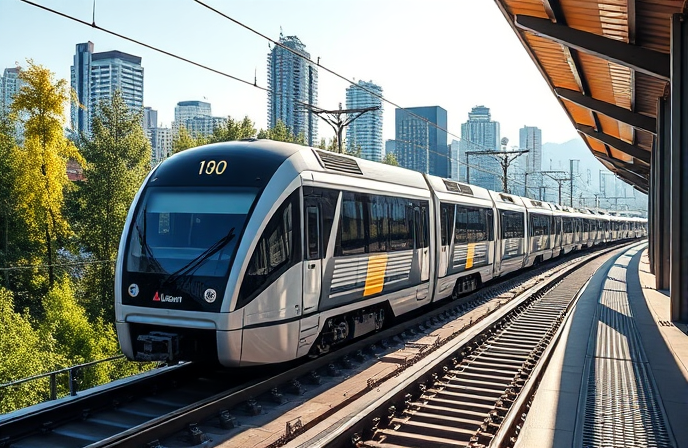
Alstom’s Mark V SkyTrain Enters Service, Enhancing Vancouver’s Rapid Transit
Vancouver, Canada, July 11, 2025 – Alstom, in collaboration with TransLink, has officially launched the Mark V SkyTrain vehicles, marking a significant upgrade to the city’s rapid transit network. This introduction, announced today, sees the first of the new generation of driverless light rail vehicles entering commercial operation on the Expo and Millennium Lines. These state-of-the-art trains represent the longest and highest-capacity trains yet deployed on the SkyTrain system, promising enhanced passenger experience and increased operational efficiency. Manufactured domestically at Alstom facilities in Canada, the Mark V trains offer a 25% increase in passenger capacity compared to existing models. This article will explore the key features of the Mark V, its impact on Vancouver’s transit system, and its implications for the future of urban rail transportation.
Enhanced Passenger Capacity and Experience
The Mark V trains are designed to significantly improve the passenger experience. Each five-car train has a capacity of 672 passengers, a substantial increase from the current four-car Mark III models. This increase in capacity is crucial for meeting the growing ridership demands in the Metro Vancouver area. The new trains incorporate several passenger-focused improvements, including redesigned interiors with interconnected carriages, new seating arrangements, and advanced heating, ventilation, and air-conditioning (HVAC) systems. Large digital displays will provide real-time station information, improving the overall commute. These advancements underscore TransLink’s commitment to providing a comfortable and efficient public transportation system.
Technological Advancements and Design
The Mark V trains leverage cutting-edge technology to enhance both passenger comfort and operational efficiency. The driverless light rail vehicles are controlled by a centralized train control system, streamlining operations and improving safety. The trains feature advanced HVAC systems, ensuring optimal temperature control regardless of external weather conditions. The Mark V also incorporates intelligent lighting and passenger information systems. The design and manufacturing of the Mark V trains are carried out domestically at Alstom’s facilities in Kingston, Ontario, and La Pocatière and Saint-Bruno-de-Montarville in Québec. The project created 282 jobs at its peak, and further supported the local supply chain.
Expansion and Fleet Modernization
TransLink’s ongoing commitment to fleet modernization is evident in the expansion of the Mark V fleet. Following the initial order, TransLink placed an additional order for six more five-car Mark V trains in 2024, bringing the total number of Mark V cars ordered to 235 (47 trains). This investment underscores the agency’s strategy to accommodate the needs of a growing region. The Mark V trains will gradually replace and supplement the existing fleet, bolstering overall capacity and reliability of the SkyTrain network. The implementation of these newer trains highlights TransLink’s dedication to offering a better experience for every customer.
Alstom’s Broader Rail Portfolio
While the focus is on Vancouver’s SkyTrain, Alstom’s impact extends far beyond. In a separate development, Alstom secured a $2.3 billion contract to supply 316 commuter rail cars to the Long Island Rail Road (LIRR) and Metro-North Railroad, both part of the New York Metropolitan Transportation Authority (MTA) in the US. The contract includes an option for up to 242 additional cars, which could potentially raise the contract value by $1.5 billion. This underscores Alstom’s global presence and expertise in providing advanced rolling stock solutions for various types of passenger rail services, from light rail to commuter trains.
Conclusion
The introduction of Alstom’s Mark V SkyTrain vehicles marks a pivotal moment in the modernization of Vancouver’s public transit system. These driverless light rail vehicles offer a significant increase in passenger capacity, improved comfort, and advanced technology, enhancing the overall commuting experience. The success of this project exemplifies the advantages of investing in modern, domestically-manufactured rolling stock. The increased capacity and improved passenger experience of the Mark V will reduce congestion and encourage transit ridership. With a focus on sustainability, technological innovation, and passenger comfort, the Mark V trains align with global trends in urban rail development and represent a model for future transit projects. The Vancouver project and Alstom’s broader ventures showcase the company’s ability to meet the growing demands of urban transportation systems worldwide, setting a new standard for efficiency and passenger satisfaction in rail transit.

Railway infrastructure, rolling stock and transport technologies specialist focused on global rail industry developments, high-speed rail systems, signaling technologies and freight transportation. Covering railway investments, public transport modernization, rail operations and international mobility projects across Europe, Asia and North America.
RELATED POSTS

October 8, 2026 1:15 pm
Alstom secured a €1bn contract to build 13 automated trains,...

October 1, 2026 7:09 am
United States regulators confirmed a September 30 deadline for the...

October 4, 2026 5:14 pm
Alstom secured a CA$4.7 billion order from VIA Rail Canada...

October 1, 2026 12:13 am
Illinois approved $1.5 billion annually for the Northern Illinois Transit...

October 5, 2026 1:13 pm
New York MTA confirmed a late 2026 DEIS release for...

October 6, 2026 9:17 am
Illinois approved $1.1M in state funds to upgrade two McHenry...