
Bombardier & Leclanche: Rail’s Green Revolution
The strategic partnership between Bombardier Transportation and Leclanché aims to integrate advanced battery systems into the train portfolio, highlighting the pivotal role of battery technology in achieving sustainable rail transportation solutions.
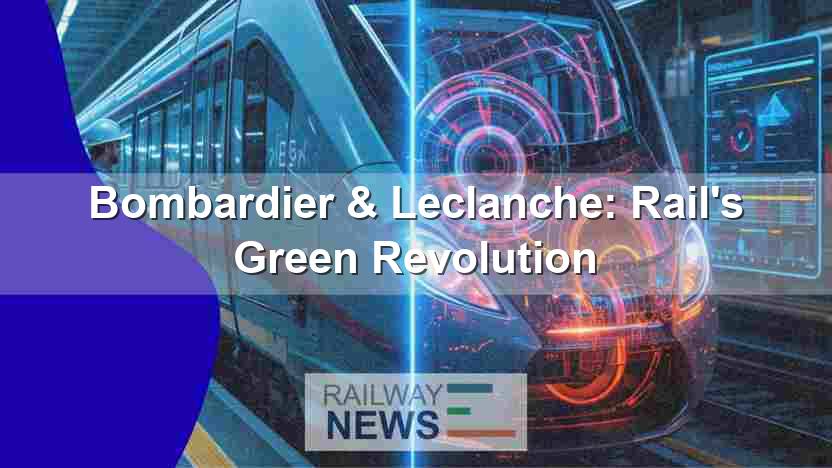
The global railway industry is undergoing a significant transformation, driven by the urgent need for sustainable and environmentally friendly transportation solutions. This shift is compelling railway manufacturers to adopt innovative technologies, particularly in the area of traction power. This article will explore the strategic partnership between Bombardier Transportation, a leading player in the rail industry, and Leclanché, a specialist in energy storage solutions, focusing on their collaboration to integrate advanced battery systems into Bombardier’s train portfolio. This partnership highlights the crucial role battery technology plays in achieving decarbonization goals within the railway sector and its potential to revolutionize the efficiency and sustainability of rail transportation. We will examine the technical aspects of the chosen battery chemistries, the strategic implications for both companies, and the broader impact on the future of railway electrification. The increasing demand for battery-powered rolling stock and the advancements in battery technology are paving the way for a greener and more efficient railway system.
The Bombardier-Leclanché Partnership: A Catalyst for Rail Electrification
Bombardier Transportation’s collaboration with Leclanché marks a significant step towards widespread adoption of battery-electric trains. This partnership leverages Leclanché’s expertise in developing and manufacturing advanced lithium-ion battery systems specifically designed for railway applications. The agreement designates Leclanché as a preferred supplier of lithium titanate oxide (LTO) and lithium graphite/Nickel Manganese Cobalt (GNMC) battery cells, modules, and packs for Bombardier’s diverse range of trains. The choice of these specific chemistries is crucial, reflecting a balance between performance requirements and operational considerations within the railway environment.
Lithium-ion Battery Chemistries in Rail Applications: LTO and GNMC
The selection of both LTO and GNMC battery chemistries showcases a strategic approach to meeting the varied needs of different railway applications. LTO (Lithium Titanate Oxide) batteries are known for their exceptional cycle life and fast charging capabilities, making them ideal for frequent stop-and-go operations characteristic of commuter and suburban rail services. These batteries offer superior safety and thermal stability, crucial for ensuring reliable and safe operation in demanding railway environments. Conversely, GNMC (Graphite/Nickel Manganese Cobalt) batteries offer a higher energy density, making them suitable for longer-distance applications and higher-power requirements. This combination allows Bombardier to tailor its battery solutions to the specific operational profile of each train type, optimizing performance and minimizing life cycle costs.
Strategic Implications and Market Dynamics
This collaboration offers significant advantages to both companies. For Bombardier, the partnership secures a reliable supply of high-performance battery systems, enabling it to meet the growing demand for environmentally friendly rolling stock. The integration of Leclanché’s technology strengthens Bombardier’s position as a leader in the development and deployment of sustainable transportation solutions. For Leclanché, the partnership provides access to a major global market and validates its technology within a demanding and reputable industry. This collaboration also reflects a wider trend within the railway industry towards battery-electric propulsion, driven by both environmental concerns and the potential for significant operational cost savings through reduced reliance on diesel locomotives.
The Future of Rail Electrification: Sustainability and Innovation
Independent studies project a significant surge in demand for rail batteries, forecasting a 400% increase by 2025. This signifies a major shift in the railway sector towards sustainable and efficient transportation. The Bombardier-Leclanché partnership serves as a strong example of the industry’s commitment to decarbonization. The collaboration not only supports the transition to cleaner energy sources but also fosters technological innovation, driving the development of even more efficient and sustainable battery technologies for future applications. The successful implementation of this technology will contribute to lowering greenhouse gas emissions, reducing operational costs, and improving the overall sustainability of railway systems globally. Additionally, advancements in battery technology and charging infrastructure will play a vital role in unlocking the full potential of electrified rail networks, allowing for improved service frequency and expanded reach.
Conclusions
The partnership between Bombardier Transportation and Leclanché signifies a pivotal moment in the evolution of railway technology. The integration of Leclanché’s advanced LTO and GNMC battery systems into Bombardier’s train portfolio represents a significant step towards a more sustainable and efficient railway sector. The strategic decision to utilize both LTO and GNMC chemistries demonstrates a thoughtful approach to meeting the diverse demands of different railway applications, maximizing performance and operational efficiency. The projected surge in demand for rail batteries underscores the growing importance of battery-electric propulsion in achieving decarbonization goals within the rail industry. This collaboration not only strengthens both Bombardier and Leclanché’s market positions but also serves as a compelling example of how industry partnerships can accelerate the adoption of innovative, sustainable technologies. The long-term implications of this partnership are significant, promising a future where rail transportation is cleaner, more efficient, and more environmentally responsible. The success of this collaboration will likely influence other railway manufacturers to adopt similar strategies, contributing to a broader transformation of the railway sector towards a more sustainable future. This move towards battery-powered trains is not merely a technological advancement but a crucial step towards a greener and more sustainable global transportation system.

Railway infrastructure, rolling stock and transport technologies specialist focused on global rail industry developments, high-speed rail systems, signaling technologies and freight transportation. Covering railway investments, public transport modernization, rail operations and international mobility projects across Europe, Asia and North America.
RELATED POSTS

October 8, 2026 1:15 pm
Alstom secured a €1bn contract to build 13 automated trains,...

October 1, 2026 7:09 am
United States regulators confirmed a September 30 deadline for the...

October 8, 2026 12:18 pm
Siemens Mobility signed an agreement with VinSpeed to supply 350...

October 4, 2026 5:14 pm
Alstom secured a CA$4.7 billion order from VIA Rail Canada...

October 5, 2026 6:12 pm
AECOM and Jacobs secured a contract in September 2026 to...

October 4, 2026 11:08 pm
Sound Transit confirmed the September 30 opening of Seattle Pinehurst...