
BNSF Customers Invest $5.3 Billion in 117 US Facilities 2025
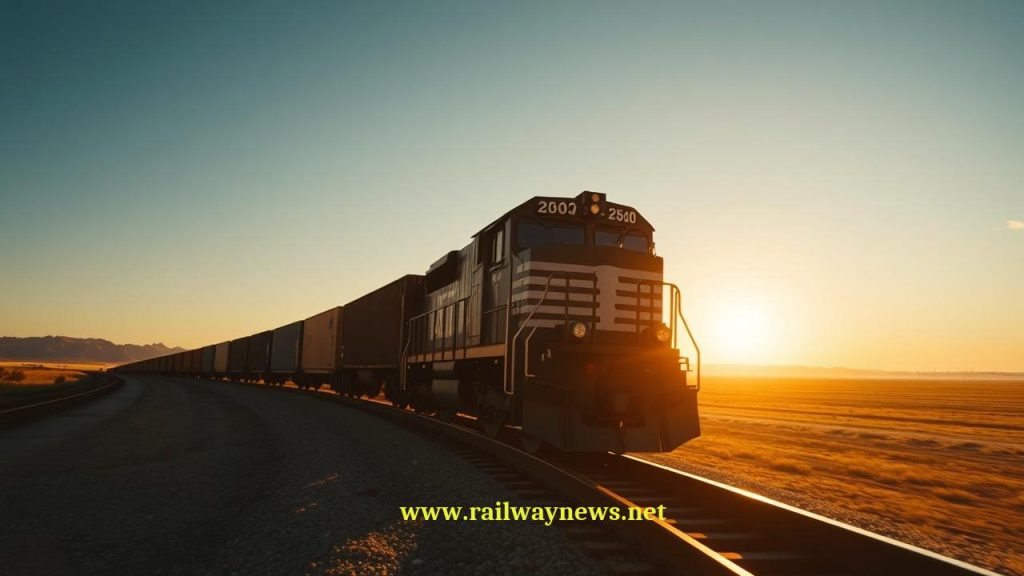
BNSF Railway customers invested over $5.3 billion in 117 new and expanded US rail-served facilities during 2025.
⚡ In Brief: BNSF Railway customers invested over $5.3 billion across 117 new and expanded rail-served facilities in the United States during 2025, creating more than 1,200 jobs in industrial and agricultural sectors.
[UNITED STATES] – Customers of BNSF Railway completed 117 projects to expand or build new rail-served facilities in 2025, representing a total private investment of more than $5.3 billion. The projects, which spanned industrial, agricultural, and consumer markets, created over 1,200 new jobs. This level of activity marks the highest number of completed customer projects on the network in the last six years.
What Is the Full Scope of This Project?
The total investment from BNSF customers covers 117 distinct capital projects designed to enhance rail logistics and capacity. Notable examples include U.S. Steel’s $27 million rail infrastructure upgrade at its Big River Steel Works campus in Osceola, Arkansas, and South Dakota Soybean Processors’ new $500 million processing plant with direct mainline access. A separate investment stream saw BNSF customers contribute over $5 million to community programs in the same year (Source: The Maritime Executive). The full list of the 117 projects and their individual values was not disclosed.
Key Project Data
| Parameter | Value |
|---|---|
| Project / Contract Name | BNSF Customer Rail-Served Facility Investments 2025 |
| Total Value | >$5.3 billion |
| Parties Involved | BNSF Railway, 117 customer companies (incl. U.S. Steel, South Dakota Soybean Processors) |
| Timeline / Completion | Completed during calendar year 2025 |
| Country / Corridor | United States (across BNSF network) |
How Does This Compare to Similar Projects?
The $5.3 billion in private capital investment by BNSF customers into freight-related infrastructure contrasts with funding challenges in the public passenger rail sector. For example, Seattle’s Sound Transit is concurrently exploring cost-saving options to reduce the projected cost of its West Seattle light rail expansion by $2.1 billion to $2.6 billion, citing long-term affordability challenges (Source: KOMO News). This divergence highlights a trend where private investment in revenue-generating freight assets remains robust, while publicly funded passenger projects face significant financial reviews. Meanwhile, technology suppliers to the rail sector show strong growth, with companies like Ondas reporting record FY2025 revenue of $50.7 million and raising future targets, indicating healthy underlying demand for network modernization (Source: TradingView).
Editor’s Analysis
The record number of customer-funded projects on the BNSF network underscores the critical role of rail in supporting industrial and agricultural supply chains, particularly in steel and grain processing. This investment is driven by a need for increased capacity and efficiency to handle raw material inputs and finished product outputs. The trend suggests strong confidence from BNSF customers in long-term economic growth, a sentiment that contrasts with the budget volatility seen in some large-scale public transit projects.
FAQ
Q: What specific industries are driving these investments?
A: The primary source highlights major investments in the steel and agricultural processing sectors. U.S. Steel’s $27 million project in Arkansas and South Dakota Soybean Processors’ $500 million plant are key examples of this trend.
Q: Was the $5.3 billion investment from BNSF or its customers?
A: The $5.3 billion was invested directly by BNSF’s customers to improve their own facilities that are served by the railway. BNSF’s role is as the rail service provider for these expanded sites.
Q: Does this investment signal a broader trend in the North American freight market?
A: Yes, this represents the highest number of such projects for BNSF customers in six years, indicating a strong, sustained trend of private investment into rail-centric logistics. This is further supported by positive financial reports from rail technology suppliers like Ondas (Source: TradingView).

Railway infrastructure, rolling stock and transport technologies specialist focused on global rail industry developments, high-speed rail systems, signaling technologies and freight transportation. Covering railway investments, public transport modernization, rail operations and international mobility projects across Europe, Asia and North America.
RELATED POSTS

October 1, 2026 7:09 am
United States regulators confirmed a September 30 deadline for the...

October 8, 2026 1:15 pm
Alstom secured a €1bn contract to build 13 automated trains,...

October 4, 2026 5:14 pm
Alstom secured a CA$4.7 billion order from VIA Rail Canada...

October 1, 2026 12:13 am
Illinois approved $1.5 billion annually for the Northern Illinois Transit...
October 6, 2026 2:14 am
Union Pacific launched export rail shipments with Ferromex to deliver...

October 1, 2026 6:10 am
Amtrak approved a System Expansion Committee on July 30 to...