
Blackheath Station Revival: Restoring Heritage in SE London
Blackheath Station restored to Victorian glory, a railway heritage project completed with meticulous detail. South Eastern Railway, the Blackheath Society, and the Railway Heritage Trust collaborated.
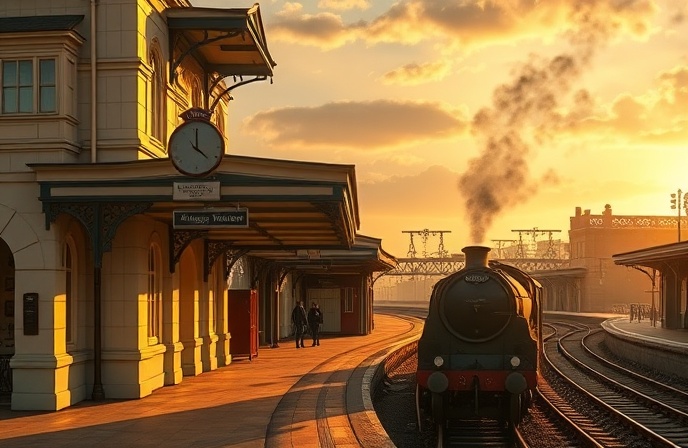
Blackheath Station Reborn: A Heritage Revival in South East London
A missing piece of history sparked a remarkable transformation. When the Blackheath Society discovered a lost 20th-century weight restriction sign, the stage was set for a stunning refurbishment of the Grade II listed Blackheath station in South East London. This project, completed with meticulous attention to detail, sees the station restored to its Victorian-era glory. The project, unveiled during the station’s 176th birthday celebrations, showcases the collaborative efforts of South Eastern Railway, the Blackheath Society, and the Railway Heritage Trust. The restoration, completed using the classic cream and green colour scheme, highlights the vital role of rail in connecting communities – past, present, and future – while providing modern, accessible amenities for passengers. This article explores the details of this restoration, focusing on its significance for rail heritage and future implications.
A Legacy Restored: The Weight Sign & Historical Accuracy
The refurbishment of Blackheath station began with the discovery of the missing “weight restriction” sign in an antique shop. This seemingly minor event triggered a detailed restoration effort. Nicola Peers, Trustee of The Blackheath Society, highlights that the project was motivated by the desire to fully restore the building, and to return the sign to its original position. This dedication to historical accuracy extended beyond the sign, encompassing the station’s facade, canopies, beams, columns, and dagger boards. The result is a visually stunning and historically accurate representation of the station’s original design. The restoration demonstrates a commitment to preserving railway heritage while providing modern passenger amenities, a testament to the collaborative efforts of Network Rail and operators working together.
The Victorian Vision: Colour Scheme & Design Elements
The refurbishment prioritised the accurate reproduction of the station’s original Victorian aesthetic. The selection of the classic cream and green colour scheme, characteristic of the era, was a core design element. This was meticulously applied throughout the station, from the facades to the architectural details. As a result, the station provides an immersive experience that transports passengers back to the golden age of rail travel. South Eastern Railway’s (SER) Managing Director, Steve White, commended the project, noting how the restored colour scheme has revived Blackheath station’s visual appeal. This dedication to detail underscores the importance of historical accuracy in railway restoration projects.
A Collaborative Effort: Funding, Partnerships, and Community Engagement
The success of Blackheath station’s refurbishment is a direct result of strong collaborative partnerships. Financial backing from the Railway Heritage Trust, providing grants totaling £195,000, was crucial. Partnerships between SER, the Blackheath Society, Lewisham Council, and the Railway Heritage Trust ensured a joined-up approach. Community engagement was also a key element. The birthday celebrations included activities, such as wooden train painting, and hook-a-duck, that benefited St Christopher’s Hospice, which helped foster a sense of ownership and pride within the local community. This focus on collaboration and community involvement highlights a successful approach for railway restoration projects.
Modern Amenities & Future-Forward Integration
While the restoration celebrates the past, the project also embraces modern amenities. The refurbished station includes updated passenger facilities and a modern coffee shop, catering to contemporary traveller needs. SER has also incorporated the station’s restoration into its broader, integrated plans. The strategy aims to ensure efficient and less disruptive station improvements for better customer outcomes, setting a precedent for future projects across the network. This integrated approach signals a move toward a more cohesive and efficient railway system that combines heritage with modern customer expectations.
Conclusion
The transformation of Blackheath station serves as a shining example of how a railway project can successfully blend heritage preservation with modern functionality. From the recovery of a simple sign to the extensive restoration using the classic Victorian colour scheme, the project demonstrates a commitment to historical accuracy and community engagement. The collaborative efforts of South Eastern Railway, the Blackheath Society, and the Railway Heritage Trust, alongside the financial support from the Railway Heritage Trust, have created a station that not only celebrates the past but also enhances the passenger experience. This successful project illustrates the benefits of such partnerships and demonstrates how operational stations can benefit from heritage enhancements. With the coinciding completion of essential repairs in the Blackheath tunnel, the restored station is well-positioned to meet future passenger needs and continue serving the community. Blackheath station’s revival also highlights the railway’s enduring significance in connecting communities.

Railway infrastructure, rolling stock and transport technologies specialist focused on global rail industry developments, high-speed rail systems, signaling technologies and freight transportation. Covering railway investments, public transport modernization, rail operations and international mobility projects across Europe, Asia and North America.
RELATED POSTS

October 8, 2026 1:15 pm
Alstom secured a €1bn contract to build 13 automated trains,...

October 1, 2026 7:09 am
United States regulators confirmed a September 30 deadline for the...

October 8, 2026 12:18 pm
Siemens Mobility signed an agreement with VinSpeed to supply 350...

October 4, 2026 5:14 pm
Alstom secured a CA$4.7 billion order from VIA Rail Canada...

October 5, 2026 6:12 pm
AECOM and Jacobs secured a contract in September 2026 to...

October 1, 2026 12:13 am
Illinois approved $1.5 billion annually for the Northern Illinois Transit...