
Bavaria Deutsche Bahn Signs Ebersberg Wasserburg Electrification
Bavaria and Deutsche Bahn signed a contract for 19 km Ebersberg–Wasserburg electrification, backed by over €7 million.
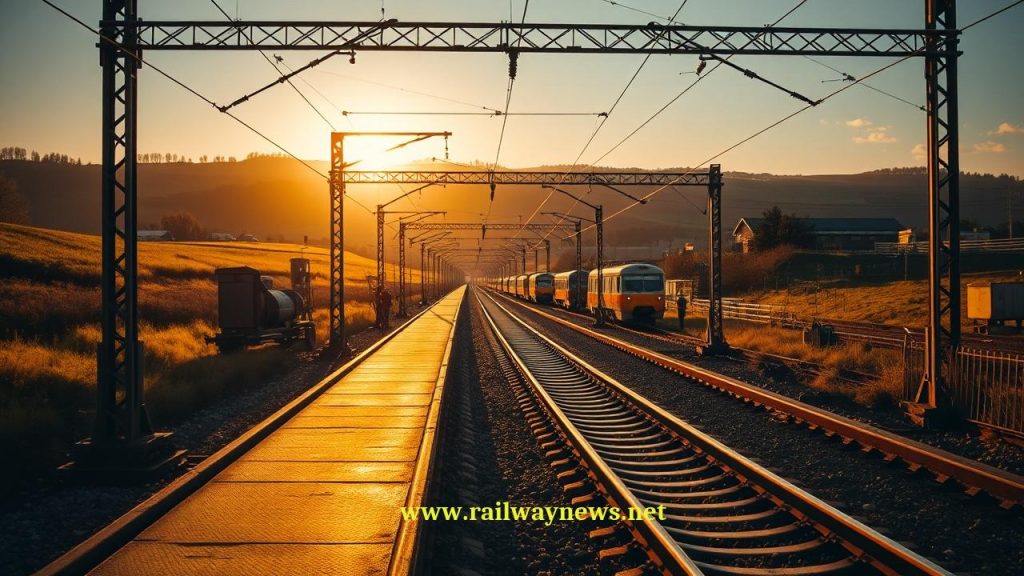
⚡ In Brief: The Bavarian Ministry of Transport and Deutsche Bahn have signed a contract to electrify the 19 km Ebersberg–Wasserburg line, with Bavaria contributing over €7 million to integrate the route into the S-Bahn München network.
MUNICH, GERMANY – The Bavarian Ministry of Transport and Deutsche Bahn have finalized a contract to finance and implement the electrification of the 19 km Ebersberg–Wasserburg railway line. The state of Bavaria is investing over €7 million as part of the S-Bahn München network expansion program, with the German federal government covering the remaining costs. The project will allow for the replacement of diesel trains with faster, quieter electric S-Bahn services running continuously to Munich.
What Is the Full Scope of This Project?
The project’s initial phase focuses exclusively on the electrification of the 19 km single-track section between Ebersberg and Wasserburg. A subsequent, separate modernization phase is planned to further upgrade the corridor, including the construction of a new station at Ebersberg Süd. This later phase also includes doubling the track on the Grafing Bahnhof–Grafing Stadt and Ebersberg Süd–Ebersberg sections to increase capacity and operating speeds.
Key Project Data
| Parameter | Value |
|---|---|
| Project / Contract Name | Ebersberg–Wasserburg Line Electrification |
| Total Value | Not disclosed (Bavaria’s contribution is >€7 million) |
| Parties Involved | Bavarian Ministry of Transport, Deutsche Bahn, German Federal Government |
| Timeline / Completion | Not disclosed; construction to begin after plan approval process completes. |
| Country / Corridor | Germany / Grafing–Wasserburg |
How Does This Compare to Similar Projects?
The secured funding for the Ebersberg–Wasserburg project contrasts with the financial challenges facing larger transit expansions globally. While this German project has overcome environmental delays and secured state and federal funding, other major programs are facing budget shortfalls. For example, Sound Transit in Seattle, USA, is exploring cost-saving measures to address long-term affordability challenges for its light rail expansion, with revised 2025 cost estimates for one section reaching up to $5.3 billion (Source: KOMO News, 2025). The Bavarian project’s phased approach, separating electrification from more costly track doubling and station construction, reflects a strategy to manage escalating costs common in large-scale transportation initiatives.
Editor’s Analysis
This project demonstrates a pragmatic approach to network expansion by phasing deliverables to manage capital outlay. By prioritizing the core goal of electrification, operators can deliver immediate service improvements—eliminating diesel traction and increasing speed—while deferring more capital-intensive upgrades like track doubling. This incremental strategy is becoming increasingly necessary as transit agencies worldwide grapple with budget overruns and affordability concerns, as seen in recent challenges for major US transit programs. Securing funding for a defined, smaller-scope project appears more viable than pursuing a single, large-scale overhaul from the outset.
FAQ
Q: Why was the Ebersberg-Wasserburg electrification project delayed?
A: The project was delayed due to the discovery of nesting areas for the Kiebitz (lapwing). A new survey in 2025 confirmed the nesting areas no longer exist, allowing the plan approval process to proceed.
Q: What is the total cost of the project and its completion date?
A: The total cost has not been disclosed, though the state of Bavaria’s contribution exceeds €7 million. A specific timeline for construction and completion has not been announced and is contingent on the final building permit.
Q: What impact will this have on passenger service?
A: Once completed, the project will allow for continuous electric S-Bahn train operation from Wasserburg to Munich. This will replace the current diesel trains on the unelectrified section, resulting in faster, quieter, and more environmentally friendly journeys for passengers.

Railway infrastructure, rolling stock and transport technologies specialist focused on global rail industry developments, high-speed rail systems, signaling technologies and freight transportation. Covering railway investments, public transport modernization, rail operations and international mobility projects across Europe, Asia and North America.
RELATED POSTS

October 8, 2026 1:15 pm
Alstom secured a €1bn contract to build 13 automated trains,...

October 1, 2026 7:09 am
United States regulators confirmed a September 30 deadline for the...

October 8, 2026 12:18 pm
Siemens Mobility signed an agreement with VinSpeed to supply 350...

October 4, 2026 5:14 pm
Alstom secured a CA$4.7 billion order from VIA Rail Canada...

October 5, 2026 6:12 pm
AECOM and Jacobs secured a contract in September 2026 to...

October 4, 2026 11:08 pm
Sound Transit confirmed the September 30 opening of Seattle Pinehurst...