
Alstom’s Coradia Stream: Poland’s High-Speed Rail Hub
Alstom’s Coradia Stream production line in Katowice is revolutionizing high-speed rail manufacturing. Discover how this state-of-the-art facility is shaping the future of European rail!
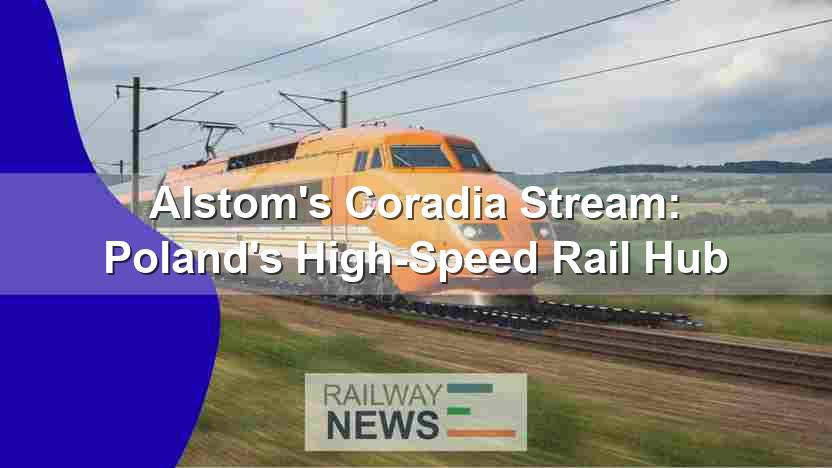
This article explores the significant development in high-speed rail manufacturing marked by Alstom’s opening of a new production line for its Coradia Stream trains at its Katowice, Poland facility. The establishment of this facility represents a substantial investment in European rail infrastructure and signifies a strategic shift in the production and deployment of modern, high-capacity passenger trains. We will delve into the specifics of the Katowice facility, the Coradia Stream train itself, its impact on Nederlandse Spoorwegen (NS, the Dutch national railway operator), and the broader implications for the European rail industry. The analysis will cover the production process, the technological advancements embodied in the Coradia Stream, the economic benefits for Poland and the Netherlands, and the overall contribution to sustainable and efficient passenger transportation across the continent. This examination will highlight the importance of strategic partnerships between manufacturers and railway operators in modernizing railway networks and enhancing the passenger experience.
The Katowice Facility: A State-of-the-Art Manufacturing Hub
Alstom’s choice of Katowice for this significant investment underscores Poland’s growing role in the European rail industry. The 6,500m² production hall, boasting 20 workstations, represents a sophisticated manufacturing environment. The facility’s capacity to produce one train car per workday showcases its efficiency and scale. The integrated approach, with separate halls for car body shell welding and construction, painting, and final testing, ensures a streamlined and high-quality production process. The facility’s larger 250,000m² site further highlights its capacity for undertaking numerous projects concurrently, currently managing 19 projects for 10 countries, demonstrating its significant contribution to the global rail market.
The Coradia Stream: Technological Advancement in High-Speed Rail
The Coradia Stream trains, designed for a maximum speed of 200 km/h, represent a significant leap forward in passenger rail technology. The configuration of driving, intermediate, and end cars allows for optimal capacity and operational flexibility. This adaptability is crucial in meeting the diverse needs of various railway networks. The design reflects a deep understanding of passenger comfort and operational efficiency, integrating modern design and technology to optimize passenger flow, reduce maintenance costs, and improve overall performance. The use of modern materials and manufacturing techniques contributes to the train’s longevity and reduces its environmental footprint.
The NS Partnership: Delivering Modernization to the Dutch Rail Network
The contract between Alstom and NS for the delivery of 79 Coradia Stream trains, with an option for more, represents a significant investment in modernizing the Dutch rail network. The trains’ planned deployment on high-speed lines connecting Amsterdam, Rotterdam, Breda, and the Den Haag-Eindhoven corridor highlights their role in improving both passenger travel times and overall network capacity. This partnership underlines the importance of collaboration between manufacturers and railway operators in enhancing the effectiveness and sustainability of rail transport. The partnership showcases a successful approach to modernizing national railway infrastructure through long-term strategic agreements.
Economic and Societal Impacts: Benefits for Poland and the Netherlands
The Katowice facility’s establishment has provided substantial economic benefits for Poland, creating numerous skilled jobs and fostering technological advancements within the country. The production of the Coradia Stream trains bolsters Poland’s position as a key player in the European rail industry. Simultaneously, the modernization of the Dutch rail network through the introduction of these new trains will lead to increased passenger capacity, improved travel times, and reduced environmental impact. The overall societal impact includes enhanced connectivity, boosted tourism, and an improved quality of life for commuters and travelers across the Netherlands.
Conclusion
The opening of Alstom’s Coradia Stream production line in Katowice marks a significant milestone in the evolution of European high-speed rail. The facility’s state-of-the-art infrastructure and the advanced technology embedded in the Coradia Stream trains showcase a commitment to innovation and efficiency in rail manufacturing. The partnership between Alstom and NS exemplifies the crucial role of collaboration between manufacturers and railway operators in modernizing rail networks. The economic and societal benefits generated by this project, both for Poland through job creation and technological advancement, and for the Netherlands through improved rail infrastructure, underscore the positive impact of large-scale investments in rail transportation. The project serves as a model for future collaborations aimed at enhancing the sustainability, efficiency, and passenger experience of rail travel across Europe. The success of this venture, as evidenced by the commencement of deliveries in January 2020 and operational deployment beginning in 2021, demonstrates the potential for similar projects to drive economic growth and enhance transport infrastructure across the continent. The ongoing success of the Katowice facility and the broader implementation of the Coradia Stream trains promise continued innovation and modernization within the European rail industry, contributing to a more sustainable and efficient transportation system for years to come.

Railway infrastructure, rolling stock and transport technologies specialist focused on global rail industry developments, high-speed rail systems, signaling technologies and freight transportation. Covering railway investments, public transport modernization, rail operations and international mobility projects across Europe, Asia and North America.
RELATED POSTS

October 8, 2026 1:15 pm
Alstom secured a €1bn contract to build 13 automated trains,...

October 1, 2026 7:09 am
United States regulators confirmed a September 30 deadline for the...

October 8, 2026 12:18 pm
Siemens Mobility signed an agreement with VinSpeed to supply 350...

October 4, 2026 5:14 pm
Alstom secured a CA$4.7 billion order from VIA Rail Canada...

October 5, 2026 6:12 pm
AECOM and Jacobs secured a contract in September 2026 to...

October 1, 2026 12:13 am
Illinois approved $1.5 billion annually for the Northern Illinois Transit...