
Akiem, Germany’s Rail Decarbonization: Battery-Electric Trains
Akiem leases battery-electric trains to ODEG, helping decarbonize German regional rail. The €100M deal modernizes routes, phasing out diesel.
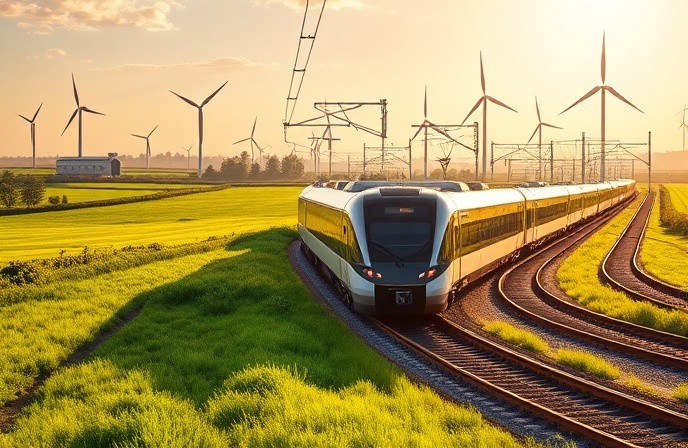
Akiem Drives Decarbonization of German Regional Rail with Major Battery-Electric Train Lease
In a move poised to significantly reshape regional rail transport, Akiem, a leading European rolling stock lessor, has signed a landmark agreement with ODEG (Ostdeutsche Eisenbahn GmbH), a prominent German regional rail operator. The deal, valued at €100 million, will see Akiem lease 14 Stadler Akku Flirt 3L battery-electric multiple units (BEMUs) to ODEG, commencing December 2027 and lasting until December 2040. This strategic partnership, covering the Rehna–Parchim and Parchim–Plau am See lines in Mecklenburg-Western Pomerania, directly addresses Germany’s imperative to phase out diesel-powered passenger trains. This article will examine the specifics of this contract, its implications for the industry, and its contribution to sustainable mobility in Germany.
Fleet Deployment and Operational Scope
The core of the agreement lies in the acquisition and subsequent leasing of the Stadler Akku Flirt 3L BEMUs. These trains are engineered to operate flexibly on partially electrified networks. The inclusion of high-capacity batteries grants each unit the capacity to autonomously traverse at least 100 kilometers on non-electrified sections of track, negating the requirement for continuous overhead lines. This capability offers significant operational advantages on lines with limited electrification, reducing the need for extensive infrastructure upgrades. These trains will service routes totaling 2.1 million train-kilometres annually, allowing ODEG to retire an older fleet of diesel-powered units. The selection of these routes underscores the potential for BEMUs to replace diesel rolling stock in regions where electrification projects might be cost-prohibitive.
Financial Framework and Investment Strategy
The €100 million investment in the BEMU fleet is supported by a consortium of lenders, spearheaded by Crédit Agricole Corporate and Investment Bank, acting as the sole structuring bank. Other members of the financing group include CIC, La Banque Postale, and NatWest. Moreover, the project benefits from an investment grant from Germany’s Federal Ministry of Transport (BMV), reflecting the national commitment to achieving ambitious energy transition targets within the transport sector. This multifaceted financial structure, combining commercial lending with governmental support, underscores the feasibility of large-scale rolling stock investments in the context of evolving decarbonization policies. This financing strategy exemplifies a model for accelerating the modernization of railway assets.
Strategic Growth and Market Dynamics
This contract is a key component of Akiem’s broader strategic expansion into the European passenger rail leasing market. Akiem, backed by its shareholder La Caisse, formerly known as CDPQ (Caisse de dépôt et placement du Québec), one of the largest institutional infrastructure investors globally, is planning to invest over €1 billion in the coming years across continental Europe, specifically targeting Germany and France. The leasing model adopted by Akiem offers a financially sound approach to help regional operators update their rolling stock fleets. Akiem combines the ability to secure private financing with extensive expertise in rail vehicle operations and maintenance, providing a detailed solution that alleviates financial burdens for railway operators. The rise of leasing models is a response to budget constraints and increasing demand for more sustainable rolling stock across Europe.
Sustainability and Technological Advantages
The transition to battery-electric trains represents a substantial step toward environmental sustainability. BEMUs significantly reduce greenhouse gas emissions compared to diesel-powered trains. The Stadler Akku Flirt 3L model offers advanced technological features, including regenerative braking and efficient energy management systems that further enhance energy efficiency. The ability to operate autonomously on non-electrified sections of track opens doors for electrification of secondary railway lines in Germany and beyond, bolstering the adoption of sustainable transport solutions.
Conclusion
The Akiem-ODEG agreement signifies a milestone in the decarbonization of German regional rail, and a new way for regional operators to modernize their fleets. By leasing 14 Stadler Akku Flirt 3L BEMUs, Akiem will help ODEG replace its diesel fleet, cutting down on emissions. This deal, supported by a consortium of lenders and government grants, demonstrates a robust model for financing sustainable transport projects. The BEMUs, offering the flexibility to operate on both electrified and non-electrified lines, are well-suited to support Germany’s goal of phasing out diesel passenger trains by 2030. The transaction is a testament to Akiem’s strategic expansion into the European passenger rail leasing market. The industry can look forward to innovative, sustainable and adaptable transportation solutions.
Company Summary
Akiem is a leading European rolling stock lessor, specializing in providing locomotives and passenger rolling stock to railway operators. Akiem is part of the SNCF group, and its shareholder, La Caisse (CDPQ), a Canadian institutional investor. Akiem’s leasing model offers detailed services from financing and maintenance to operational support. The company focuses on facilitating the decarbonization of rail transport through its investment in electric and sustainable rolling stock.

Railway infrastructure, rolling stock and transport technologies specialist focused on global rail industry developments, high-speed rail systems, signaling technologies and freight transportation. Covering railway investments, public transport modernization, rail operations and international mobility projects across Europe, Asia and North America.
RELATED POSTS

October 1, 2026 7:09 am
United States regulators confirmed a September 30 deadline for the...

October 1, 2026 12:13 am
Illinois approved $1.5 billion annually for the Northern Illinois Transit...

October 4, 2026 5:14 pm
Alstom secured a CA$4.7 billion order from VIA Rail Canada...

October 1, 2026 6:10 am
Amtrak approved a System Expansion Committee on July 30 to...
October 1, 2026 3:12 am
Greenbrier confirmed Brian Comstock as new president and CEO effective...

October 6, 2026 2:14 am
Union Pacific launched export rail shipments with Ferromex to deliver...