
BWC Terminals Opens $316M Rail Terminal in Mississippi
BWC Terminals launched a $316 million rail terminal in Pascagoula, Mississippi, with CSX unit trains and seven bulk tanks to supply a nearby Chevron refinery.
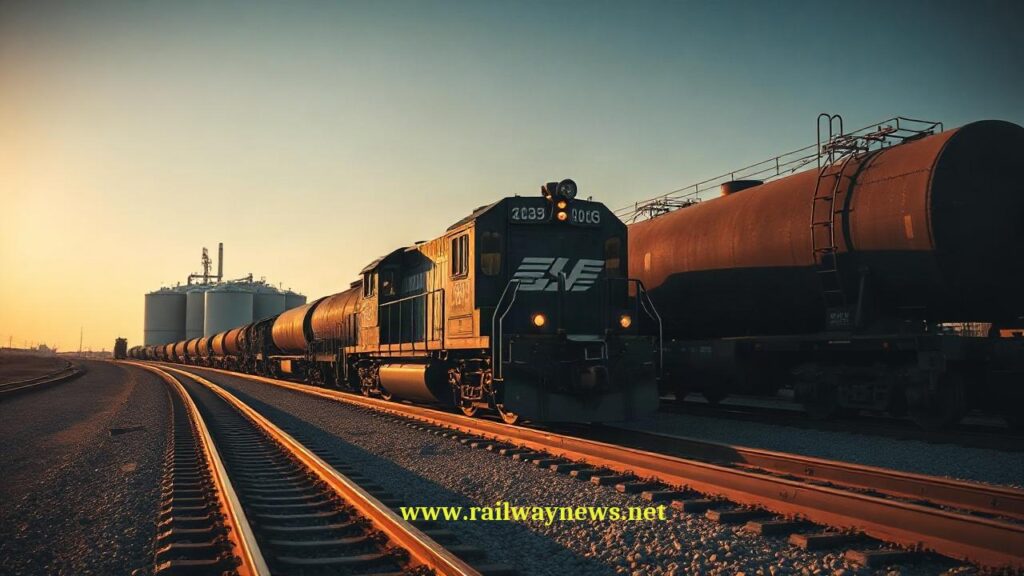
⚡ In Brief: BWC Terminals has commissioned the first phase of a $316 million multimodal terminal in Pascagoula, Mississippi, providing CSX unit-train offloading and marine infrastructure to supply Chevron’s adjacent petroleum refinery.
PASCAGOULA, United States – BWC Terminals commissioned the first phase of its $316 million multimodal logistics facility in Pascagoula, Mississippi, situated on a brownfield parcel formerly owned by the Mississippi Phosphates Corporation. The facility combines seven bulk storage tanks with unit-train discharge tracks serviced by CSX and direct deepwater berths for Chevron Products Company. Local authorities confirmed the operational terminal will generate at least 25 logistics jobs across its initial two years of service.
What Is the Full Scope of This Project?
Phase one delivers bulk liquid storage through seven above-ground tanks configured to handle petroleum feedstocks for the neighbouring Chevron Pascagoula Refinery. Under the commercial operating agreement, CSX handles the line-haul movement of complete unit trains to and from the site, while Chevron personnel directly manage the loading and discharge of the company’s dedicated railcar fleet. The site features deepwater vessel and barge docks alongside rail staging tracks to enable high-volume transfer between maritime and rail modes. Development of the former phosphate manufacturing property involved oversight from the US Environmental Protection Agency and regional development agencies, including the Jackson County Port Authority. Total trackage length and aggregate storage barrel volume for the first phase were not disclosed.
Key Project Data
| Parameter | Value |
|---|---|
| Project / Contract Name | BWC Pascagoula Terminal Development (Phase 1) |
| Total Value | $316 million (full program commitment) |
| Parties Involved | BWC Terminals, Chevron Products Co., CSX, Jackson County Port Authority |
| Timeline / Completion | Phase 1 complete; subsequent phase schedules not disclosed |
| Country / Corridor | United States / CSX Gulf Coast rail corridor |
How Does This Compare to Similar Projects?
Dedicated private railheads connected directly to refining complexes command high capital intensity because of containment, switching loops, and multi-modal transfer requirements. The global rail infrastructure market is expanding toward USD 462.13 billion by 2033, supported by regional modernization programs and industrial terminal integration (Source: IndexBox, 2025). However, comparable capital expenditure data for single-refinery private rail terminals on the US Gulf Coast was not publicly available at time of publication. While European rail infrastructure commitments often center on state-administered multi-year operational agreements—such as the SNCF Réseau network performance contract covering the 2024–2033 period (Source: Railway Gazette, 2026)—North American terminal developments remain predominantly private commercial partnerships driven by energy shippers and Class I carriers.
Editor’s Analysis
Long-term commercial off-take agreements like the BWC-Chevron partnership insulate freight operators from spot carload volatility by securing continuous unit-train moves into refining complexes. Reclaiming decommissioned industrial sites for specialized rail transloading provides Class I carriers with high-margin freight volume without requiring public right-of-way expansion. As Gulf Coast processing facilities demand predictable inland raw materials, dedicated shipper-owned rail terminal networks will continue to anchor regional freight traffic (Source: Midgard Finance, 2025).
FAQ
Q: What rail service connects to the new BWC Pascagoula facility?
A: CSX operates the unit trains hauling petroleum products into and out of the Pascagoula terminal. Chevron handles the actual loading and unloading operations using its own rolling stock fleet on site.
Q: How much capital is invested in the Pascagoula terminal project?
A: The development represents a $316 million total capital investment across its full scope. Phase one is fully delivered, though financial allocations for upcoming phases were not disclosed.
Q: What previous industrial operations existed at the terminal site?
A: The facility sits on the former Mississippi Phosphates Corporation property, an industrial brownfield that underwent remediation oversight involving the US Environmental Protection Agency. The site now hosts active commercial rail and port logistics operations managed alongside Jackson County authorities.

Railway infrastructure, rolling stock and transport technologies specialist focused on global rail industry developments, high-speed rail systems, signaling technologies and freight transportation. Covering railway investments, public transport modernization, rail operations and international mobility projects across Europe, Asia and North America.
RELATED POSTS
November 2, 2026 5:15 pm
WSP secured an advisory contract from Transport for London in...
November 1, 2026 6:16 am
CPKC signed a five-year labor contract with BLET covering 250...
November 3, 2026 5:14 pm
Conrail confirmed 28-year rail veteran John Wright as president and...
November 2, 2026 8:15 pm
Network Rail confirmed the installation of a new Church Fenton...

November 1, 2026 7:12 am
Metra launched its draft rail plan across an 11-line Chicago...
November 8, 2026 3:15 pm
HDR expanded its US rail and transit reach across 16...