
Midland Metro Alliance Delivers Digbeth Tram Line by 2028
Midland Metro Alliance confirmed a 2028 launch for the Birmingham tram link to Digbeth Coach Station, routing tracks under the new HS2 Curzon Street rail hub.
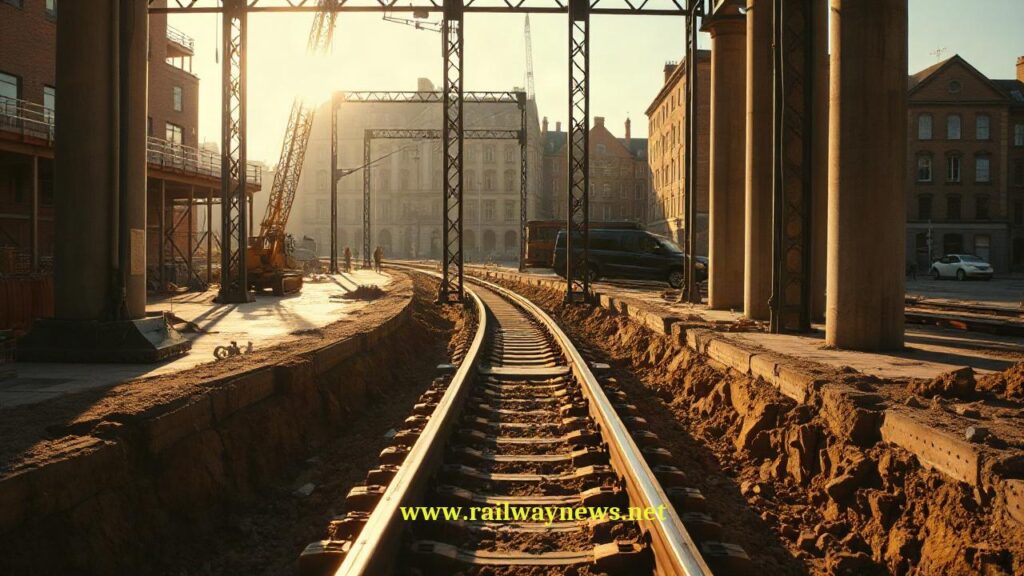
⚡ In Brief: Midland Metro Alliance has taken possession of the first land parcel at Birmingham’s HS2 Curzon Street site to construct the final tramway link to Digbeth Coach Station, scheduled for revenue service in 2028.
BIRMINGHAM, UK – The Midland Metro Alliance has begun ground preparation for track laying beneath the HS2 Curzon Street station site following the handover of the first land parcel in March 2025. The project forms the final phase of the Birmingham Eastside Metro extension connecting Bull Street to Digbeth Coach Station across multiple phases. Passenger operations along the full corridor are scheduled to start in 2028, while the intermediate Curzon Street stop will open alongside the high-speed rail terminus.
What Is the Full Scope of This Project?
The Birmingham Eastside Metro extension delivers a multi-phase light rail link connecting central Birmingham to Digbeth while routing directly beneath the future High Speed 2 terminus. Construction requires a two-stage site handover from HS2 Ltd, allowing contractors to construct track beds before structural concrete beams are placed over pillars to create an under-station tunnel. While tracks along Meriden Street and Digbeth High Street are complete, intermediate construction continues along New Canal Street to link the operational Bull Street-to-Millennium Point segment with the southern terminus. The dedicated Curzon Street tram stop will remain inactive until HS2 commissions the main station complex.
Key Project Data
| Parameter | Value |
|---|---|
| Project / Contract Name | Birmingham Eastside Metro Extension (Curzon Street / Digbeth Link) |
| Total Value | Not disclosed |
| Parties Involved | Midland Metro Alliance (MMA), Transport for West Midlands (TfWM), West Midlands Combined Authority (WMCA), HS2 Ltd |
| Timeline / Completion | Digbeth service launch in 2028; Stage 2 land handover scheduled for spring 2026 |
| Country / Corridor | United Kingdom / Bull Street to Digbeth Coach Station via Curzon Street |
How Does This Compare to Similar Projects?
Light rail intermodal integration remains the primary focus of urban transit investment globally, reflecting strong post-pandemic volume recovery. Global urban rail transit represented a 46% share of the overall railway systems market in 2025, driven by municipal efforts to link urban cores to long-distance rail terminals (Source: Precedence Research, 2025). Furthermore, passenger traffic across international rail networks increased by 7% in 2024 compared to 2023, accelerating investments in interface infrastructure like the Curzon Street hub (Source: International Union of Railways [UIC], 2024). Comparable contract valuation figures for the Digbeth Coach Station interface were not publicly available at the time of publication.
Editor’s Analysis
Integrating urban tram lines directly beneath heavy rail hubs mitigates passenger transfer friction but exposes municipal operators to high interface risks when master projects encounter construction re-sequencing. Delivering Digbeth Coach Station trackage by 2028 ahead of the main HS2 station proves TfWM’s prioritization of local connectivity over terminus dependencies. Global market trends show that electric multiple units captured 72% of propulsion investments in 2025, underscoring how central urban rail integration is to decarbonizing regional transport networks (Source: Precedence Research, 2025).
FAQ
Q: When will trams start running to Digbeth Coach Station?
A: Passenger services from central Birmingham to Digbeth Coach Station are scheduled to enter operation in 2028 under the delivery schedule managed by Transport for West Midlands.
Q: What is the total budget for this section of the Metro extension?
A: The specific contract value for the Curzon Street underpass section was not disclosed by the Midland Metro Alliance or HS2 Ltd.
Q: Will the Curzon Street tram stop open when tracks are finished in 2028?
A: No, the Curzon Street tram stop will remain closed until the adjacent HS2 rail terminus is officially completed and commissioned.

Railway infrastructure, rolling stock and transport technologies specialist focused on global rail industry developments, high-speed rail systems, signaling technologies and freight transportation. Covering railway investments, public transport modernization, rail operations and international mobility projects across Europe, Asia and North America.
RELATED POSTS

October 8, 2026 1:15 pm
Alstom secured a €1bn contract to build 13 automated trains,...

October 1, 2026 7:09 am
United States regulators confirmed a September 30 deadline for the...
October 8, 2026 12:18 pm
Siemens Mobility signed an agreement with VinSpeed to supply 350...

October 4, 2026 5:14 pm
Alstom secured a CA$4.7 billion order from VIA Rail Canada...

October 1, 2026 12:13 am
Illinois approved $1.5 billion annually for the Northern Illinois Transit...
October 5, 2026 6:12 pm
AECOM and Jacobs secured a contract in September 2026 to...