
Network Rail Secures 26 Biodiversity Units in Leeds
Network Rail secured 26 biodiversity units in Leeds to restore 8.32 hectares of native woodland habitat over a 30-year term for the Transpennine Route Upgrade.
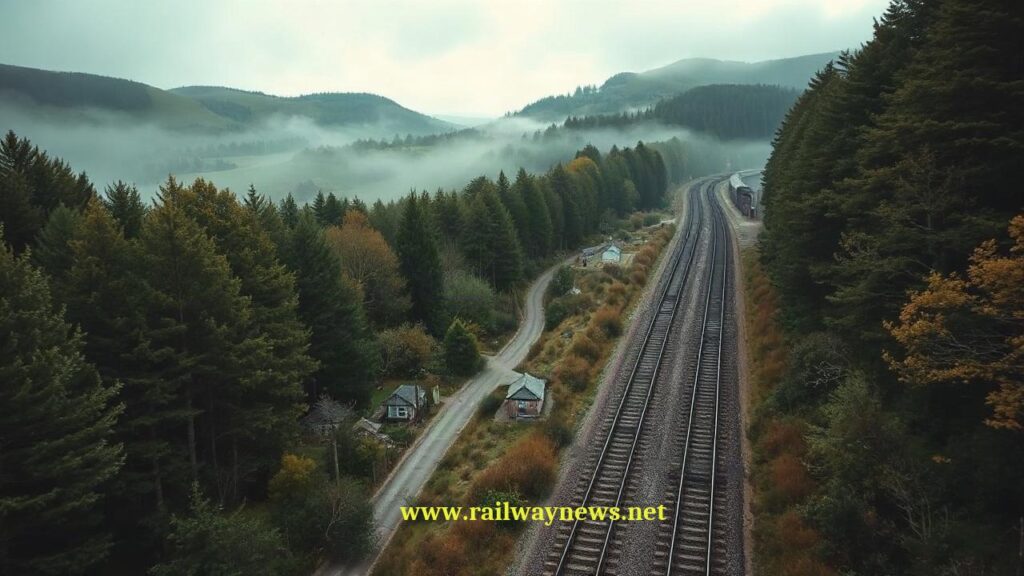
⚡ In Brief: The Transpennine Route Upgrade acquired 26 biodiversity units from Leeds City Council to deliver 8.32 hectares of managed woodland habitat in West Yorkshire under a 30-year conservation programme running through 2055.
LEEDS, UNITED KINGDOM – Network Rail’s Transpennine Route Upgrade (TRU) completed the purchase of 26 off-site biodiversity units from Leeds City Council in May 2025 to create and manage 8.32 hectares of woodland. The transaction constitutes England’s tenth largest public biodiversity unit acquisition to date. The agreement funds ecological interventions across two designated sites situated 500 metres from the rail corridor through 2055.
What Is the Full Scope of This Project?
The habitat agreement delivers 8.32 hectares of long-term native woodland enhancement to satisfy TRU’s mandatory target of 10% Biodiversity Net Gain (BNG). Interventions focus on two council-owned plots located approximately 3 km east of Cross Gates station, incorporating active canopy enrichment planting and tree veteranisation techniques. Network Rail is fully financing the maintenance regime over a legally bound 30-year lifecycle to foster species abundance, manage regional water runoff, and sequester carbon. Public access remains integrated through existing rights-of-way networks, retaining community access alongside structural environmental improvements. Specific financial allocations per unit were not publicly disclosed by either authority.
Key Project Data
| Parameter | Value |
|---|---|
| Project / Contract Name | TRU Leeds Woodland Biodiversity Net Gain Agreement |
| Total Value | Not disclosed |
| Parties Involved | Transpennine Route Upgrade (Network Rail), Leeds City Council |
| Timeline / Completion | May 2025 – 2055 (30-year term) |
| Country / Corridor | United Kingdom / Transpennine Route (York–Leeds–Manchester) |
How Does This Compare to Similar Projects?
Linear transport programmes across Europe face accelerating regulatory pressure to finance off-site ecological mitigation as physical expansions encounter land-use limits. While TRU is balancing civil corridor works with 26 localized habitat credits, continental operators are managing similar biodiversity targets through massive capital renewals. In France, the national government mandated that SNCF Réseau regenerate 1,000 km of track annually while increasing network traffic 25% by 2033, forcing civil engineers to embed land protection protocols directly into industrial timelines (Source: Railway Gazette International, 2026). On a global scale, the broader railway system market reached USD 31.1 billion in 2025, driven heavily by environmental compliance frameworks and track renewals across the UK and the European Union (Source: Future Market Insights, 2025).
Editor’s Analysis
TRU’s unit purchase establishes off-site statutory offsetting as a standard procurement mechanism for UK linear infrastructure rather than relying strictly on boundary-fence planting. As the global railroad market expanded to USD 343.8 billion in 2025, civil delivery models have had to absorb environmental accounting alongside track civil works (Source: IMARC Group, 2025). Network Rail’s use of municipal credit markets will likely serve as the structural template for future high-density corridor upgrades facing tight geographic boundaries.
FAQ
Q: What is the volume of biodiversity credits acquired by TRU in Leeds?
A: TRU purchased 26 statutory biodiversity units from Leeds City Council. These units finance the enhancement and maintenance of 8.32 hectares of woodland across two sites.
Q: How long will the habitat restoration agreement remain active?
A: The conservation and maintenance framework extends for 30 years, running from May 2025 until 2055. Total contract value for this duration was not disclosed.
Q: Will passenger train services be disrupted by these woodland works?
A: Rail services will operate normally, as the offset locations sit approximately 500 metres outside the operational rail alignment. The project focuses purely on environmental land management rather than active track infrastructure.

Railway infrastructure, rolling stock and transport technologies specialist focused on global rail industry developments, high-speed rail systems, signaling technologies and freight transportation. Covering railway investments, public transport modernization, rail operations and international mobility projects across Europe, Asia and North America.
RELATED POSTS

October 8, 2026 1:15 pm
Alstom secured a €1bn contract to build 13 automated trains,...

October 1, 2026 7:09 am
United States regulators confirmed a September 30 deadline for the...

October 4, 2026 5:14 pm
Alstom secured a CA$4.7 billion order from VIA Rail Canada...
October 8, 2026 12:18 pm
Siemens Mobility signed an agreement with VinSpeed to supply 350...

October 1, 2026 12:13 am
Illinois approved $1.5 billion annually for the Northern Illinois Transit...
October 5, 2026 6:12 pm
AECOM and Jacobs secured a contract in September 2026 to...