
BART Reports 67% Crime Drop Following Fare Gate Rollout
BART confirmed a 67% drop in passenger crime across its 50-station San Francisco rail network following the full rollout of Next Generation Fare Gates in 2025.
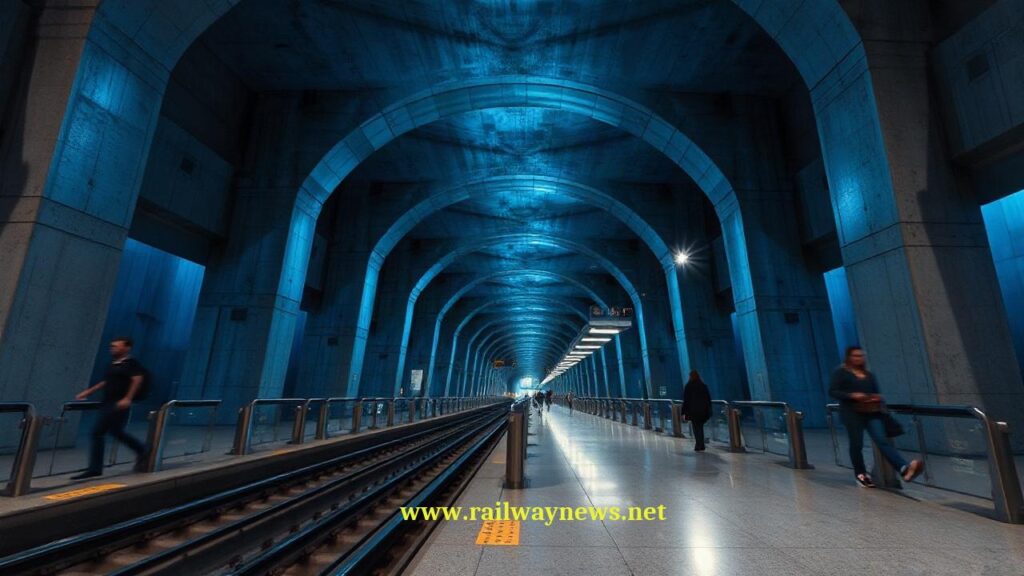
⚡ In Brief: Bay Area Rapid Transit recorded a 67% reduction in passenger-targeted crime per million trips across San Francisco’s 50-station network following the full deployment of Next Generation Fare Gates, generating an estimated $10 million in recovered annual revenue.
SAN FRANCISCO, UNITED STATES – Bay Area Rapid Transit (BART) confirmed that crimes committed against passengers fell 67% per million trips between late 2024 and the latest quarter. Over the same timeframe, transit police dispatches and safety-related delays decreased by 47% across the regional rail network. The performance gains follow the complete systemwide rollout of Next Generation Fare Gates at all 50 stations in September 2025.
What Are the Technical Specifications?
BART’s Next Generation Fare Gate network consists of full-height mechanical barriers designed to prevent both over-the-top vaulting and under-gate crawling. The physical barrier system employs dual high-strength polycarbonate swinging door leaves mounted on motorized pedestals, replacing low-profile optical turnstiles. To counter mechanical forced entry, the transit agency is currently piloting an upgraded, high-torque motor gear assembly at Coliseum and Pittsburg Center stations to increase gate resistance against continuous direct impacts. The electronic access control system pairs modern contactless fare media readers with infrared passage sensors to detect tailgating and calculate station entry-exit throughput in real time.
Key Technical Data
| Parameter | Value |
|---|---|
| Technology / System Name | Next Generation Fare Gates (NGFG) |
| Total Value | $90 million program budget (Source: BART, 2024) |
| Parties Involved | Bay Area Rapid Transit (BART), STraffic Co. Ltd. |
| Timeline / Completion | September 2025 (All 50 stations completed) |
| Country / Corridor | United States / San Francisco Bay Area Rail Network |
Where Does This Technology Stand in the Market?
Physical barrier upgrades are now replacing open turnstile architectures across legacy North American transit systems to mitigate revenue leakage and unauthorized perimeter access. New York’s Metropolitan Transportation Authority (MTA) deployed wide-aisle paddle gates manufactured by Cubic Transportation Systems, achieving an entry processing capacity of up to 40 passengers per minute compared to BART’s mechanical swing rate of roughly 30 passengers per minute (Source: MTA, 2024). Gunnebo offers the ImmSec automated barrier system featuring 1.8-meter tempered security glass with pneumatic locking mechanisms rated for 1.2 kilonewtons of break-in resistance, contrasting with the electro-mechanical gear-drive architecture BART deployed from STraffic (Source: Gunnebo Entrance Control, 2024). Independent verification of the exact failure rates for the upgraded motor gear pilots at Coliseum station was not available at time of publication.
Editor’s Analysis
The operational metrics from Northern California demonstrate that physical access control directly governs downstream operational costs, as evidenced by a 47% drop in police dispatches. Transit systems across North America are pivoting from soft compliance monitoring to physical access restriction to protect farebox recovery ratios, mirroring automated gate enforcement deployments seen throughout Western Europe (Source: Keolis, 2025). The capital recovery profile of these installations sets a technical benchmark for metropolitan authorities struggling to reconcile high-capacity passenger throughput with physical station security.
FAQ
Q: What specific crime reduction did BART record after the fare gate installation?
A: Crimes committed against riders dropped 67% per million trips between late 2024 and the latest operating quarter. Over that same timeframe, transit police incidents causing passenger delays dropped 47% across the network.
Q: How much additional revenue is the new gate system expected to generate?
A: BART officials estimate that preventing fare evasion with the new barriers will recover approximately $10 million in passenger fare revenue annually. The total capital expenditure for the networkwide replacement program was budgeted at $90 million.
Q: Which stations are testing the upgraded barrier motor systems?
A: BART is conducting field evaluations of the reinforced motor gear assemblies at Coliseum and Pittsburg Center stations. Networkwide deployment timelines for these reinforced gear retrofits have not been officially confirmed.

Railway infrastructure, rolling stock and transport technologies specialist focused on global rail industry developments, high-speed rail systems, signaling technologies and freight transportation. Covering railway investments, public transport modernization, rail operations and international mobility projects across Europe, Asia and North America.
RELATED POSTS

October 1, 2026 7:09 am
United States regulators confirmed a September 30 deadline for the...

October 1, 2026 12:13 am
Illinois approved $1.5 billion annually for the Northern Illinois Transit...

October 1, 2026 5:14 am
Siemens confirmed delivery of the first new S200 train to...
October 1, 2026 4:10 am
DART launched two public ridership dashboards in March 2026 to...

October 1, 2026 6:10 am
Amtrak approved a System Expansion Committee on July 30 to...

October 1, 2026 3:12 am
Greenbrier confirmed Brian Comstock as new president and CEO effective...