
Midlands Rail Hub Completes £1.75B Birmingham Consultation
Britain confirmed a £1.75 billion rail link in Birmingham to run 300 new daily trains as Midlands Rail Hub Alliance ended its first public consultation.
⚡ In Brief: The Midlands Rail Hub Alliance completed an initial consultation in August 2024 for a £1.75 billion rail enhancement project in Birmingham, drawing over 3,500 responses ahead of a formal Transport and Works Act Order submission in 2028.
BIRMINGHAM, UK – The Midlands Rail Hub Alliance concluded an eight-week public consultation on 28 August 2024, gathering 3,500 responses on proposed track and capacity improvements between Bordesley and Birmingham Moor Street. The proposed infrastructure scheme aims to add up to 300 additional daily train services across the West Midlands network. Detailed design work will now progress toward a statutory approval submission in early 2028.
What Is the Full Scope of This Project?
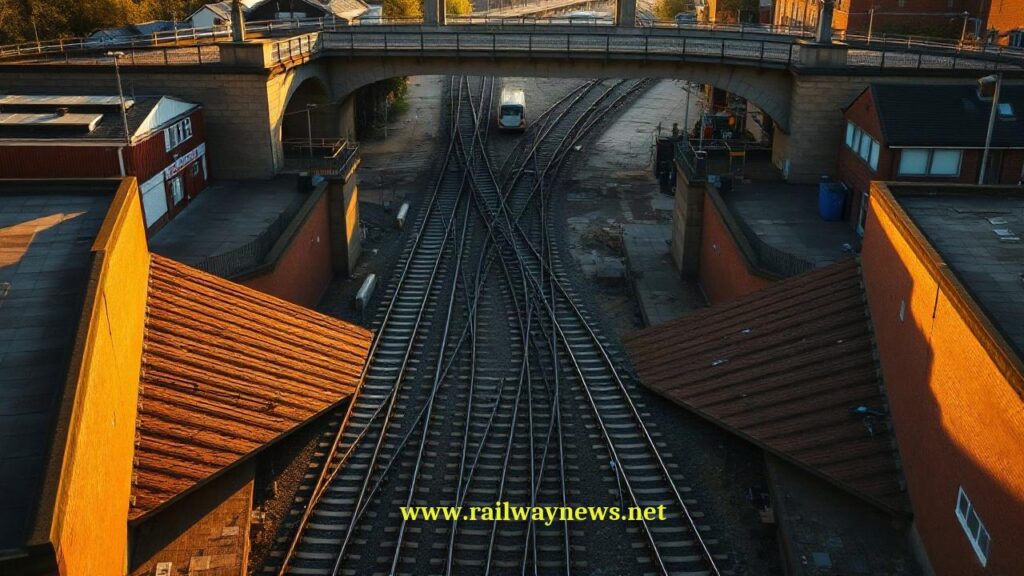
The £1.75 billion Midlands Rail Hub scheme centres on the construction of two new rail links, known as the East Chord and West Chord, to divert regional traffic away from Birmingham New Street. The West Chord will link services from the South-West and Wales into Birmingham Moor Street, while the East Chord will route regional services arriving from the East Midlands directly into Moor Street. This realignment enables the network to accommodate 300 additional services per day while relieving heavy passenger traffic at New Street, which remains the busiest rail hub in the UK outside London. Beyond civil works at Bordesley, the program improves frequency and direct routing across 50 destinations, including Nottingham, Leicester, Bromsgrove, Nuneaton, Worcester, Hereford, and Cardiff, while enhancing pedestrian connectivity to HS2 services at Birmingham Curzon Street. Construction timelines and an official service commencement date were not disclosed by the Alliance.
Key Project Data
| Parameter | Value |
|---|---|
| Project / Contract Name | Midlands Rail Hub (Bordesley to Birmingham Moor Street Chords) |
| Total Value | £1.75 billion |
| Parties Involved | Midlands Rail Hub Alliance, Network Rail, Department for Transport |
| Timeline / Completion | Second consultation summer 2027; TWAO submission early 2028; final completion date not disclosed |
| Country / Corridor | United Kingdom / West Midlands rail corridor |
How Does This Compare to Similar Projects?
Diverting cross-country regional operations to relieve bottleneck hub stations mirrors capacity programs implemented across European heavy rail networks. In the UK, the £1.75 billion allocation targets capacity relief similar to the Manchester rail upgrades, where central station track bottlenecks historically restricted intercity growth across northern corridors (Source: Network Rail, 2023). On a broader scale, capital programs targeting urban rail junction de-confliction align with global rail investments expanding at a 13.34% compound annual growth rate through 2031 (Source: Fortune Business Insights, 2024). Unlike pure high-speed track delivery programs, the Midlands Rail Hub focuses on junction restructuring, adding chord trackage over short distances to maximize existing mainline throughput without building complete new trunk lines.
Editor’s Analysis
By shifting regional traffic from New Street to Moor Street, regional planners solve a long-standing physical capacity ceiling that prevented passenger rail expansion across the central UK. This structural realignment positions Moor Street as the regional complement to high-speed passenger services arriving at the adjacent Curzon Street terminal. The multi-year lag before construction consents can be granted reflects continuing UK statutory planning hurdles, even as European operators accelerate similar urban junction de-bottlenecking initiatives (Source: Market Data Forecast, 2024).
FAQ
Q: What are the Bordesley chords in the Midlands Rail Hub project?
A: The East and West Chords are new track structures built near Bordesley that divert regional services directly into Birmingham Moor Street. This engineering intervention frees up platform capacity at Birmingham New Street station.
Q: When will construction on the Bordesley chords begin?
A: An exact construction start date has not been officially confirmed. The Alliance plans to run a second public consultation in summer 2027 before submitting a Transport and Works Act Order in early 2028.
Q: Which regional cities will gain improved rail connectivity from this scheme?
A: The project directly enhances links to more than 50 locations across the UK network. Key beneficiaries include Cardiff, Hereford, Worcester, Bromsgrove, Nuneaton, Leicester, and Nottingham.

Railway infrastructure, rolling stock and transport technologies specialist focused on global rail industry developments, high-speed rail systems, signaling technologies and freight transportation. Covering railway investments, public transport modernization, rail operations and international mobility projects across Europe, Asia and North America.
RELATED POSTS

October 1, 2026 7:09 am
United States regulators confirmed a September 30 deadline for the...

October 1, 2026 12:13 am
Illinois approved $1.5 billion annually for the Northern Illinois Transit...

October 1, 2026 5:14 am
Siemens confirmed delivery of the first new S200 train to...

October 1, 2026 6:10 am
Amtrak approved a System Expansion Committee on July 30 to...

October 1, 2026 3:12 am
Greenbrier confirmed Brian Comstock as new president and CEO effective...
October 1, 2026 4:10 am
DART launched two public ridership dashboards in March 2026 to...