
Knorr-Bremse Expands UK Rail Adhesion Trial to 2027
Knorr-Bremse expanded its UK rail adhesion trial on Chiltern Railways to August 2027 after a Class 165 DMU logged 500 wheel-slide events over 45,000 miles.
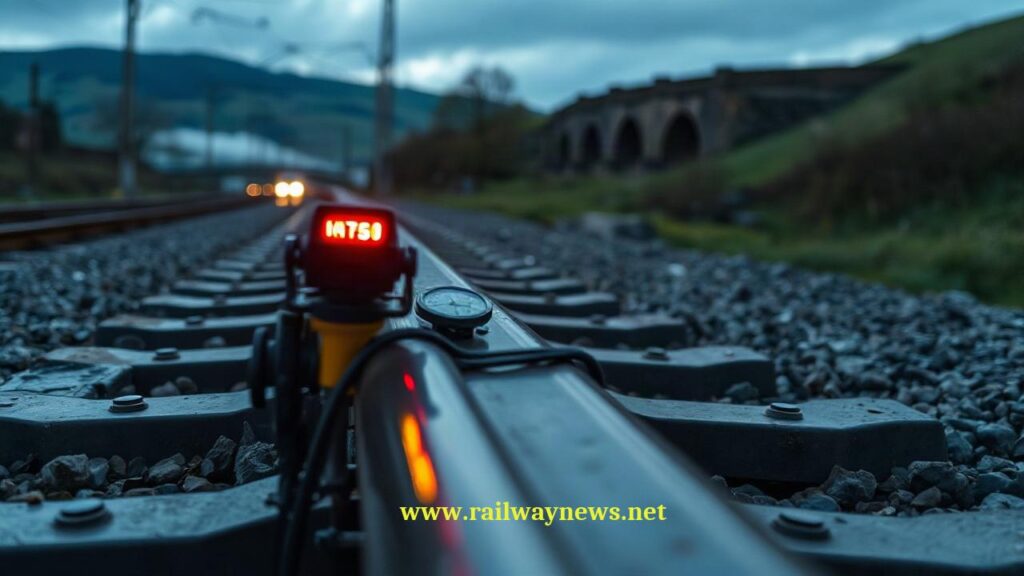
⚡ In Brief: Knorr-Bremse, Chiltern Railways, and Angel Trains have extended their real-time railhead low adhesion monitoring trial on a Class 165 DMU to August 2027 after logging 500 wheel-slide events across 45,000 operational miles.
LONDON, UNITED KINGDOM – Knorr-Bremse Rail Systems UK and Chiltern Railways have extended their live railhead adhesion monitoring trial on the Chiltern Main Line through August 2027. Operating on a single Class 165 passenger unit since September 2025, the instrumented train logged over 45,000 operational miles, detecting 500 wheel-slide events and 850 traction-slip occurrences. Supported by rolling stock owner Angel Trains, the two-year extension allows the partnership to evaluate a second autumn leaf-fall cycle while preparing direct integration into train braking controls.
What Are the Technical Specifications?
The system calculates dynamic wheel-rail adhesion coefficients down to an accuracy of a few metres during active service braking cycles. Unlike legacy wheel-slide protection (WSP) equipment that logs events only after a slide threshold is crossed, this sensor suite captures continuous friction values in the milliseconds immediately before, during, and after WSP activation. By isolating individual axle kinematics across the Class 165 diesel multiple unit (DMU), the system identifies localised friction deficits caused by micro-climates, leaf contamination, and moisture without requiring dedicated track-recording trains.
Data streams are processed through an adaptive user interface that feeds spatial coordinates directly to engineering teams and the Rail Safety and Standards Board’s (RSSB) Adhesion Research Group. This architecture enables infrastructure operators to dispatch targeted railhead treatment trains (RHTTs) to precise track coordinates rather than spraying sandite across broad line segments. Project engineers are now configuring the system to feed telemetry directly into the train’s braking computer, allowing automatic deceleration adjustments that preempt driver intervention.
Key Technical Data
| Parameter | Value |
|---|---|
| Technology / System Name | Railhead Low Adhesion Monitoring System |
| Total Value | Not disclosed |
| Parties Involved | Knorr-Bremse Rail Systems UK, Chiltern Railways, Angel Trains, RSSB ARG |
| Timeline / Completion | August 2025 – August 2027 |
| Country / Corridor | United Kingdom / Chiltern Main Line & London Marylebone to Aylesbury |
Where Does This Technology Stand in the Market?
On-train adhesion diagnostics are shifting from passive event-logging to predictive infrastructure telemetry. Competing supplier Wabtec offers its TrackIQ friction monitoring suite, which uses trackside optical sensors and axle-box accelerometers to assess wheel-rail contact mechanics, whereas Knorr-Bremse’s system evaluates braking force variance directly on passenger units in revenue service (Source: Wabtec Corporation, 2024). Similarly, Alstom incorporates wheel-slip prevention software into its Onvia train control platforms, but that configuration relies on relative rotational speed differences between bogies rather than generating real-time, metre-by-metre geographic adhesion maps for network managers (Source: Alstom, 2024).
This deployment occurs as the United Kingdom rail sector modernises operational assets across mature corridors. The UK rail market was valued at USD 108.15 billion in 2025 and is projected to expand to USD 185.31 billion by 2034 at a compound annual growth rate (CAGR) of 6.65%, with passenger rail accounting for 45.6% of total network demand (Source: Market Data Forecast, 2025). British expenditure on digital railway systems and advanced signalling is growing at a 4.3% CAGR, driven by Network Rail requirements to eliminate timetable delays caused by autumn adhesion loss (Source: Future Market Insights, 2025). Commercial terms and overall installation budgets for the Chiltern pilot were not disclosed by the participants.
Editor’s Analysis
Transitioning low-adhesion detection from specialised diagnostic trains to active passenger fleets shifts track maintenance from calendar-based schedules to condition-based dispatching. If Knorr-Bremse succeeds in feeding real-time friction values straight into the WSP loop, train operators can prevent flat spots and signal passed at danger (SPAD) incidents without diluting autumn timetables. Wider UK fleet adoption will depend on establishing automated data-exchange standards between private rolling stock owners and Network Rail maintenance bases (Source: RSSB, 2025).
FAQ
Q: What train class is running the Knorr-Bremse low adhesion monitoring system?
A: The system is fitted to a British Rail Class 165 diesel multiple unit operated by Chiltern Railways on services between London Marylebone, Aylesbury, and Birmingham.
Q: How long will the low adhesion monitoring trial continue?
A: Originally initiated in August 2025, the trial partners agreed to an extension that keeps the monitoring system active through August 2027.
Q: How does this system differ from standard wheel-slide protection?
A: Standard systems register wheel slide only after friction is lost, whereas this setup records wheel-rail micro-adhesion in the milliseconds prior to slip to predict contamination zones across the route.

Railway infrastructure, rolling stock and transport technologies specialist focused on global rail industry developments, high-speed rail systems, signaling technologies and freight transportation. Covering railway investments, public transport modernization, rail operations and international mobility projects across Europe, Asia and North America.
RELATED POSTS

October 1, 2026 3:12 am
Greenbrier confirmed Brian Comstock as new president and CEO effective...

October 1, 2026 12:13 am
Illinois approved $1.5 billion annually for the Northern Illinois Transit...

October 1, 2026 1:10 am
Georgia Ports Authority confirmed a $181 billion economic impact for...
October 1, 2026 4:10 am
DART launched two public ridership dashboards in March 2026 to...
October 1, 2026 5:14 am
Siemens confirmed delivery of the first new S200 train to...

October 1, 2026 6:10 am
Amtrak approved a System Expansion Committee on July 30 to...