
Network Rail Tests £1.4B ETCS On East Coast Main Line
Network Rail launched testing for the £1.4 billion East Coast Digital Programme to deploy ETCS Level 2 cab signalling between Welwyn and Hitchin in the UK.
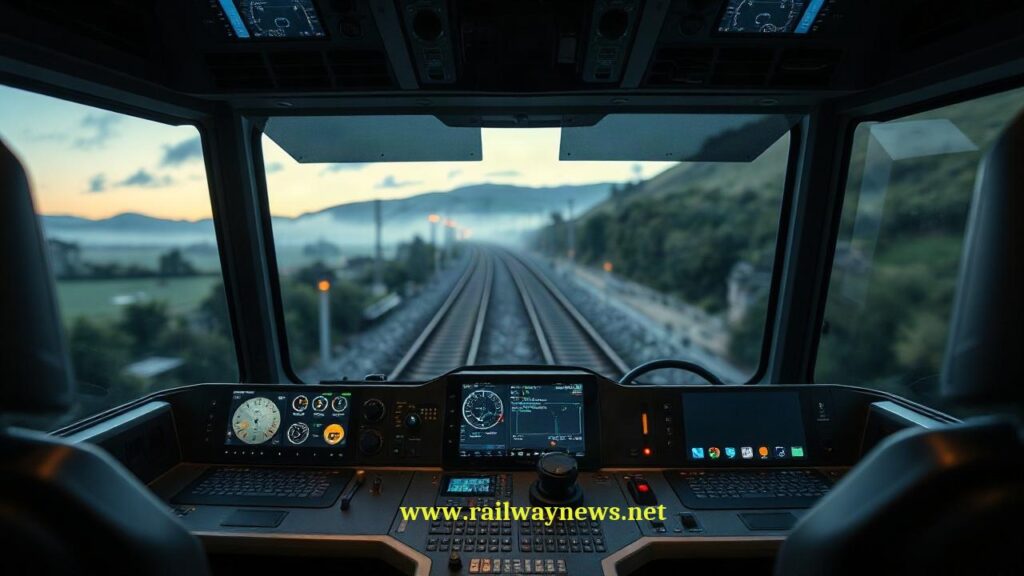
⚡ In Brief: Network Rail is executing final operational testing for the £1.4 billion East Coast Digital Programme south of Peterborough and Royston, introducing digital in-cab signalling between Welwyn and Hitchin to replace lineside signals on the East Coast Main Line.
LONDON, United Kingdom – Network Rail and Govia Thameslink Railway will conduct critical train control testing between 10:00 pm on Saturday, 29 August, and 8:00 am on Monday, 31 August, impacting passenger routes south of Peterborough and Royston. The blockade marks the final trackside validation for the £1.4 billion East Coast Digital Programme prior to introducing digital in-cab signalling between Welwyn and Hitchin. Replacement bus services will operate across affected Thameslink and Great Northern routes during the 34-hour engineering window.
What Are the Technical Specifications?
The East Coast Digital Programme implements European Train Control System Level 2 digital in-cab signalling to eliminate lineside visual signals across the southern section of the East Coast Main Line. Under this architecture, continuous track-to-train communication transmits movement authorities and velocity profiles directly to the driver cab display via dedicated radio networks and track-mounted balises. The system replaces legacy colour-light lineside signals with cab-based signaling that enables automatic train protection and optimized headway management. Following initial commissioning on London’s Northern City Line, the Welwyn-to-Hitchin deployment covers high-density mixed-traffic tracks, though the precise bandwidth allocations and specific radio frequency handoff parameters were not disclosed.
Key Technical Data
| Parameter | Value |
|---|---|
| Technology / System Name | European Train Control System (ETCS) Level 2 / East Coast Digital Programme (ECDP) |
| Total Value | £1.4 billion |
| Parties Involved | Network Rail, Govia Thameslink Railway (Thameslink, Great Northern), Siemens Mobility |
| Timeline / Completion | Initial Welwyn–Hitchin rollout summer 2025; corridor completion date not disclosed |
| Country / Corridor | United Kingdom / East Coast Main Line (London King’s Cross to Peterborough) |
Where Does This Technology Stand in the Market?
The East Coast Digital Programme positions the United Kingdom alongside core European mainline conversion projects where software-based train control is superseding lineside optical systems. In the global train control sector, Alstom offers its Atlas 200 ETCS system with over 30% European route adoption across high-speed and freight lines vs ECDP’s Siemens Mobility Trainguard 200 cab-signalling deployment, while Hitachi Rail offers its dynamic ETCS Level 2 architecture across high-speed lines in Italy and Japan (Source: UNIFE, 2024). European infrastructure managers currently dominate global signalling modernisation activity, supporting a connected rail market projected to grow at a compound annual growth rate of 5.8% between 2025 and 2034 (Source: Market.us, 2024). Operational fleet adjustments on the route have already seen peak services between London and Royston split into three 4-carriage formations to maintain fleet coverage across regional operations (Source: Helena Dollimore, 2024). An official corridor-wide completion date for full lineside signal removal north of Peterborough was not disclosed by Network Rail.
Editor’s Analysis
The transition to in-cab digital signalling between Welwyn and Hitchin proves that brownfield mainline conversions require trading short-term passenger disruption for structural network efficiency. Network Rail’s phased rollout strategy reflects a wider European industry shift toward software-defined railway architectures and automated traffic supervision (Source: Rail Market News, 2025). Validating ETCS on this high-frequency mixed-traffic bottleneck will dictate whether the UK network can increase train paths without funding multi-billion-pound track widening schemes.
FAQ
Q: Why are Thameslink and Great Northern trains facing disruption south of Peterborough and Royston?
A: Network Rail is conducting final operational testing for the £1.4 billion East Coast Digital Programme between 10:00 pm on 29 August and 8:00 am on 31 August. These engineering works validate trackside assets before introducing digital in-cab signalling between Welwyn and Hitchin.
Q: What is the delivery schedule and total funding for the digital signalling upgrade?
A: The East Coast Digital Programme represents a £1.4 billion government-funded capital project. The Welwyn-to-Hitchin section begins operational introduction in summer 2025, but the full corridor completion timeline has not been officially confirmed.
Q: How does ETCS Level 2 in-cab signalling alter train operations?
A: The system transmits continuous speed profiles and track authority limits straight to the driver cab display, removing the need for physical lineside traffic light signals. This dynamic control reduces braking buffers, enabling trains to travel closer together with lower maintenance requirements.

Railway infrastructure, rolling stock and transport technologies specialist focused on global rail industry developments, high-speed rail systems, signaling technologies and freight transportation. Covering railway investments, public transport modernization, rail operations and international mobility projects across Europe, Asia and North America.
RELATED POSTS

September 6, 2026 5:19 am
Hitachi delivered Taiwan's first N700ST high-speed train from Japan in...

September 6, 2026 6:17 am
Hungary ordered a national ban on most freight trains from...

September 6, 2026 1:17 am
Hitachi Toshiba Supreme Consortium confirmed the first of 12 N700ST...

September 5, 2026 4:19 pm
CPK launched formal tender talks with four consortia to design...

September 7, 2026 8:16 am
Midea, Gree and TCL shipped air conditioners via China Railway...

September 5, 2026 7:14 pm
HS2 Ltd signed renegotiated civils contracts with EKFB and Align...