
PKP PLK Completes 250 km/h High-Speed Tests in Poland
PKP PLK confirmed 253 km/h tests on Poland’s Central Railway Line, approving 180 km of track for 250 km/h commercial Pendolino runs from December 2027.
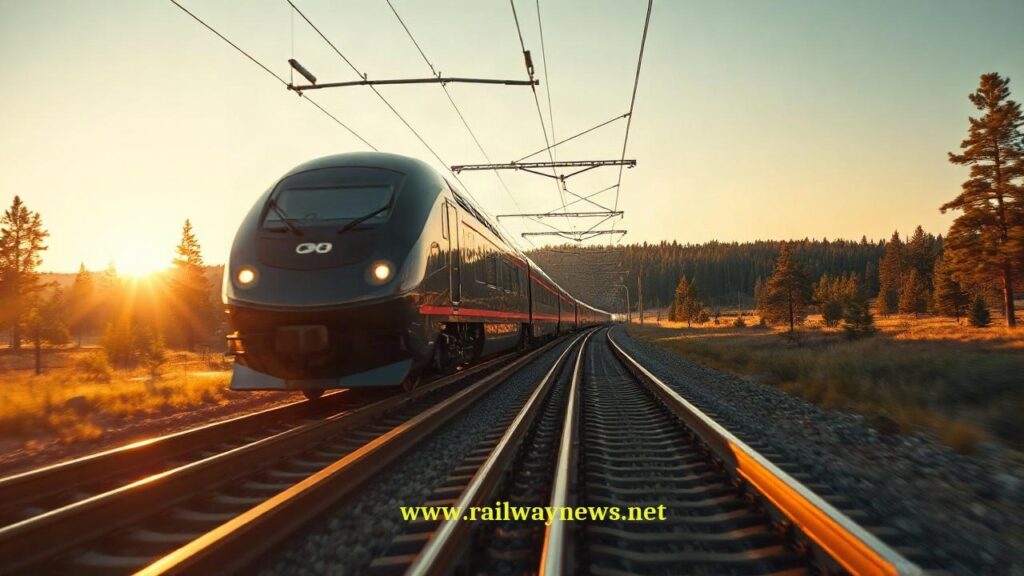
⚡ In Brief: Poland’s rail infrastructure manager PKP PLK validated commercial speeds of 250 km/h across 180 km of the Central Railway Line following a 253 km/h test run, scheduling regular passenger deployment for December 2027.
WARSAW, Poland – Infrastructure manager PKP Polskie Linie Kolejowe confirmed the completion of 253 km/h operational tests using an Alstom Pendolino train on the Central Railway Line. The test validated GSM-R communications and overhead contact systems ahead of scheduled commercial operations at 250 km/h starting with the December 2027 timetable. The upgrade will shorten journey times between Warsaw and Kraków to 1 hour and 52 minutes, down from the current two hours and 45 minutes.
What Is the Full Scope of This Project?
The Central Railway Line modernisation program raises maximum operational line speeds to 250 km/h along a continuous 180-kilometre section of the 223-kilometre trunk corridor.
Built between 1971 and 1977, the Central Railway Line (Centralna Magistrala Kolejowa, or CMK) links Warsaw with Katowice and Kraków. Although PKP Intercity took delivery of 20 Alstom ED250 Pendolino seven-car trainsets capable of 250 km/h in 2014, commercial runs have remained capped at 200 km/h due to power supply and signalling limitations. The upgrade program replaces legacy power feeds, adapts track geometry, and certifies Level 2 European Train Control System (ETCS) paired with high-speed GSM-R. Speeds on the remaining 43 km of the corridor will remain below 250 km/h due to urban approaches and junction constraints. Beyond shortening Warsaw–Kraków transit, the upgraded line will reduce Warsaw–Katowice journeys to 1 hour and 54 minutes, and Warsaw–Wrocław journeys to approximately three hours. Total capital expenditure specific to the CMK 250 km/h testing program was not disclosed by PKP PLK.
Key Project Data
| Parameter | Value |
|---|---|
| Project / Contract Name | Central Railway Line (CMK) 250 km/h Adaptation Program |
| Total Value | Not disclosed (Part of annual PLN 40 billion national rail procurement program) |
| Parties Involved | PKP Polskie Linie Kolejowe (PKP PLK), PKP Intercity, Alstom |
| Timeline / Completion | Commercial revenue entry scheduled for December 2027 |
| Country / Corridor | Poland / Central Railway Line (Warsaw–Kraków/Katowice) |
How Does This Compare to Similar Projects?
The CMK upgrade serves as an interim speed transition ahead of Poland’s planned 2,700-kilometre greenfield high-speed network designed for 320 km/h operations.
While the CMK adaptation focuses on upgrading an existing legacy freight-and-passenger trunk line, the government’s broader Port Polska program (formerly Central Communication Port, or CPK) involves dedicated high-speed routes, beginning with the Warsaw–Łódź corridor. The Ministry of Infrastructure processed rail procurements valued at approximately PLN 40 billion (€9.3 billion) over the preceding twelve months, with comparable outlays scheduled for 2026 (Source: Ministry of Infrastructure, 2025). In December 2025, PKP Intercity tendered for 20 new trainsets rated for 320 km/h to serve Port Polska corridors. Operational usage for the existing Alstom Pendolino fleet exceeded 1.2 million train-kilometres annually by 2025, supporting a domestic passenger volume that reached 44.7 million riders for PKP Intercity in the first half of 2026 alone (Source: PKP Intercity, 2026). Regionally, Poland’s incremental step to 250 km/h mirrors Germany’s legacy ICE corridor upgrades, whereas the forthcoming 320 km/h lines align Poland with French LGV and Spanish AVE standards rather than the 249 km/h parameters selected for the Baltic states’ Rail Baltica project (Source: Rail Baltica, 2024).
Editor’s Analysis
Commercial deployment of 250 km/h trains closes a thirteen-year technical gap during which Poland’s Alstom trainsets ran below their engineered capabilities. By verifying GSM-R transmission at speeds exceeding 250 km/h, PKP PLK resolves safety certification hurdles that long stalled domestic rail acceleration. With PKP Intercity passenger volumes up 45 percent over a three-year span, higher track speeds protect rail market share against domestic road expansions and regional aviation (Source: PKP Intercity, 2026).
FAQ
Q: When will commercial 250 km/h passenger trains begin running in Poland?
A: Revenue service at 250 km/h will launch with the 2027–2028 PKP Intercity timetable in December 2027. Operations will initially cover 180 kilometres of the upgraded Central Railway Line.
Q: What rolling stock will operate on the 250 km/h sections?
A: PKP Intercity will deploy its existing fleet of 20 Alstom ED250 Pendolino trains, which have operated in Poland since 2014. The operator also initiated procurement for 20 additional trainsets designed for 320 km/h in December 2025.
Q: How much funding was spent specifically on this line upgrade?
A: The specific contract value for the 250 km/h testing and track adaptation phase was not publicly disclosed. However, the work sits within a wider national rail infrastructure program totaling approximately PLN 40 billion in annual tenders.

Railway infrastructure, rolling stock and transport technologies specialist focused on global rail industry developments, high-speed rail systems, signaling technologies and freight transportation. Covering railway investments, public transport modernization, rail operations and international mobility projects across Europe, Asia and North America.
RELATED POSTS

September 6, 2026 5:19 am
Hitachi delivered Taiwan's first N700ST high-speed train from Japan in...

September 6, 2026 6:17 am
Hungary ordered a national ban on most freight trains from...
September 6, 2026 1:17 am
Hitachi Toshiba Supreme Consortium confirmed the first of 12 N700ST...

September 5, 2026 4:19 pm
CPK launched formal tender talks with four consortia to design...
September 7, 2026 8:16 am
Midea, Gree and TCL shipped air conditioners via China Railway...

September 5, 2026 7:14 pm
HS2 Ltd signed renegotiated civils contracts with EKFB and Align...