
Crowley Launches Weekly Houston-Central America Service
Crowley launched a weekly container service on September 10, 2026, linking Port Houston to Guatemala and Honduras to connect with US rail and inland freight.
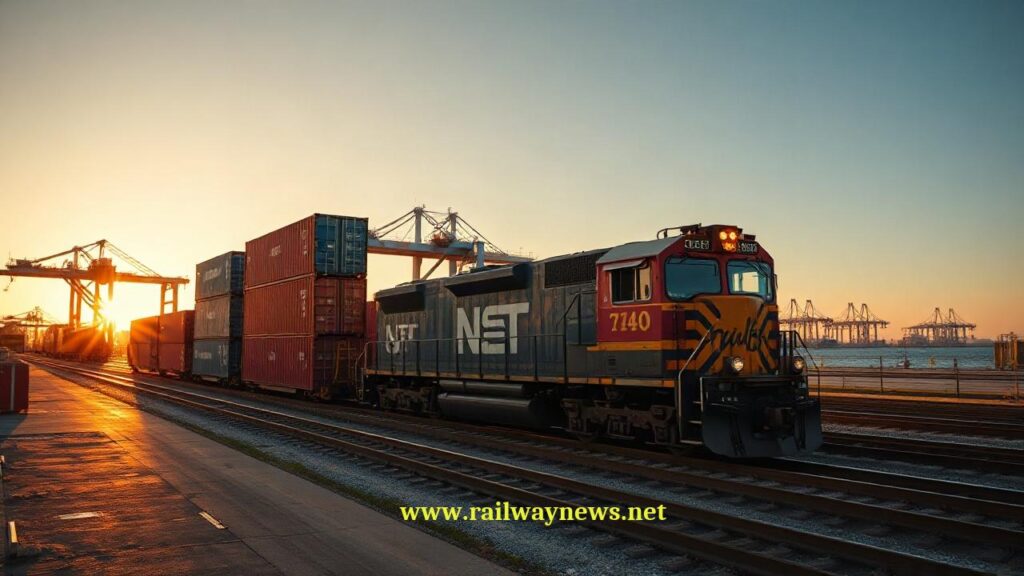
⚡ In Brief: Crowley launched the weekly Gulf-Central America Express Service on September 10, 2026, linking Port Houston to Guatemala and Honduras to support Central American agricultural exports that grew 15.7% earlier that year.
HOUSTON, United States – Logistics operator Crowley inaugurated its Gulf-Central America Express Service on September 10, 2026, establishing a weekly container ocean connection between Port Houston, Guatemala, and Honduras. The maritime service deploys dry, refrigerated, 53-foot, and flat-rack containers to address a 15.7% surge in Central American exports to the United States recorded in early 2026. Ocean transit links directly with Crowley’s established regional inland freight networks spanning Central America and the Caribbean.
What Is the Full Scope of This Project?
The Gulf-Central America Express Service provides scheduled weekly maritime transport connecting Port Houston directly to Santo Tomás de Castilla in Guatemala and Puerto Cortés in Honduras. The service accommodates a diverse equipment fleet comprising 20-foot and 40-foot flat-rack units, 40-foot and 45-foot dry and refrigerated containers, and 53-foot dry containers designed for highway and rail intermodal freight. Primary northbound and southbound commodities include apparel, fresh agricultural produce, industrial supplies, and consumer merchandise. Crowley integrates this maritime link with more than 65 years of inland distribution and warehousing operations across Central America, reducing cargo transfers between ocean carriers and landside transport. Capital expenditure and vessel charter valuations for this service deployment were not disclosed by the carrier.
Key Project Data
| Parameter | Value |
|---|---|
| Project / Contract Name | Gulf-Central America Express Service |
| Total Value | Not disclosed |
| Parties Involved | Crowley, Port Houston, Santo Tomás de Castilla Port Authority, Puerto Cortés Terminal Operators |
| Timeline / Completion | First Houston call September 10, 2026; weekly recurring service |
| Country / Corridor | United States – Guatemala – Honduras (U.S. Gulf / Central America Corridor) |
How Does This Compare to Similar Projects?
Cross-border transport corridors are expanding internationally to capture surging agricultural and consumer freight demand through dedicated intermodal connections. The China-Kyrgyzstan-Uzbekistan Railway project, approved in 2024, targets transit-time reductions of up to 10 days relative to traditional regional freight routes (Source: Mordor Intelligence, 2025). On transcontinental rail corridors, China-Europe freight train services expanded 3.3% in 2025, moving cargo valued at USD 67.7 billion (Source: Mordor Intelligence, 2025). North American bulk intermodal corridors exhibited parallel momentum, as United States grain rail carloads expanded 3.7% between 2024 and 2025 to satisfy international export requirements (Source: Mordor Intelligence, 2025). Specific vessel slot capacity and container turnaround metrics for Crowley’s Houston service were not publicly available at time of publication.
Editor’s Analysis
Crowley’s Gulf connection reinforces the strategic shift toward Gulf Coast ports as intermodal entry points for agricultural and apparel nearshoring flows. By pairing ocean calls with inland warehousing, the carrier circumvents East Coast port congestion and offers direct access to central United States rail hubs. This service expansion aligns with the global rail freight market, which was valued at USD 370.0 billion in 2025 and is projected to reach USD 602.7 billion by 2036 at a 4.5% compound annual growth rate (Source: Future Market Insights, 2025).
FAQ
Q: Which ports does the Gulf-Central America Express Service connect?
A: The weekly service operates between Port Houston in Texas, Santo Tomás de Castilla in Guatemala, and Puerto Cortés in Honduras. The inaugural vessel call at Houston took place on September 10, 2026.
Q: What container equipment types are available on this route?
A: Crowley operates 20-foot and 40-foot flat-rack equipment, 40-foot and 45-foot dry and refrigerated containers, and 53-foot dry containers. These configurations support temperature-controlled produce, apparel, and oversized industrial cargo.
Q: How does this service interface with United States inland rail networks?
A: Containers discharge at Port Houston, where direct interchange with Class I railroads facilitates distribution into Midwestern and Central U.S. consumer markets. Precise intermodal rail transit schedules for specific inland destinations have not been officially confirmed.

Railway infrastructure, rolling stock and transport technologies specialist focused on global rail industry developments, high-speed rail systems, signaling technologies and freight transportation. Covering railway investments, public transport modernization, rail operations and international mobility projects across Europe, Asia and North America.
RELATED POSTS

October 8, 2026 1:15 pm
Alstom secured a €1bn contract to build 13 automated trains,...

October 1, 2026 7:09 am
United States regulators confirmed a September 30 deadline for the...

October 4, 2026 5:14 pm
Alstom secured a CA$4.7 billion order from VIA Rail Canada...

October 1, 2026 12:13 am
Illinois approved $1.5 billion annually for the Northern Illinois Transit...

October 6, 2026 2:14 am
Union Pacific launched export rail shipments with Ferromex to deliver...

October 1, 2026 6:10 am
Amtrak approved a System Expansion Committee on July 30 to...