
EU Approves €51.5B Plan To Connect 283 Seaports To Rail
European Commission approved a €51.5 billion budget to connect 283 EU seaports to freight rail lines and deploy ERTMS signalling across core networks by 2030.
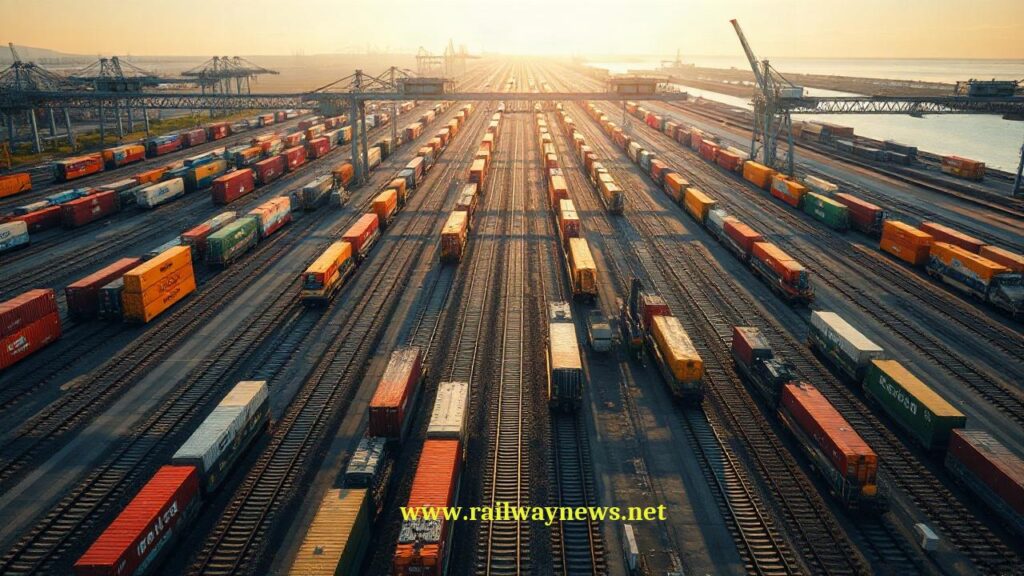
⚡ In Brief: The European Commission has enacted the EU Ports Strategy, directing a proposed €51.5 billion 2028–2034 transport budget toward connecting 283 seaports to rail corridors and mandating ERTMS signalling deployment across core networks by 2030.
BRUSSELS, BELGIUM – The European Commission has adopted the EU Ports Strategy to eliminate freight bottlenecks between coastal terminals and inland logistics networks across 283 maritime facilities. The initiative aligns TEN-T rail infrastructure with maritime hubs that process 3.4 billion tonnes of cargo annually, supported by a proposed €51.5 billion Connecting Europe Facility budget for the 2028–2034 period. Mandatory deployment targets require complete European Rail Traffic Management System installations across all core European freight corridors by 2030.
What Does This Regulation Cover?
The EU Ports Strategy legally couples maritime terminal operations with mandatory hinterland rail freight integration across the Trans-European Transport Network. Beyond quayside crane productivity, the policy targets railway throughput, shunting yard throughput, and automated customs clearance to reduce maritime terminal dwell times. The framework governs 283 seaports, 223 inland ports, and 44 combined multimodal facilities across the European Union. Infrastructure criteria mandate that rail access tracks accommodate 740-metre freight trains and operate without technical friction across member-state borders. To eliminate national signalling discrepancies, the directive sets a firm 2030 completion deadline for ERTMS implementation across core corridor routes, alongside common digital data exchange standards scheduled for entry into force by 2028.
Key Regulatory Data
| Parameter | Value |
|---|---|
| Regulation / Policy Name | EU Ports Strategy (Hinterland Intermodal Framework) |
| Total Value | €51.5 billion proposed (CEF Transport 2028–2034); €10 billion mobilized since 2014 |
| Parties Involved | European Commission, European Investment Bank, National Infrastructure Managers, Port Authorities |
| Timeline / Completion | 2028 (Data Exchange Guidelines); 2030 (Core TEN-T ERTMS Compliance) |
| Country / Corridor | European Union / Trans-European Transport Network (TEN-T) Core Corridors |
How Does This Compare to Global Standards?
European port-rail integration targets lag behind the volume growth recorded along external transcontinental supply chains. Trans-Eurasian rail freight connections expanded by 3.3% between 2024 and 2025, moving cargo valued at USD 67.7 billion despite redrawn geopolitical transit routes (Source: Mordor Intelligence, 2025). Within Europe, retail and fast-moving consumer goods rail freight is expanding at a 7.98% compound annual growth rate, driven by direct container departures from gateway docks to inland fulfillment centers (Source: Mordor Intelligence, 2025). Gateway exposure remains concentrated at nodes like the Port of Rotterdam, which channels 13% of total European Union energy consumption and supplies regional industry with chemicals, aluminium, and fertilizer imports vulnerable to maritime chokepoints (Source: Renewable Matter, 2024).
Southern transit routes are outpacing Northern European rail-port integration programs in civil expansion velocity. Mediterranean ports are adding approximately 10 million twenty-foot equivalent units of capacity through 2029, with Egypt’s Alexandria and El Dekheila processing 74.8 million tonnes in fiscal year 2024–2025, a 14% year-on-year increase (Source: Atlantic Council, 2024). Digitalization spending to support this capacity is escalating worldwide, with the digital railway market projected to expand from USD 90.6 billion in 2025 to USD 296.7 billion by 2035 (Source: Market.us, 2025). Specific public co-financing quotas for smaller secondary European ports were not disclosed by the European Commission at the time of publication.
Editor’s Analysis
Port congestion in Europe has migrated from deep-water docks directly into regional rail junctions, making hinterland capacity the decisive factor in container route selection. As supply shocks test single-corridor routes, intermodal hubs that lack dual-track electrified connections and ERTMS signalling will lose transshipment volumes to Mediterranean and private dry-port complexes. Capital allocations will favor multimodal operators able to deploy software-driven dispatching, matching a global rail digitalization market expanding past USD 290 billion over the coming decade (Source: Market.us, 2025).
FAQ
Q: What is the primary objective of the EU Ports Strategy for rail operators?
A: The strategy requires national transport agencies to remove bottlenecks between maritime terminals and inland rail corridors across 283 EU seaports. It obliges member states to synchronize rail infrastructure expansions with port container volumes to avoid landside delays.
Q: When must rail lines serving major European ports implement ERTMS?
A: Rail lines serving core TEN-T port corridors must deploy ERTMS signalling by 2030 under European Commission regulations. Binding technical standards for multimodal digital data sharing must be finalized by 2028.
Q: How much European Union funding is allocated to port-rail infrastructure?
A: The European Commission has proposed €51.5 billion under the Connecting Europe Facility for the 2028–2034 cycle, following €10 billion spent across port programs since 2014. Precise funding allocations for individual national rail projects have not been officially confirmed.

Railway infrastructure, rolling stock and transport technologies specialist focused on global rail industry developments, high-speed rail systems, signaling technologies and freight transportation. Covering railway investments, public transport modernization, rail operations and international mobility projects across Europe, Asia and North America.
RELATED POSTS
September 6, 2026 5:19 am
Hitachi delivered Taiwan's first N700ST high-speed train from Japan in...
September 6, 2026 6:17 am
Hungary ordered a national ban on most freight trains from...
September 6, 2026 1:17 am
Hitachi Toshiba Supreme Consortium confirmed the first of 12 N700ST...

September 5, 2026 4:19 pm
CPK launched formal tender talks with four consortia to design...
September 7, 2026 8:16 am
Midea, Gree and TCL shipped air conditioners via China Railway...

September 5, 2026 7:14 pm
HS2 Ltd signed renegotiated civils contracts with EKFB and Align...