
Port of Vancouver Secures Subaru Rail Lease Through 2040
Port of Vancouver USA extended Subaru of America’s rail lease through 2040, expanding the hub to 43 acres for auto shipments moving directly via BNSF Railway.
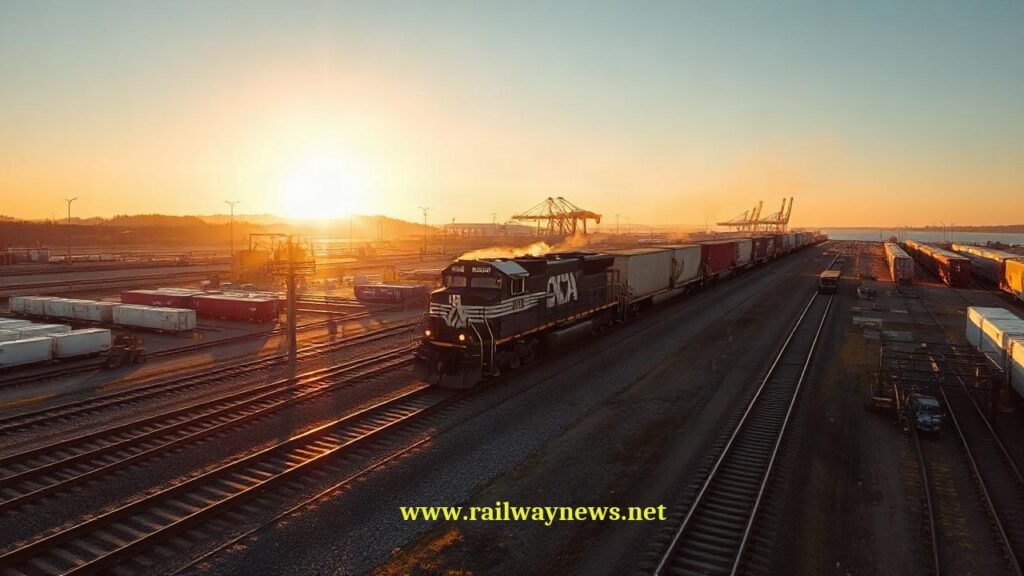
⚡ In Brief: The Port of Vancouver USA handled its 2 millionth imported Subaru vehicle while extending its logistics leasehold agreement with Subaru of America through 2040 across an expanded 43-acre footprint.
VANCOUVER, UNITED STATES – The Port of Vancouver USA marked the arrival of its 2 millionth imported Subaru vehicle on August 14, solidifying its position as the automaker’s primary North American import terminal. Under a newly formalized long-term agreement, the port extended Subaru of America’s operational lease through 2040 and expanded its footprint from 40 to 43 acres. Approximately 80% of the nearly 2,000 vehicles arriving weekly from Japan are transferred directly to BNSF Railway for long-haul overland distribution.
What Does This Contract Cover?
The extended agreement secures Subaru of America’s automotive processing operations at the Columbia River gateway through 2040 and enlarges its dedicated processing facility by three acres to 43 acres total. The terminal receives maritime shipments from Japan, conducting pre-delivery inspections and direct rail-loading operations to service auto dealerships across the United States. Terminal throughput currently averages roughly 104,000 vehicles annually, building on a supply chain relationship established in 1993 that took 21 years to reach 1 million vehicles in 2014 and just 10 additional years to deliver the second million. The financial value of the lease expansion and capital commitments through 2040 was not disclosed by port officials.
Key Contract Data
| Parameter | Value |
|---|---|
| Contract Name | Port of Vancouver USA – Subaru of America Lease Extension |
| Total Value | Not disclosed |
| Parties Involved | Port of Vancouver USA, Subaru of America Inc., BNSF Railway |
| Timeline / Completion | Operating through 2040 |
| Country / Corridor | United States / Pacific Northwest Intermodal Rail Corridor |
How Does This Compare to Similar Contracts?
Long-term automotive import leases at United States ports rarely commit to 16-year horizons without staged capital trigger points, giving this agreement an unusually long operational visibility compared to standard 5-to-10-year maritime facility contracts. The high rail-modal split at Vancouver—routing 80% of auto freight onto Class I rail networks—outpaces the typical 60% to 70% rail dispatch share observed at major coastal roll-on/roll-off (Ro-Ro) facilities in the US Gulf and Mid-Atlantic. This captive volume directly feeds the US rail freight market, which is projected to expand from USD 370 billion in 2025 to USD 602.7 billion by 2036 at a Compound Annual Growth Rate (CAGR) of 4.5% (Source: Fact.MR, 2024). By locking down terminal capacity through 2040, Subaru insulates its import operations from broader Pacific Northwest industrial land scarcity, whereas competing automotive shippers face rising spot-lease rates at congested West Coast entry points.
Editor’s Analysis
Subaru’s long-term commitment validates the Pacific Northwest as a durable automotive corridor, insulating BNSF Railway’s northern tier from truck competition on finished vehicle transport. With Class I rail freight revenues tied increasingly to intermodal expansion and high-value bulk shipments, steady automotive unit trains provide predictable base-load traffic through 2040. Continued carrier performance will depend on BNSF maintaining network velocity across the Columbia River Gorge to prevent dwell bottlenecks as import volumes increase.
FAQ
Q: How many vehicles does Subaru import through the Port of Vancouver USA?
A: Subaru imports approximately 2,000 vehicles per week from Japan through the facility, totaling more than 100,000 units each year. The port delivered its 2 millionth cumulative vehicle for the automaker on August 14.
Q: How long is the new agreement between Subaru and the Port of Vancouver?
A: The lease extension runs through 2040 and increases Subaru’s operational site from 40 to 43 acres. Total monetary terms of the lease were not disclosed by either party.
Q: Which railroad handles the vehicles leaving the port?
A: BNSF Railway provides exclusive on-dock rail switching and mainline transport for the facility. Approximately 80% of all arriving Subaru vehicles move to interior North American markets by rail rather than highway transport.

Railway infrastructure, rolling stock and transport technologies specialist focused on global rail industry developments, high-speed rail systems, signaling technologies and freight transportation. Covering railway investments, public transport modernization, rail operations and international mobility projects across Europe, Asia and North America.
RELATED POSTS
September 6, 2026 5:19 am
Hitachi delivered Taiwan's first N700ST high-speed train from Japan in...
September 6, 2026 1:17 am
Hitachi Toshiba Supreme Consortium confirmed the first of 12 N700ST...
September 6, 2026 6:17 am
Hungary ordered a national ban on most freight trains from...

September 5, 2026 4:19 pm
CPK launched formal tender talks with four consortia to design...
September 7, 2026 8:16 am
Midea, Gree and TCL shipped air conditioners via China Railway...
September 6, 2026 8:17 am
DB InfraGO reopened the Nuremberg-Regensburg line in Bavaria on 31...