
ÖBB Launches St Pölten-Herzogenburg 8 km Double-Tracking EIA
ÖBB launched EIA for an 8 km double-tracking project on Austria’s St. Pölten–Herzogenburg line, raising maximum speed to 160 km/h when works finish in 2036.
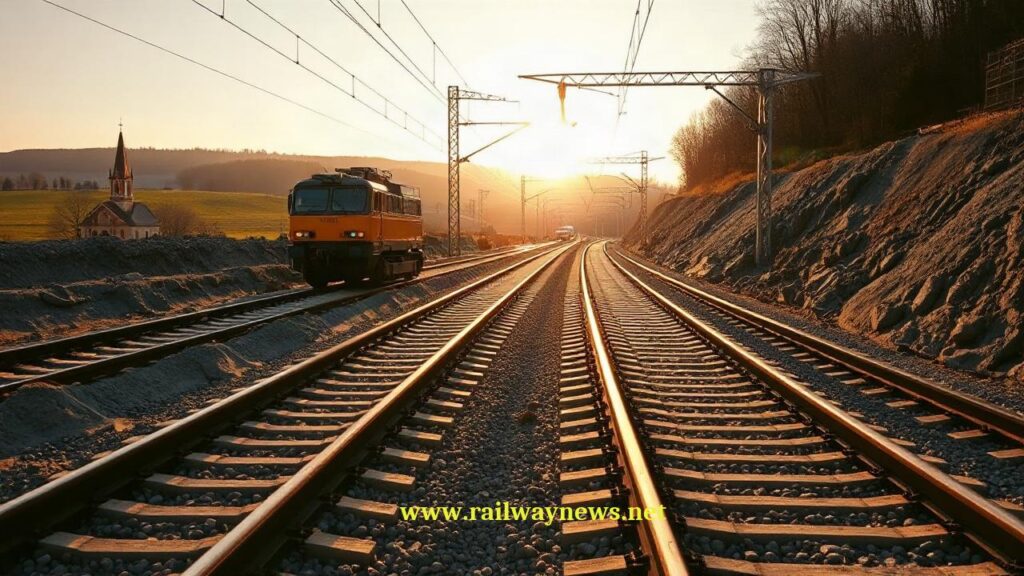
⚡ In Brief: ÖBB has launched environmental assessment studies for an 8 km double-tracking and electrification upgrade of Austria’s St. Pölten–Herzogenburg line, raising line speed from 120 km/h to 160 km/h by end-2036.
ST. PÖLTEN, Austria – ÖBB has begun the environmental impact assessment (EIA) preparation phase for an 8 km double-tracking project on the St. Pölten–Herzogenburg railway, part of the Tullnerfelder Bahn network in Lower Austria. The upgrade will add a second track, electrify the corridor, remove level crossings, and modernise three stations, enabling maximum speeds to rise from 120 km/h to 160 km/h. Full service entry is scheduled for the end of 2036, with early works planned from 2028.
What Is the Full Scope of This Project?
The project is a complete corridor rebuild of an 8 km single-track section that ÖBB says has reached the limit of its operational capacity. Scope elements include second-track construction, electrification, removal of level crossings, new underpasses for road, pedestrian and cycle traffic, station modernisation at Unterradlberg, Viehofen and St. Pölten Traisenpark, and a dedicated pedestrian-cyclist link in the Gorbachgasse area.
ÖBB did not disclose total investment value for the 8 km programme, nor the cost breakdown among track, electrification, flood protection, and station works. The timetable is staged: first-phase works begin around 2028, underpasses open to road traffic in mid-2029, and main double-track construction starts no earlier than 2031 following completion of authorisation procedures.
Key Project Data
| Parameter | Value |
|---|---|
| Project / Contract Name | St. Pölten–Herzogenburg double-tracking and electrification (Tullnerfelder Bahn) |
| Total Value | Not disclosed |
| Parties Involved | ÖBB (Infrastruktur AG) |
| Timeline / Completion | First works 2028; underpasses mid-2029; double-track build from 2031; service entry end-2036 |
| Country / Corridor | Austria / Tullnerfelder Bahn, Lower Austria |
How Does This Compare to Similar Projects?
Austrian rail investment in the same period has operated at dramatically larger scale: the Koralm Railway, opened on December 14, 2025, connects Graz and Klagenfurt along a roughly 130 km alignment and supports a daily high-speed service linking Vienna and Trieste that cut journey time by three hours. (Source: European Newsroom, 2025)
Internationally, the 22-mile South Shore Line Double Track Project completed in 2025 from Michigan City, Indiana to Gary, Indiana is a direct analogue: like St. Pölten–Herzogenburg, it attacks a single-track choke point on an existing passenger corridor rather than building a new alignment. (Source: Railway Track & Structures, 2025) CN’s Glen Valley Double Track on the Yale Subdivision near Abbotsford, western Canada, is another example of capacity release through incremental track duplication on a live corridor. (Source: Railway Supply, 2025)
A planned future high-speed link between Klagenfurt and Vienna is projected for completion between 2040 and 2050, implying the 8 km Tullnerfelder upgrade will serve as a feeder to, rather than part of, Austria’s emerging high-speed core. (Source: evrimagaci.org, 2025)
Editor’s Analysis
The St. Pölten–Herzogenburg project signals a strategic correction in Austrian rail policy: after the Koralm opening shifted the national focus to long-distance speed, the next bottleneck is the regional network that feeds it. An 8 km double track with 160 km/h running converts a capacity-strained branch into a functional segment of the Vienna–St. Pölten–west corridor, particularly as European rail tourism demand shifts toward high-speed and regional-intercity connections. (Source: Future Market Insights, 2025) The absence of a disclosed budget suggests ÖBB is still testing cost assumptions inside the EIA process, so the 2036 entry date carries execution risk.
FAQ
Q: Why is only an 8 km section being double-tracked when the whole line is single track?
A: ÖBB states this section has reached its operational capacity limits, making it the critical blocking point on the corridor. The project is designed to remove that constraint and enable more flexible traffic management across the wider Tullnerfelder Bahn network.
Q: What happens to level crossings on the route?
A: Level crossings will be removed and replaced with separated underpasses for road traffic, pedestrians and cyclists. The first underpasses are scheduled to open to road traffic in mid-2029.
Q: Will the upgrade allow faster journeys between Vienna, St. Pölten and the west?
A: Yes, the 160 km/h maximum speed and double-track operation will reduce journey times and improve timetable reliability for both regional and long-distance trains, although ÖBB has not published specific end-to-end journey time savings. The line is distinct from the future Klagenfurt–Vienna high-speed link, which is slated for 2040–2050 completion. (Source: evrimagaci.org, 2025)

Railway infrastructure, rolling stock and transport technologies specialist focused on global rail industry developments, high-speed rail systems, signaling technologies and freight transportation. Covering railway investments, public transport modernization, rail operations and international mobility projects across Europe, Asia and North America.
RELATED POSTS
September 6, 2026 5:19 am
Hitachi delivered Taiwan's first N700ST high-speed train from Japan in...

September 5, 2026 4:19 pm
CPK launched formal tender talks with four consortia to design...

September 5, 2026 7:14 pm
HS2 Ltd signed renegotiated civils contracts with EKFB and Align...
September 6, 2026 6:17 am
Hungary ordered a national ban on most freight trains from...
September 5, 2026 5:17 pm
Chiltern Railways completed the Banbury Station ticket office and main...
September 5, 2026 6:17 pm
Universal Signalling won a deal to install its U-Cross system...