
China Railway Express Cuts AC Delivery to Europe to 15 Days
Midea, Gree and TCL shipped air conditioners via China Railway Express to Europe in 15 days, cutting sea transit by 25 days as H1 exports rose 43%.
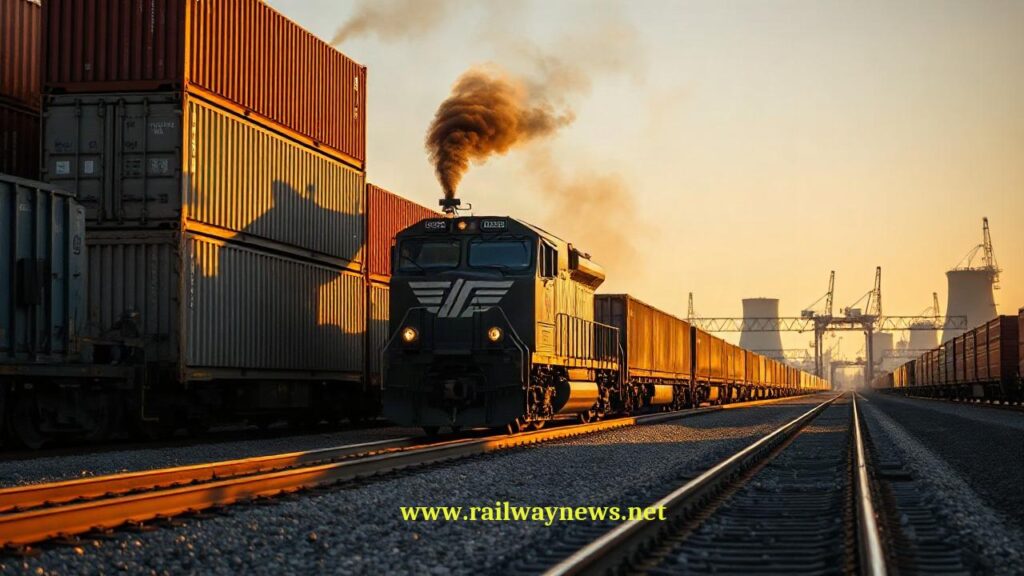
⚡ In Brief: Chinese appliance makers Midea, Gree and TCL are rail-freighting air conditioners to Europe after 40°C heatwaves stripped dealer stocks, cutting delivery from 40 days to 15 days as H1 exports climb 43%.
BEIJING – Chinese home-appliance manufacturers Midea Group, Gree Electric Appliances and TCL have activated China Railway Express block-train capacity for air-conditioning units after European distributor stocks were depleted by sustained 40°C-plus heat. China State Railway Group confirmed the rail-volume increase during the 2026 European cooling season. The modal switch cuts transit from roughly 40 days by sea to about 15 days by rail, a 25-day reduction in delivery lead time.
What Is the Full Scope of This Development?
China’s air-conditioner exports to Europe grew 43% year-on-year in the first half of 2026, according to Chinese trade authorities, and the rail channel is being used for the incremental emergency volume rather than baseline sea-freight commitments.
The affected trains use the China Railway Express network, which links inland Chinese industrial zones with Central and Western European markets via Central Asia and, on certain routings, Russia. The corridor is formally promoted by Beijing as a “fast corridor” within the Belt and Road Initiative. The urgency is compounded by Middle East shipping disruptions, which introduced multi-week schedule uncertainty for ocean services in 2026 and made rail’s fixed 15-day transit window commercially decisive for seasonal goods with a short sales peak.
Key Development Data
| Parameter | Value |
|---|---|
| Company / Organisation | Midea Group, Gree Electric Appliances, TCL (manufacturers); China State Railway Group (operator) |
| Total Value | Not disclosed |
| Parties Involved | China Railway Express operators, European distributors, Chinese manufacturing plants |
| Timeline / Completion | 15-day rail transit vs roughly 40-day sea transit; emergency shipments initiated during the 2026 European heat season |
| Country / Corridor | China – Central Asia – Russia (select routings) – Central and Western Europe |
How Does This Compare to Industry Trends?
China’s national rail system moved 3.7 billion tonnes of cargo in 2025, a 2.7% year-on-year increase, yet China–Europe rail freight volumes fell again in 2025, according to logistics analytics firm upply.
The air-conditioning surge is therefore counter-cyclical: it is filling westbound train slots at a moment when broad China–Europe rail demand has softened. The rail logistics market was valued at US$428.2 billion in 2025, with China Railway holding an estimated 22.2% of global market share, and the global rail freight market is projected to reach US$602.7 billion by 2036 on a 4.1% CAGR (Source: GM Insights, 2025; Future Market Insights, 2026).
The AC rush also shows the corridor absorbing time-critical consumer manufacturing — a segment historically ceded to air freight — by offering a middle tier priced above sea but below air. Comparable rail spot-cargo surges for seasonal consumer goods were not widely documented on this corridor before 2026; no disaggregated China Railway Express monthly tonnage or revenue figure for the AC shipments was publicly available at time of publication.
Editor’s Analysis
The air-conditioning rail rush signals that China Railway Express is now being used as a supply-chain risk tool, not merely a cost-reduction route: manufacturers accepted a higher freight rate to avoid losing an entire selling season to Middle East shipping delays. If this spot-cargo model proves repeatable, Chinese rail operators can diversify beyond bulk and conventional container flows at a time when westbound Europe volumes are under pressure (Source: upply Market Insights, 2025). The next test is whether railways retain any of this demand after ocean schedules stabilise.
FAQ
Q: How much faster is rail than sea freight for air conditioners from China to Europe?
A: Rail transit takes about 15 days versus roughly 40 days by sea — a 25-day lead-time saving. That difference lets Midea, Gree and TCL replenish European dealer stocks before a heatwave ends.
Q: Why did the manufacturers not use air freight instead?
A: Rail is more expensive than sea but remains significantly cheaper than air freight, offering what trade officials describe as a compromise between cost and speed. The specific cost premium per container or per unit has not been disclosed by the manufacturers or China State Railway Group.
Q: Will these rail-based AC shipments continue after the European summer?
A: The shipments are designed to capture peak seasonal demand, so volumes are expected to taper as temperatures fall. A durable shift depends on whether ocean schedule reliability in the Middle East corridor is restored in late 2026.

Railway infrastructure, rolling stock and transport technologies specialist focused on global rail industry developments, high-speed rail systems, signaling technologies and freight transportation. Covering railway investments, public transport modernization, rail operations and international mobility projects across Europe, Asia and North America.
RELATED POSTS

September 5, 2026 4:19 pm
CPK launched formal tender talks with four consortia to design...

September 6, 2026 5:19 am
Hitachi delivered Taiwan's first N700ST high-speed train from Japan in...
September 6, 2026 6:17 am
Hungary ordered a national ban on most freight trains from...

September 5, 2026 7:14 pm
HS2 Ltd signed renegotiated civils contracts with EKFB and Align...

September 5, 2026 6:17 pm
Universal Signalling won a deal to install its U-Cross system...
September 6, 2026 7:12 am
Renfe invests €1bn by 2030 to fix its rail depots...