
Ukraine Approves 30% Ukrzaliznytsia Freight Tariff Increase
Ukraine approved a 30% Ukrzaliznytsia freight tariff rise from 1 August 2026, and a 15% stage from 1 January 2027, to cover UAH 8.6 billion of its shortfall.
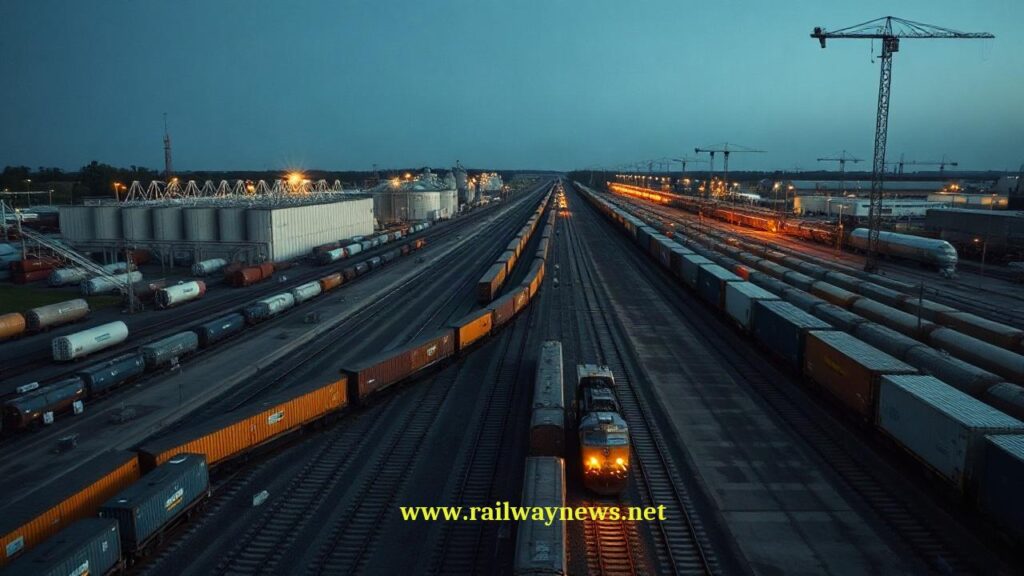
⚡ In Brief: Ukraine approved a 30% Ukrzaliznytsia rail freight tariff rise on 31 July 2026, effective 1 August 2026, with a second 15% stage from 1 January 2027, to stabilise finances and fund wartime infrastructure repair.
KYIV, Ukraine – The Ministry for Communities, Territories and Infrastructure Development approved the first rail freight tariff indexation for Ukrzaliznytsia since 2022 on 31 July 2026, with rates rising 30% from 1 August 2026 and an additional 15% from 1 January 2027. The decision replaces the previous cargo-dependent tariff for empty wagon movements with a unified charging system based on operating cost. The Ukrainian economy ministry expects the 30% step to reduce Ukrzaliznytsia’s 2026 funding shortfall by UAH 8.6 billion ($191.50 million).
What Does This Regulation Cover?
The approved regulation raises Ukrzaliznytsia’s freight tariffs by 30% from 1 August 2026 and by a further 15% from 1 January 2027, while unifying empty wagon movement charges. Under the old mechanism, charges for empty wagons depended on the cargo previously carried rather than the actual cost of moving the wagon; the new system links charges directly to operational cost.
The measure applies across Ukrzaliznytsia’s national freight network, including grain and ore export flows. The company says its operating costs have risen far faster than revenues: industrial inflation has more than doubled since the 2022 tariff revision, additional electricity costs have exceeded UAH 15 billion compared with 2023, and more than 460 locomotives have been damaged since the full-scale invasion (Source: Ukrzaliznytsia, 2026). A previously planned tariff adjustment for 1 January 2026 was postponed to protect wartime businesses; Ukrzaliznytsia estimates that years of postponed indexation generated an economic benefit of more than UAH 100 billion for freight customers.
Key Regulatory Data
| Parameter | Value |
|---|---|
| Regulation / Policy Name | Ministry order approving Ukrzaliznytsia freight tariff indexation (order number not disclosed) |
| Total Value | 30% step expected to cover UAH 8.6 billion ($191.50 million) of the 2026 funding shortfall; 15% step revenue impact not disclosed (Source: Ukraine economy ministry, 2026) |
| Parties Involved | Ministry for Communities, Territories and Infrastructure Development; Ukrzaliznytsia; freight customers; State Audit Service of Ukraine; international financial institutions |
| Timeline / Completion | Published 31 July 2026; effective 1 August 2026; additional 15% effective 1 January 2027 |
| Country / Corridor | Ukraine, national network |
How Does This Compare to Global Standards?
The approved tariff adjustment is counter-cyclical: it is being implemented as Ukrzaliznytsia’s freight volumes fall, while global rail freight markets expand. The global rail freight market is forecast to grow at a compound annual rate of 5.0% from 2025 and reach EUR 567.3 billion by 2035 (Source: Rail Market, 2025); by contrast, Ukrzaliznytsia expects volumes to fall by 13 million tonnes in 2025 and by a further 5–10 million tonnes in 2026 (Source: GMK Center, 2024).
Tariff-setting is only one form of state intervention in rail economics. When Canada’s two largest railways faced contract paralysis in 2024, the federal labour board imposed binding arbitration on CN, CPKC and more than 9,000 workers, using fatigue-management, scheduling and rest-facility standards as the main regulatory lever rather than freight charges (Source: The Conversation, 2024). Comparable multi-stage tariff-reset data for other national networks was not publicly available at time of publication.
Editor’s Analysis
The two-stage design gives freight customers time to adjust contracts before the second rise in January 2027, but it also makes plain that Ukrainian rail policy is now driven by a single financial stabilisation programme. The UAH 10.2 billion cost-optimisation plan and the first-time direct passenger subsidy of up to UAH 16 billion are part of the same strategy: without tariff indexation, Ukrzaliznytsia cannot restore core freight profitability or restart lending from international financial institutions. The decision will be judged by whether the January 2027 stage is implemented without further postponement once export-commodity prices and wartime volumes are tested.
FAQ
Q: What is the additional cost per tonne for grain and ore under the new tariffs?
A: The economy ministry estimates the 30% step adds about $3.6 per tonne of grain and $3.2 per tonne of ore for shipments up to 750 km. Longer-distance impacts have not been disclosed by the ministry.
Q: How much revenue will the tariff increase generate for Ukrzaliznytsia?
A: The 30% step is expected to cover UAH 8.6 billion ($191.50 million) of Ukrzaliznytsia’s 2026 funding shortfall. The additional revenue from the 15% step in 2027 has not been publicly estimated.
Q: Will the freight tariff increase affect passenger fares?
A: No passenger fare increase was included in this decision. Instead, the government allocated up to UAH 16 billion in direct public service obligation funding for domestic passenger rail, moving away from the old practice of cross-subsidising passenger losses with freight revenue.

Railway infrastructure, rolling stock and transport technologies specialist focused on global rail industry developments, high-speed rail systems, signaling technologies and freight transportation. Covering railway investments, public transport modernization, rail operations and international mobility projects across Europe, Asia and North America.
RELATED POSTS

September 5, 2026 4:19 pm
CPK launched formal tender talks with four consortia to design...

September 6, 2026 5:19 am
Hitachi delivered Taiwan's first N700ST high-speed train from Japan in...
September 6, 2026 6:17 am
Hungary ordered a national ban on most freight trains from...
September 5, 2026 7:14 pm
HS2 Ltd signed renegotiated civils contracts with EKFB and Align...
September 5, 2026 6:17 pm
Universal Signalling won a deal to install its U-Cross system...
September 5, 2026 5:17 pm
Chiltern Railways completed the Banbury Station ticket office and main...