
Siemens Mobility Completes €41.8M Slovakia Rail Upgrade
Siemens Mobility has completed a €41.8M project in Slovakia for ŽSR, splitting signal blocks to add capacity on its busiest line, with EU Recovery Plan funding.
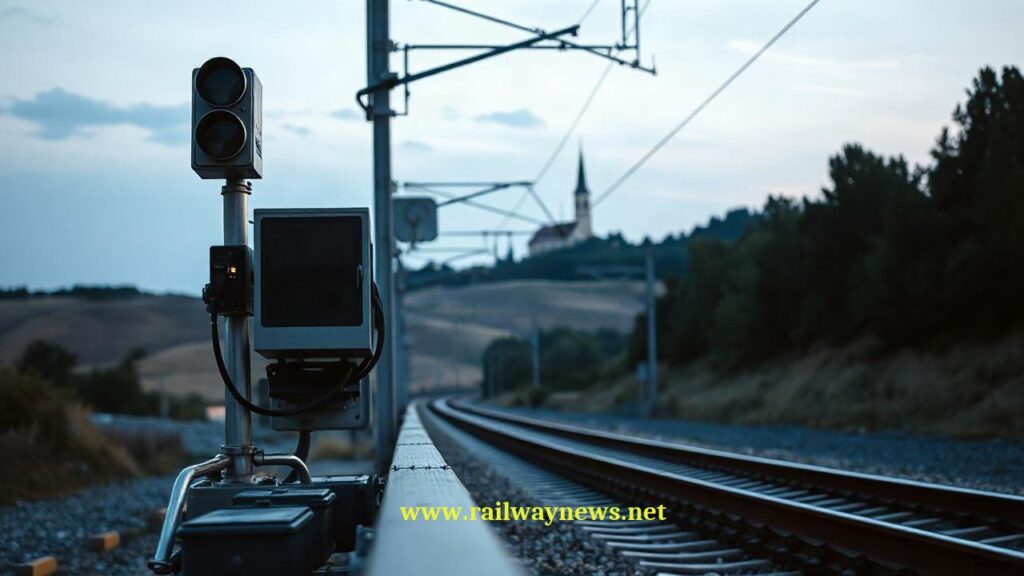
⚡ In Brief: ŽSR completed a €41.8M Siemens Mobility project to increase capacity on Slovakia’s busiest line, Bratislava-Rača – Leopoldov, through modernised signalling and traffic blocks, funded by the EU Recovery and Resilience Plan.
BRATISLAVA, Slovakia – Železnice Slovenskej republiky (ŽSR) announced in April 2026 the completion of the €41.8 million capacity modernisation of the Bratislava-Rača – Leopoldov line, the busiest railway in Slovakia. The project, delivered by Siemens Mobility and funded through the EU Recovery and Resilience Plan, upgrades the corridor that carries regional, inter-regional, international and freight services between Bratislava, Trnava, Žilina and eastern Slovakia.
What Is the Full Scope of This Project?
The project’s core technical element is the division of block intervals between stations into two or three separate traffic blocks, enabling multiple trains to occupy the same section simultaneously without civil engineering works. The scope also included modernisation of the Traffic Management Centre in Trnava, which coordinates traffic between Bratislava-Rača and Nové Mesto nad Váhom, with installation of the new ILTIS N command and control system, modern transmission systems and signalling installations compatible with future European ETCS implementation.
Passenger information systems and public address systems were modernised across the entire sector, new cabling infrastructure was built between Trnava and Cífer, and fibre-optic cables were installed on the Trnava–Nové Mesto nad Váhom section. The contract was funded through Slovakia’s Recovery and Resilience Plan, which allocates €6.4 billion in European funds for investment and reforms, with support from the Slovak Ministry of Transport and the Ministry of Finance.
Key Project Data
| Parameter | Value |
|---|---|
| Project / Contract Name | Bratislava-Rača – Leopoldov line capacity modernisation |
| Total Value | EUR 41.8 million |
| Parties Involved | ŽSR (client), Siemens Mobility (contractor), Slovak Ministry of Transport, Ministry of Finance, EU Recovery and Resilience Plan |
| Timeline / Completion | Completed; announced April 2026 |
| Country / Corridor | Slovakia / Main corridor linking Bratislava to Trnava, Žilina and eastern Slovakia |
How Does This Compare to Similar Projects?
This €41.8 million signalling project is smaller than Stadler’s €50 million Bergen signalling contract secured in 2025, reflecting the difference between retrofitting an existing corridor with capacity blocks and deploying a full new signalling system in a dense urban network. Stadler secured that Bergen contract in the same competitive wave of software-based control system procurement that underpins the Slovak deployment. (Source: Stadler, 2025)
Looked at against the broader European supply picture, Alstom’s record €27.6 billion order book in fiscal year 2025/2026 — including a €1.6 billion Polish contract for 42 Coradia Max double-deck EMUs and a €500 million German order with maintenance extending to 2055 — shows that the industry’s largest revenue pools are in rolling stock and long-term maintenance, not standalone signalling upgrades. The Slovak contract involves no new rolling stock and no disclosed maintenance agreement, limiting its commercial scope relative to those peer transactions. (Source: Alstom, 2026)
Comparable signalling-only project costs in central Europe vary widely by line length and ETCS scope; ŽSR has not disclosed the upgraded section’s route length, the number of new block signals, or the expected percentage increase in theoretical line capacity. No independent assessment of the ILTIS N deployment by the European Union Agency for Railways was publicly available at time of publication.
Editor’s Analysis
The decision to increase capacity through signalling density rather than new track avoids the land acquisition and civil engineering costs that have historically delayed Slovak rail projects. The ILTIS N installation positions the line for ETCS operation ahead of the EU’s 2030 TEN-T core network deadline, but ŽSR’s failure to disclose the line’s capacity uplift percentage makes it difficult to benchmark the €41.8 million investment against neighbouring projects in Czechia and Hungary. With the railway signalling market projected to grow on the back of software-based control and automated freight systems, this project fits a European-wide shift toward traffic management density as a substitute for physical expansion. (Source: Future Market Insights, 2025)
FAQ
Q: How much did the Bratislava-Rača – Leopoldov capacity project cost?
A: The project cost €41.8 million and was delivered by Siemens Mobility. It was funded through the EU Recovery and Resilience Plan with backing from Slovakia’s Ministry of Transport and Ministry of Finance.
Q: What technology was installed to increase capacity without new track?
A: Signalling intervals between stations were divided into two or three traffic blocks, allowing more trains to run simultaneously on the same section. The new ILTIS N control system at Trnava Traffic Management Centre is ETCS-compatible, so the line can adopt European train control standards without another major signalling replacement.
Q: When will passengers see benefits from this project?
A: ŽSR says the completed system improves train flow and reduces delay risk, though no specific capacity uplift percentage was disclosed. The benefits apply to both passenger and freight operators using the corridor between Bratislava-Rača and Leopoldov.

Railway infrastructure, rolling stock and transport technologies specialist focused on global rail industry developments, high-speed rail systems, signaling technologies and freight transportation. Covering railway investments, public transport modernization, rail operations and international mobility projects across Europe, Asia and North America.
RELATED POSTS

October 8, 2026 1:15 pm
Alstom secured a €1bn contract to build 13 automated trains,...

October 1, 2026 7:09 am
United States regulators confirmed a September 30 deadline for the...

October 8, 2026 12:18 pm
Siemens Mobility signed an agreement with VinSpeed to supply 350...

October 4, 2026 5:14 pm
Alstom secured a CA$4.7 billion order from VIA Rail Canada...

October 5, 2026 6:12 pm
AECOM and Jacobs secured a contract in September 2026 to...

October 1, 2026 12:13 am
Illinois approved $1.5 billion annually for the Northern Illinois Transit...