
Moscow Metro Upgrades Big Circle Line With 94 ATO Trains
Moscow Metro will equip all 94 trains on the 70-km Big Circle Line with ATO systems by 2030 and launch passenger-free automated runs in late 2026.
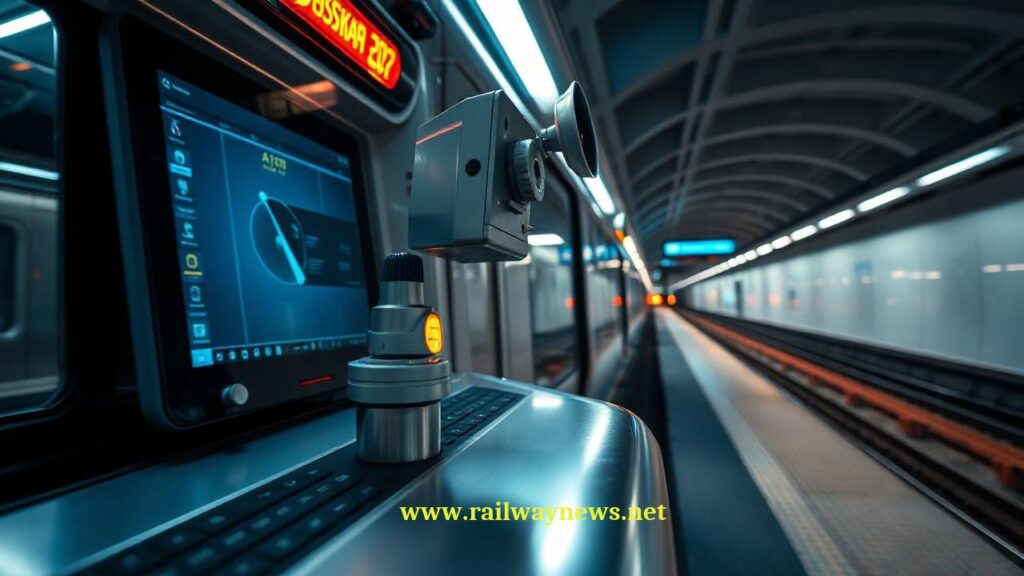
⚡ In Brief: Moscow Metro will equip all 94 trains on the 70-km Big Circle Line with automatic train operation systems by 2030, with the first passenger-free automated run scheduled for late 2026.
MOSCOW, Russia – Moscow Metro will equip all 94 trains on the 70-km Big Circle Line with automatic train operation (ATO) systems by 2030, with the first automated train entering regular service without passengers by the end of 2026. Passenger tests begin in 2027, and a track intrusion detection system developed by the Moscow Research and Development Centre for Automated Transport will be installed at all 29 stations. Peak-hour intervals on the line are as short as 90 seconds.
What Are the Technical Specifications?
Moscow Metro’s Big Circle Line automation programme will equip 94 trains with automatic train operation (ATO), computer vision, LiDAR sensors, and continuous communication with the traffic control centre. Trials have begun using the Moskva-2024 autonomous metro train, with a driver present for safety and monitoring during initial no-passenger runs (Source: GetTransport, 2026). The line serves 31 stations, but the announced detection system covers 29 stations; the discrepancy was not explained. The total programme cost and targeted Grade of Automation level were not disclosed.
Key Technical Data
| Parameter | Value |
|---|---|
| Technology / System Name | Moskva-2024 automated train with ATO, computer vision, LiDAR sensors, and track intrusion detection |
| Total Value | Not disclosed |
| Parties Involved | Moscow Metro, Moscow Research and Development Centre for Automated Transport, Moscow city transport authorities |
| Timeline / Completion | First passenger-free automated service by end 2026; passenger tests from 2027; full 94-train automation by 2030 |
| Country / Corridor | Russia – Moscow Big Circle Line, 70 km, 31 stations; track detection system covering 29 stations |
Where Does This Technology Stand in the Market?
Moscow’s domestic ATO and track-intrusion detection stack enters a market where Alstom, Siemens Mobility, and Hitachi Rail are deploying driverless metro systems across Europe, Asia, and the Middle East.
Alstom’s Urbalis Fluence offers Grade of Automation 4 (GoA4) driverless operation and has been selected for the €915 million first phase of Belgrade Metro Line 1 from Makiško Polje to Karaburma (Source: Alstom, 2026). Siemens Mobility’s Trainguard MT CBTC operates on GoA4 lines such as Paris Line 14 and Barcelona Line 9 (Source: Siemens Mobility, 2024). Hitachi Rail is delivering CBTC systems for the Taipei Keelung metropolitan MRT (Source: Hitachi Rail, 2025). Moscow’s BCL programme has not publicly confirmed a Grade of Automation target.
Regional investment data shows rail passenger traffic rose 7% in 2025 compared with 2024, and South Korea’s railway system sector is projected to grow at a 4.7% CAGR through 2036 (Source: Railway Supply, 2026; Future Market Insights, 2026). These figures support the scale-up of high-capacity automated metro corridors.
Editor’s Analysis
Moscow is using the Big Circle Line as a testbed for domestic automation technology at a time when major global suppliers are expanding driverless metro portfolios. The choice to retrofit the world’s longest circular metro line rather than build a new driverless line is operationally demanding, because the 90-second peak headway leaves little room for degraded-mode recovery. The 7% rise in rail passenger traffic in 2025 (Source: Railway Supply, 2026) and South Korea’s 4.7% projected railway system CAGR through 2036 indicate that automated capacity will remain a priority for urban rail planners.
FAQ
Q: When will passengers be able to ride automated trains on Moscow’s Big Circle Line?
A: Passenger tests are scheduled to begin in 2027, with full automation of all 94 trains targeted for 2030.
Q: What safety systems will the automated line use?
A: A track intrusion detection system developed by the Moscow Research and Development Centre for Automated Transport will be installed at all 29 stations, alongside LiDAR and computer vision on trains.
Q: How will automation affect train frequency on the Big Circle Line?
A: Moscow authorities state automated trains will run at the same intervals as current services, including 90-second peak headways, but the retained role of onboard staff after 2030 has not been officially confirmed.

Railway infrastructure, rolling stock and transport technologies specialist focused on global rail industry developments, high-speed rail systems, signaling technologies and freight transportation. Covering railway investments, public transport modernization, rail operations and international mobility projects across Europe, Asia and North America.
RELATED POSTS

October 1, 2026 7:09 am
United States regulators confirmed a September 30 deadline for the...

October 1, 2026 12:13 am
Illinois approved $1.5 billion annually for the Northern Illinois Transit...
October 1, 2026 5:14 am
Siemens confirmed delivery of the first new S200 train to...

October 1, 2026 6:10 am
Amtrak approved a System Expansion Committee on July 30 to...

October 1, 2026 3:12 am
Greenbrier confirmed Brian Comstock as new president and CEO effective...
October 1, 2026 4:10 am
DART launched two public ridership dashboards in March 2026 to...