
AAR Launches Freight Rail Research Consortium With MIT
AAR launched the Freight Rail Research Consortium on May 22, 2025 with four universities including MIT and Rutgers to study supply chain resilience and policy.
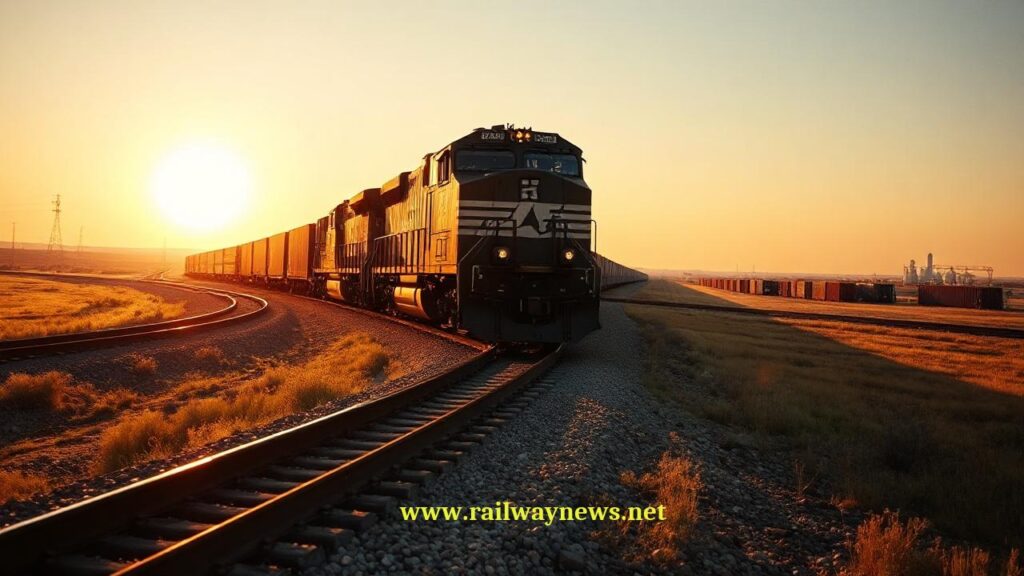
⚡ In Brief: The Association of American Railroads launched the Freight Rail Research Consortium yesterday, partnering with MIT, UC Berkeley, Rutgers University, and UIUC to advance freight-rail research in supply chain resilience, economic performance, and policy.
WASHINGTON, D.C. – The Association of American Railroads (AAR) launched the Freight Rail Research Consortium on May 22, 2025, establishing research partnerships with four academic institutions. The consortium includes the Massachusetts Institute of Technology, the University of California, Berkeley, Rutgers University, and the University of Illinois Urbana-Champaign. No funding amount or project duration was disclosed by the AAR.
What Is the Full Scope of This Project?
The consortium unites researchers in economics, transportation, logistics, engineering, and public policy from four universities to conduct collaborative, data-driven research on freight rail. The MIT Mobility Initiative will focus on freight rail’s role in supply chain resilience, economic performance, and goods movement. Research priorities also include technological and operational challenges, as well as policy issues shaping the future of U.S. freight rail. The consortium expands an existing long-term relationship between the AAR and UIUC, while adding three new academic partnerships. Specific research projects, funding allocations, and a timeline for deliverables were not disclosed at launch.
Key Project Data
| Parameter | Value |
|---|---|
| Project / Contract Name | Freight Rail Research Consortium |
| Total Value | Not disclosed |
| Parties Involved | AAR, MIT Mobility Initiative, UC Berkeley, Rutgers University, University of Illinois Urbana-Champaign |
| Timeline / Completion | Not disclosed |
| Country / Corridor | United States (national scope) |
How Does This Compare to Similar Projects?
The AAR’s consortium differs structurally from government-funded programs such as the U.S. Department of Transportation’s University Transportation Centers, which distributed $435 million across 35 universities in 2024 (Source: U.S. DOT, 2024). While UTC grants cover all transportation modes, the AAR consortium targets freight rail exclusively with direct industry funding. In Europe, the Shift2Rail joint undertaking operated with a €920 million budget from 2014 to 2020, combining EU and industry contributions (Source: Europe’s Rail, 2021). The AAR has not disclosed whether member railroads are providing additional co-financing beyond the association’s own contribution. Comparable data for privately funded, single-mode freight research consortia in North America was not publicly available at time of publication.
Editor’s Analysis
The AAR’s decision to build a dedicated academic consortium signals a structural shift toward in-sourced research capacity at a time when the global rail freight market is projected to reach $534.6 billion by 2035 (Source: Market.us, 2025). By including both engineering and public policy disciplines, the consortium positions the industry to address operational efficiency and regulatory strategy simultaneously. The absence of a disclosed budget may limit initial assessments of the consortium’s scale relative to federally funded alternatives, but the inclusion of four research universities suggests a multi-year commitment rather than a short-term pilot.
FAQ
Q: Which universities are part of the AAR Freight Rail Research Consortium?
A: The consortium includes the Massachusetts Institute of Technology (MIT) Mobility Initiative, the University of Illinois Urbana-Champaign (UIUC), the University of California, Berkeley, and Rutgers University.
Q: How much funding is the AAR providing for the research consortium?
A: The AAR has not disclosed the total funding amount or annual budget allocation for the consortium. No co-financing details from member railroads have been released.
Q: What specific research topics will the consortium address?
A: Research will cover supply chain resilience, economic performance, goods movement, operational and technological challenges, and policy issues affecting freight rail. Individual project topics have not been announced.

Railway infrastructure, rolling stock and transport technologies specialist focused on global rail industry developments, high-speed rail systems, signaling technologies and freight transportation. Covering railway investments, public transport modernization, rail operations and international mobility projects across Europe, Asia and North America.
RELATED POSTS

October 1, 2026 7:09 am
United States regulators confirmed a September 30 deadline for the...

October 1, 2026 12:13 am
Illinois approved $1.5 billion annually for the Northern Illinois Transit...

October 4, 2026 5:14 pm
Alstom secured a CA$4.7 billion order from VIA Rail Canada...

October 1, 2026 6:10 am
Amtrak approved a System Expansion Committee on July 30 to...

October 1, 2026 3:12 am
Greenbrier confirmed Brian Comstock as new president and CEO effective...

October 6, 2026 2:14 am
Union Pacific launched export rail shipments with Ferromex to deliver...