
CTA Approves Track Design Funding for Forest Park Branch
In July 2026, the CTA approved an intergovernmental agreement with IDOT transferring state funds for track design on the Forest Park Branch amount not disclosed.
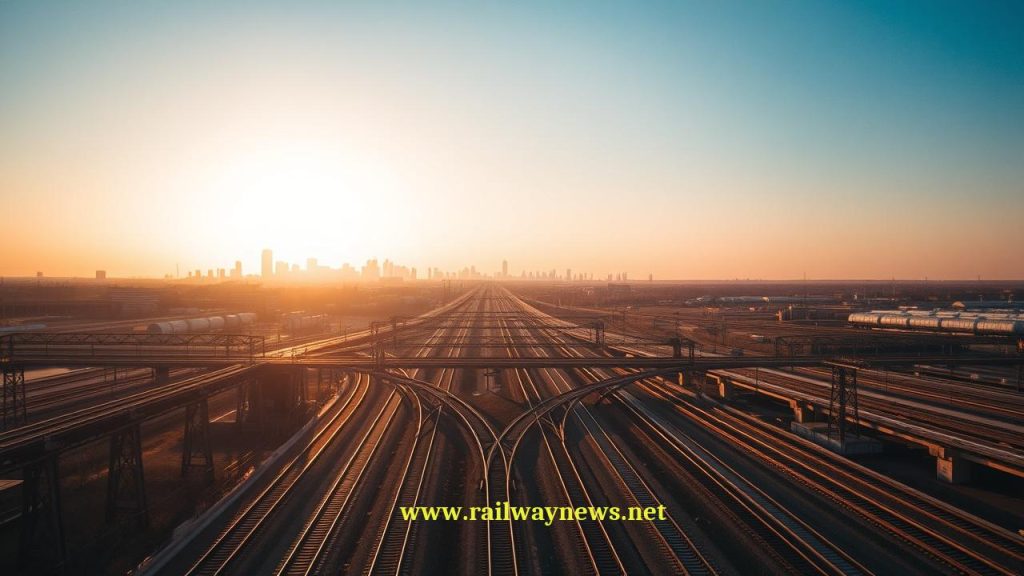
⚡ In Brief: The Chicago Transit Board approved an intergovernmental agreement with IDOT in July 2026 to transfer funds for track design work on a large segment of the CTA’s Forest Park Branch of the Blue Line; the exact dollar amount was not publicly disclosed.
CHICAGO – The Chicago Transit Board voted in mid‑July 2026 to authorize an intergovernmental agreement with the Illinois Department of Transportation that will transfer state funding to the CTA for design of future track replacement along a significant portion of the Forest Park Branch. No dollar figure for the transfer was included in the board’s public summary.
What Is the Full Scope of This Project?
The agreement funds engineering and design work for track infrastructure upgrades on the Forest Park Branch, the Blue Line segment that runs from the Forest Park terminal through Chicago’s West Side to the Loop. The CTA has not yet specified the exact track miles or station boundaries covered by the design contract. The work targets aging tracks, ties, and related systems on a corridor that serves thousands of weekday commuters and links the near‑west suburbs with downtown Chicago.
Key Project Data
| Parameter | Value |
|---|---|
| Project / Contract Name | Forest Park Branch Trackwork Design Funding Transfer |
| Total Value | Not disclosed |
| Parties Involved | Chicago Transit Board, Illinois Department of Transportation (IDOT), CTA |
| Timeline / Completion | Design phase only; construction timeline not disclosed |
| Country / Corridor | United States, Chicago – Forest Park Branch (Blue Line) |
How Does This Compare to Similar Projects?
The same board meeting also approved a separate $1 billion intergovernmental agreement with IDOT that centralizes transit planning, budgeting, and service standards under a new governance structure and supports the Red Line Extension with four new stations (Source: Chicago Tribune, 2026). That larger package signals the scale of capital ambition in the region. By contrast, the Forest Park Branch track‑design funding is an early‑phase commitment whose amount remains undisclosed; comparable design‑stage contracts on the CTA network have historically been smaller. For example, the CTA awarded a $75 million contract for preliminary engineering and design of the Red and Purple Modernization Phase One in 2019 (Source: CTA, 2019), while the full RPM Phase One construction cost reached $2.1 billion (Source: CTA, 2024). The Forest Park Branch initiative likely follows a similar model of phased funding, with the initial design package representing a fraction of eventual construction costs.
Editor’s Analysis
The Forest Park Branch design agreement emerges at a moment when Chicago’s transit governance is being remade. Cook County Board President Toni Preckwinkle, whose first two CTA board picks were approved shortly before this vote, now holds greater decision‑making power through the newly approved $1 billion planning framework. Pushing forward track renewal on the Blue Line’s western leg, which has long suffered from slow zones, aligns with a national trend of using state‑level capital funds to chip away at the $176 billion transit state‑of‑good‑repair backlog identified by the American Public Transportation Association (Source: APTA, 2023). Still, the absence of a disclosed dollar figure makes it impossible to gauge how much of the design work IDOT’s transfer will actually cover.
FAQ
Q: Which part of the Blue Line will the trackwork target?
A: The agreement covers “a significant portion” of the Forest Park Branch – the segment between the Forest Park terminal and the Loop. The CTA has not published the exact physical limits of the design contract.
Q: When will riders see construction or service disruptions?
A: No construction timeline has been announced. This funding covers only the design phase, so track‑replacement work and any associated service impacts are at least several years away.
Q: What is the source of the state funding being transferred?
A: IDOT is funneling the money through an intergovernmental agreement, likely drawing from Illinois’ Rebuild Illinois capital program, which allocated $33.2 billion for transportation statewide (Source: State of Illinois, 2019). The exact program line has not been specified.

Railway infrastructure, rolling stock and transport technologies specialist focused on global rail industry developments, high-speed rail systems, signaling technologies and freight transportation. Covering railway investments, public transport modernization, rail operations and international mobility projects across Europe, Asia and North America.
RELATED POSTS
September 6, 2026 5:19 am
Hitachi delivered Taiwan's first N700ST high-speed train from Japan in...

September 5, 2026 4:19 pm
CPK launched formal tender talks with four consortia to design...
September 6, 2026 1:17 am
Hitachi Toshiba Supreme Consortium confirmed the first of 12 N700ST...
September 6, 2026 6:17 am
Hungary ordered a national ban on most freight trains from...

September 6, 2026 4:12 am
Alstom delivered the first of 100 new G Class trams...

September 5, 2026 7:14 pm
HS2 Ltd signed renegotiated civils contracts with EKFB and Align...