
Chengdu Metro Opens 489 Stations as Free Cooling Areas
Chengdu Metro converted all 489 stations across its 700-km network into free public cooling areas during the summer 2026 heat wave in Sichuan Province, China.
⚡ In Brief: Chengdu Metro opened all 489 stations across its 700-km network as free public cooling areas, with major hubs receiving several hundred visitors daily during the summer 2026 heat wave.
CHENGDU, CHINA – Chengdu Metro converted all 489 stations on its network into free cooling and rest areas for residents and tourists in July 2026, as extreme temperatures swept across Sichuan Province. The operator confirmed that busy interchange hubs recorded several hundred daily visitors, while typical stations averaged approximately 100 users per day. The network spans over 700 km, ranking it the fourth-longest metro system globally.
What Does This Regulation Cover?
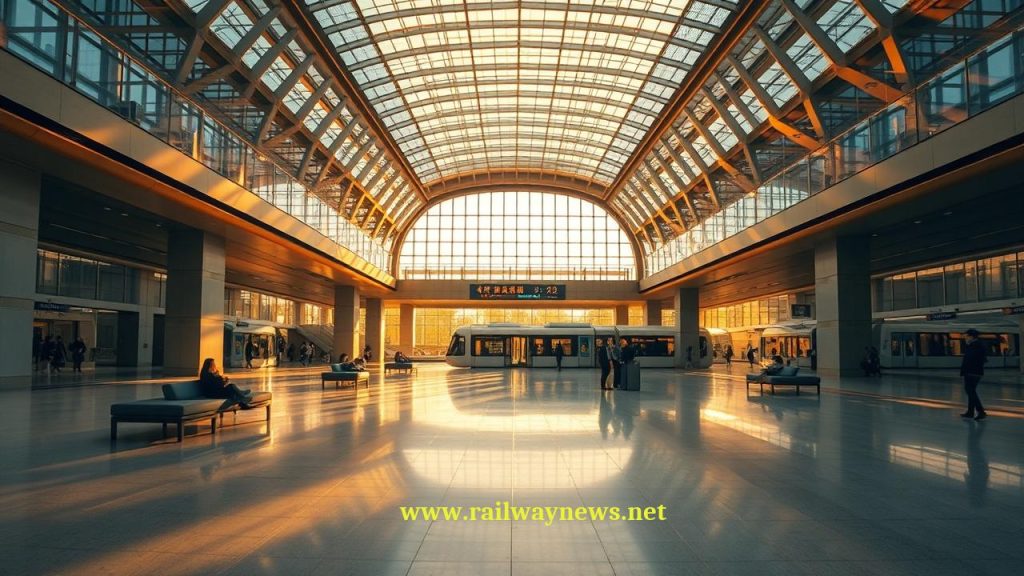
The Chengdu Metro cooling initiative designates all 489 station common areas as publicly accessible temperature-controlled spaces during heat wave conditions, with no fare gate passage required for access. Above-ground stations include dedicated air-conditioned waiting rooms with seating where platform layouts permit, addressing direct sun exposure. At major hubs—Incubation Park, Century City, Chengdu South, and Chengdu East—the operator deployed reading areas, temporary workspaces, and extended rest facilities for longer-staying visitors. Trains simultaneously offer three cooling-level zones (high, medium, low) so passengers can select railcars based on individual air-conditioning sensitivity.
Key Regulatory Data
| Parameter | Value |
|---|---|
| Regulation / Policy Name | Chengdu Metro Public Cooling & Rest Area Initiative |
| Total Value | Not disclosed — operational cost and incremental energy expenditure not published |
| Parties Involved | Chengdu Metro Operator (sole implementing entity) |
| Timeline / Completion | First launched 2022; expanded to all 489 stations by July 2026 |
| Country / Corridor | Chengdu, Sichuan Province, China — inland western province network |
How Does This Compare to Global Standards?
Chengdu’s approach converts existing transit infrastructure into distributed cooling refuges, contrasting with dedicated-facility models adopted elsewhere. London introduced an interactive map identifying cool public locations—libraries, community centres, and shaded parks—rather than retrofitting transport nodes (Source: CNN, 2026). Jodhpur, India, established standalone public cooling stations as purpose-built street-level kiosks (Source: BBC Future, 2026). Neither city matched Chengdu’s scale of 489 integrated sites. A Belfast hospital pioneered public air-conditioned waiting halls as early as 1903, establishing the precedent for healthcare-adjacent cooling, but Chengdu remains the first major metro operator to deploy the concept across an entire urban rail network. The operator stated the programme was designed around station layout, passenger flows, and congestion levels to avoid disrupting normal transit operations. Comparable data for total energy consumption across all 489 stations during cooling operations was not publicly available at time of publication.
Editor’s Analysis
Chengdu’s programme signals a structural shift in how large metro operators define station utility—from single-purpose transit access points to multipurpose climate-adaptation assets. The initiative aligns with China’s broader urban rail investment trajectory, where inland and western provinces are projected to capture 30–35% of market growth through infrastructure spending and industrial relocation policies (Source: IndexBox, 2025). The retrofitting of above-ground stations with air-conditioned waiting rooms also intersects with the country’s carbon-peak targets; the share of rail modernisation tenders incorporating energy-efficiency criteria is forecast to rise from 20–30% in 2024–2025 to 50–60% by 2030. The operator’s silence on incremental energy costs, however, leaves open the question of whether cooling 489 stations during peak heat is compatible with those efficiency goals.
FAQ
Q: How many people use Chengdu metro stations as cooling areas each day?
A: The operator reported that typical stations receive about 100 visitors per day in designated cooling spaces, while the busiest hubs—such as Chengdu East and Century City—can see several hundred daily users.
Q: Is this the first time Chengdu Metro has offered public cooling areas?
A: No. Chengdu Metro first introduced cooling spaces in 2022, and the programme was presented at that time as a first for urban rail transit in China. The 2026 expansion made all 489 stations part of the initiative.
Q: What additional facilities are available beyond basic seating and air conditioning?
A: Stations including Incubation Park, Century City, Chengdu South, and Chengdu East offer reading areas, temporary workspaces, and extended rest facilities. These hubs are designed for passengers and visitors who may need to remain at the station for longer periods.

Railway infrastructure, rolling stock and transport technologies specialist focused on global rail industry developments, high-speed rail systems, signaling technologies and freight transportation. Covering railway investments, public transport modernization, rail operations and international mobility projects across Europe, Asia and North America.
RELATED POSTS
September 6, 2026 5:19 am
Hitachi delivered Taiwan's first N700ST high-speed train from Japan in...

September 5, 2026 4:19 pm
CPK launched formal tender talks with four consortia to design...
September 5, 2026 7:14 pm
HS2 Ltd signed renegotiated civils contracts with EKFB and Align...
September 6, 2026 4:12 am
Alstom delivered the first of 100 new G Class trams...
September 6, 2026 1:17 am
Hitachi Toshiba Supreme Consortium confirmed the first of 12 N700ST...
September 6, 2026 6:17 am
Hungary ordered a national ban on most freight trains from...