
Germany Cuts DB Capacity to 60% on Congested Routes
Germany’s regulator proposed a draft 60–75% cap on long-distance train slots for a single operator on congested routes after Italo’s 2028 service entry plan.
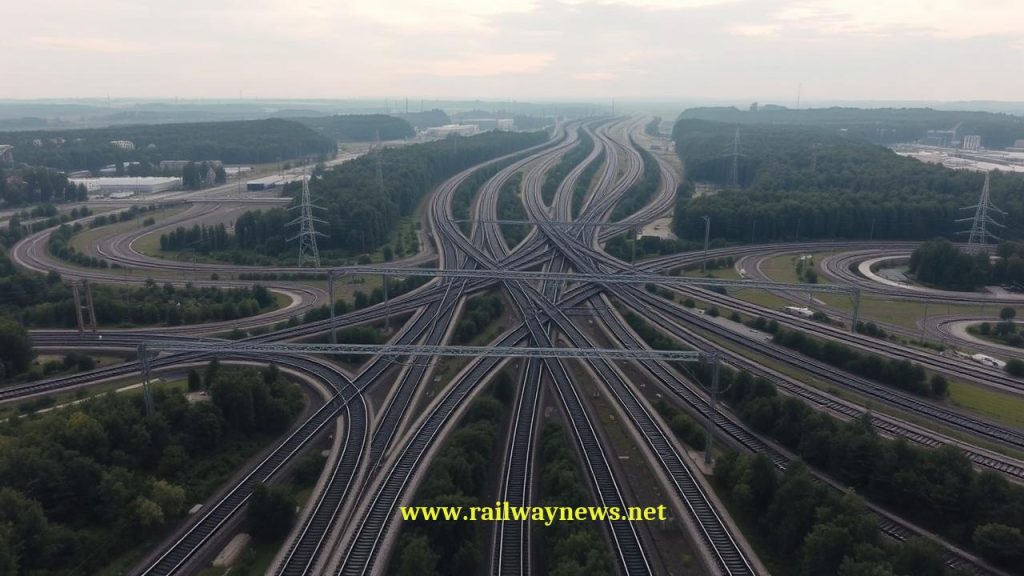
⚡ In Brief: Germany’s Bundesnetzagentur proposes capping long-distance rail capacity allocation at 60–75% for a single operator on congested routes, following a complaint from Italo, aiming to open a market in which Deutsche Bahn holds an estimated 95% share by 2028.
BERLIN – The Bundesnetzagentur, Germany’s network regulator, in July 2026 unveiled a draft decision that would limit the share of train paths that one operator can receive to between 60% and 75% on officially congested long-distance corridors. The proposal follows a formal complaint from Italian private high-speed operator Italo, which argues it cannot commit to a €3.6 billion investment and an order for around 30 Siemens high-speed trains without predictable infrastructure access for its planned Munich–Berlin and Munich–Dortmund services.
What Does This Regulation Cover?
The draft measure would restrict the proportion of long-distance passenger train slots DB InfraGO may allocate to a single railway undertaking on lines declared capacity‑constrained. It applies exclusively to scheduled long‑distance services, not to regional or freight traffic, and would become operative only when a dispute over path allocation arises between operators. Competitor access would be guaranteed at a minimum level of 60–75% of available capacity, with the precise threshold set depending on the specific corridor and peak‑hour patterns.
Key Regulatory Data
| Parameter | Value |
|---|---|
| Regulation / Policy Name | Draft capacity-allocation limit for congested long‑distance routes |
| Total Value | Not applicable |
| Parties Involved | Bundesnetzagentur (regulator), DB InfraGO, Italo (MSC‑controlled), Flix, other long‑distance operators |
| Timeline / Completion | Draft under consultation with rail advisory council; binding decision expected before Italo’s planned launch in 2028 |
| Country / Corridor | Germany – core corridors Munich–Berlin, Munich–Dortmund, and other congested long‑distance lines |
How Does This Compare to Global Standards?
No EU member state has introduced a permanent quantitative cap on long‑distance passenger capacity for an incumbent. In Italy, where Italo already operates, infrastructure manager RFI allocates slots under ordinary priority rules without a percentage ceiling; market liberalisation since 2012 has nevertheless allowed Italo to capture about 36% of high‑speed traffic (Source: Italian Transport Authority, 2024). Spain’s open‑access process awarded specific frequencies to new entrants without imposing a hard cap on incumbent RENFE. Germany’s 60–75% proposal therefore marks a more prescriptive intervention, mirroring the extreme concentration of Deutsche Bahn’s market share – reported at roughly 95%, among the highest in Europe alongside SNCF’s ~96% in France (Source: international press estimates).
Meanwhile, Germany’s rail freight sector illustrates the underlying network strain: intermodal volume grew 1.5% in 2025 to 14.06 million units, the second‑highest annual total on record (Source: Association of American Railroads, 2026). The draft capacity cap arrives as the federal cabinet approved on 4 July 2026 a draft 2027 budget with €203.6 billion in borrowing, of which a portion is earmarked for infrastructure investment that could eventually ease bottlenecks (Source: Reuters, 2026). DB InfraGO’s warning that focusing competition on major routes could worsen hub congestion thus highlights the tension between market opening and physical capacity, especially while the long‑term modernisation programme is still underway.
Note: The full list of routes that would trigger the cap was not disclosed in the draft; the regulator has not specified the exact methodology for setting the 60–75% range per corridor.
Editor’s Analysis
If adopted, this rule would be the most interventionist access policy in European high‑speed rail, potentially forcing Deutsche Bahn to cede peak‑hour slots on its most lucrative corridors years before the government’s €203.6 billion infrastructure package can deliver new capacity. Italo’s planned entry with 30 trains and €3.6 billion in investment raises the stakes: a successful launch would mirror the Italian market disruption that cut fares and doubled service frequency after 2012. For German passengers, the immediate risk is that a capacity fight could worsen punctuality on already overloaded hubs, but the longer‑term shift may accelerate a continent‑wide debate on whether open access alone suffices without regulatory caps when an incumbent holds over 90% of the market.
FAQ
Q: What is Deutsche Bahn’s current share of the German long‑distance rail market?
A: DB controls an estimated 95% of long‑distance passenger traffic, according to international press reports cited by Club Feroviar.
Q: When does Italo plan to start running trains in Germany?
A: Italo aims to launch services on the Munich–Berlin and Munich–Dortmund routes starting in 2028, provided it secures sufficient and predictable train paths.
Q: Could the proposed capacity cap worsen congestion on the German rail network?
A: DB InfraGO argues that concentrating competition on already busy hubs could exacerbate bottlenecks, while the regulator contends that mandated competitor access will spur better service without additional capacity strain.
Q: Does the draft decision affect regional or freight services?
A: No, the measure applies only to long‑distance passenger services on lines that are officially designated as congested. Regional and freight traffic are excluded from the cap.
Q: Is the capacity limit already binding?
A: Not yet. The draft must still be reviewed by the regulatory authority’s advisory council, and a binding order is expected before Italo’s planned market entry in 2028.

Railway infrastructure, rolling stock and transport technologies specialist focused on global rail industry developments, high-speed rail systems, signaling technologies and freight transportation. Covering railway investments, public transport modernization, rail operations and international mobility projects across Europe, Asia and North America.
RELATED POSTS

September 6, 2026 5:19 am
Hitachi delivered Taiwan's first N700ST high-speed train from Japan in...

September 5, 2026 4:19 pm
CPK launched formal tender talks with four consortia to design...

September 5, 2026 7:14 pm
HS2 Ltd signed renegotiated civils contracts with EKFB and Align...
September 6, 2026 6:17 am
Hungary ordered a national ban on most freight trains from...

September 6, 2026 4:12 am
Alstom delivered the first of 100 new G Class trams...
September 6, 2026 1:17 am
Hitachi Toshiba Supreme Consortium confirmed the first of 12 N700ST...