
Boise Secures $503,125 Grant for Passenger Rail Planning
Boise secured a $503,125 grant from USDOT to develop a financing strategy for future passenger rail service and to explore investment in historic Boise Depot.
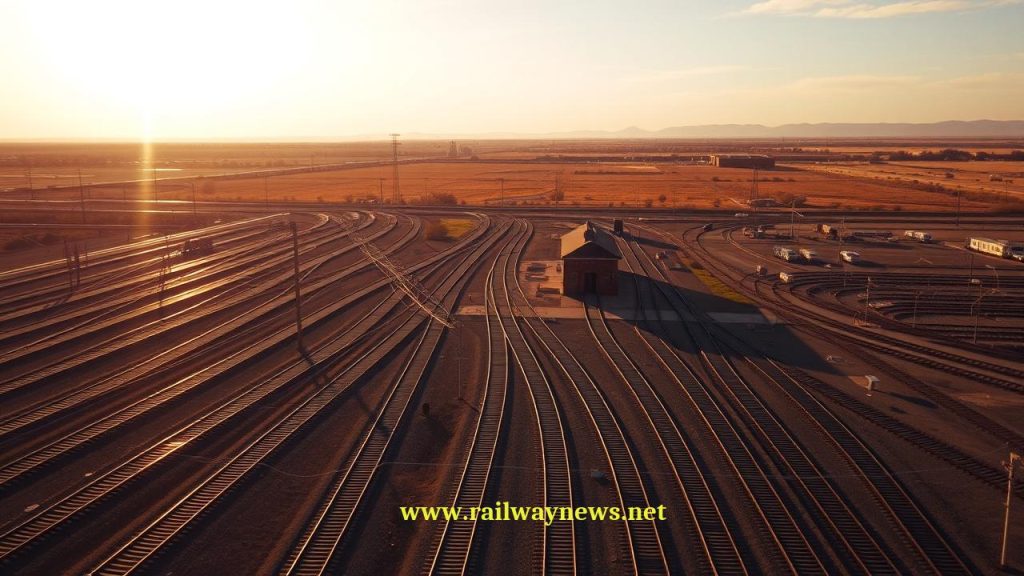
⚡ In Brief: Boise received $503,125 from the U.S. Department of Transportation’s Innovative Financing and Asset Concessions Program to build a financial strategy for future passenger-rail service and explore investment in the historic Boise Depot.
BOISE, Idaho – The City of Boise secured $503,125 in federal grant funding through the U.S. Department of Transportation’s Innovative Financing and Asset Concessions Program (IFACP), one of 45 recipients sharing a $47 million allocation for public-private partnership infrastructure development. City officials confirmed the funds will support creation of a comprehensive financing strategy for passenger-rail opportunities and examination of investment pathways for the historic Boise Depot. No specific rail corridors or service timelines were identified in the city’s announcement.
How Is the Funding Structured?
The IFACP grant to Boise totals $503,125 as a single-award planning grant, drawn from the broader $47 million program round issued to 45 recipients nationwide. The program is designed to help public entities develop financial tools, public-private partnership models, and asset concession strategies before committing to capital-intensive rail projects. Boise officials stated the work will focus on identifying financial instruments and investment strategies needed to support future intercity passenger-rail service across the Western United States.
Key Funding Data
| Parameter | Value |
|---|---|
| Fund / Programme Name | USDOT Innovative Financing and Asset Concessions Program (IFACP) |
| Total Value (Boise Award) | $503,125 |
| Total Programme Round | $47 million across 45 recipients |
| Parties Involved | City of Boise; U.S. Department of Transportation |
| Timeline / Completion | Not disclosed |
| Country / Corridor | United States / Intercity passenger rail, Western U.S. |
How Does This Compare to Similar Funding Programs?
Boise’s $503,125 planning grant sits at the early-stage feasibility end of the P3 rail funding spectrum. By comparison, the California High-Speed Rail Authority launched a formal investor solicitation process in 2025 that culminated in a co-development agreement by June 2026 with Momentum Alliance Partners, a consortium of high-speed rail firms, to deliver the Central Valley segment through a phased public-private model. That effort carries construction price tags in the billions — a $2.4 billion request for qualifications for the Merced-to-Madera segment alone, with construction expected to start in late 2027 and complete by 2030 — while the Boise grant funds preparatory financial architecture rather than shovel-ready construction. A separate joint venture was selected in June 2026 to build a 119-mile section between Bakersfield and Merced, targeting completion by 2033. (Source: Construction Dive, 2026; Newsweek, 2025)
Boise was concurrently ranked among the top U.S. cities for operational efficiency in a WalletHub study of best-run cities in both 2024 and 2025, a metric that evaluates financial management and service delivery capacity — factors that signal readiness for complex P3 structuring. The AARP Community Challenge grants also awarded $160,845 to 12 Idaho groups in the same period, though those funds target community-level projects unrelated to rail infrastructure. (Source: WalletHub, 2024–2025; Idaho Business Review, June 2026)
Editor’s Analysis
Boise’s acceptance of an IFACP planning grant signals that the city is positioning itself ahead of a potential federal push to restore intercity passenger rail corridors in the Mountain West — a region that has not seen the same rail investment intensity as California or the Northeast Corridor. The parallel between Boise’s early-stage P3 exploration and California’s shift from a statewide high-speed vision to a phased, revenue-generating Central Valley strategy suggests that smaller cities are now adopting the same financial toolkits as mega-projects, but at a scale appropriate to their corridors. If Boise’s financing strategy identifies viable concession or value-capture models, it could become a template for mid-sized Western cities that lack dedicated state-level rail authorities.
FAQ
Q: What exactly will the $503,125 grant fund?
A: The grant funds development of a comprehensive financing strategy for future passenger-rail service in Boise, including analysis of public-private partnership models, investment structures, and financial tools. It will also examine investment opportunities tied to the historic Boise Depot.
Q: When could passenger rail service actually begin in Boise?
A: No service start date has been announced. The grant covers financial planning only — not construction or operations. Discussions remain at the state, regional, and federal levels about restoring intercity passenger rail throughout the West.
Q: Is this grant connected to the AARP funding that Idaho groups also received?
A: No, these are separate programmes. The AARP Community Challenge grants awarded $160,845 to 12 Idaho groups for community-level projects, while the Boise rail-planning grant comes from the USDOT Innovative Financing and Asset Concessions Program.

Railway infrastructure, rolling stock and transport technologies specialist focused on global rail industry developments, high-speed rail systems, signaling technologies and freight transportation. Covering railway investments, public transport modernization, rail operations and international mobility projects across Europe, Asia and North America.
RELATED POSTS
September 6, 2026 5:19 am
Hitachi delivered Taiwan's first N700ST high-speed train from Japan in...

September 5, 2026 4:19 pm
CPK launched formal tender talks with four consortia to design...
September 5, 2026 7:14 pm
HS2 Ltd signed renegotiated civils contracts with EKFB and Align...
September 6, 2026 4:12 am
Alstom delivered the first of 100 new G Class trams...
September 6, 2026 1:17 am
Hitachi Toshiba Supreme Consortium confirmed the first of 12 N700ST...
September 6, 2026 6:17 am
Hungary ordered a national ban on most freight trains from...