
Avanti West Coast Reports 5 Million Miles for Class 805
Avanti West Coast reported that its Class 805 Evero fleet surpassed 5 million miles since June 2024, cutting CO₂ emissions by nearly two-thirds per vehicle-km.
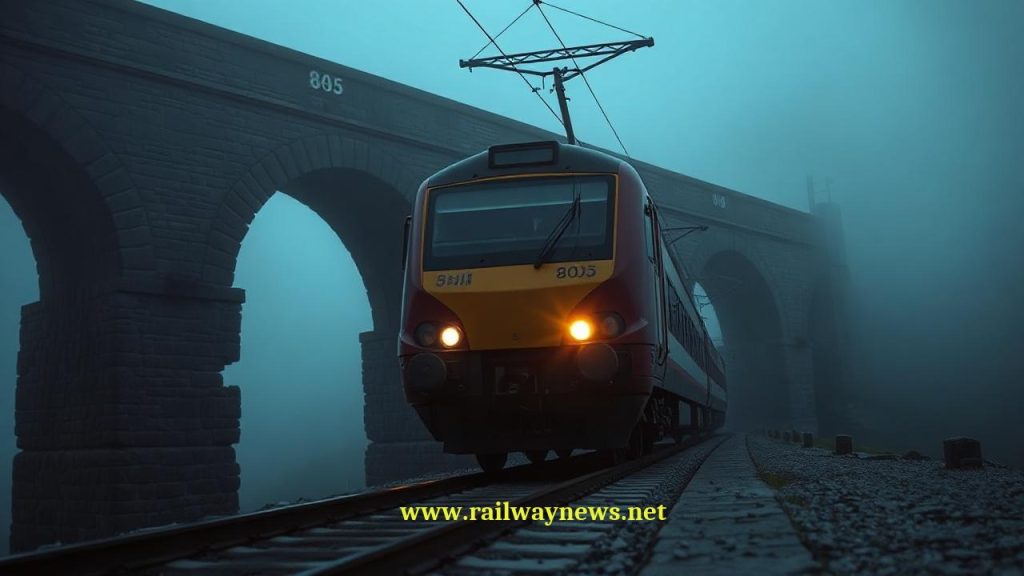
⚡ In Brief: Avanti West Coast’s Class 805 Evero bi-mode fleet, built by Hitachi Rail, has accumulated over 5 million miles (8 million km) since entering service in June 2024, cutting carbon emissions by two-thirds per vehicle-km on the London–North Wales corridor.
LONDON, UK – Avanti West Coast’s 13-strong fleet of Class 805 Evero bi-mode trains has surpassed the 5 million-mile mark (approximately 8 million kilometres) as of mid-2026, two years after their debut on the West Coast Main Line. The Hitachi Rail-built trains replaced diesel-only Class 221 units on services between London Euston and Holyhead, reducing carbon emissions by nearly two-thirds per vehicle-kilometre in the year ending April 2026 compared with the previous fleet.
What Are the Technical Specifications?
The Class 805 Evero is a 5-car bi-mode multiple unit that draws electric power via 25kV AC overhead lines and switches to onboard diesel engines beyond the electrified network at Crewe. Each train provides 16% more seats than the Class 221 it replaced—the exact seat count was not disclosed by the operator—along with additional legroom, larger luggage areas, and tactile/Braille seat markings. The fleet operates at speeds up to 125 mph (200 km/h) and is equipped for both intercity and diversionary routes, as demonstrated by 59,620 miles (95,950 km) covered on the non-electrified Settle–Carlisle line during engineering blockades in early 2026.
Key Technical Data
| Parameter | Value |
|---|---|
| Technology / System Name | Class 805 Evero |
| Fleet Size | 13 bi-mode units (plus 10 all-electric Class 807) |
| Manufacturer | Hitachi Rail |
| Operator | Avanti West Coast |
| Entry into Service | June 2024 |
| Cumulative Mileage | 5 million miles (8 million km) as of mid-2026 |
| Electrification Boundary | Crewe (approx. two-thirds of London–Holyhead journey) |
| Emissions Performance | ~66% reduction in CO₂ per vehicle-km vs. Class 221 (year to April 2026) |
| Seating Increase | +16% vs. predecessor; exact seat figure not disclosed |
Where Does This Technology Stand in the Market?
The Class 805 is part of Hitachi’s A-train family, which has become the dominant intercity bi-mode platform in the UK. Hitachi Rail reports that its wider UK fleet of Class 800, 801, and 802 trains had accumulated over 200 million miles by 2025 (Source: Hitachi Rail, 2025). The Class 805 differs from earlier members by using a more powerful diesel power pack optimised for the steep gradients on the North Wales coast line west of Crewe. Competing bi-mode systems include Stadler’s FLIRT UK (Class 755) operated by Greater Anglia, which uses a separate power pack module and is designed for regional rather than intercity speeds (max. 100 mph). In the intercity market, the Hitachi AT300 platform—covering Classes 800, 802, 805, 807, and 810—has secured orders from five UK operators, while CAF’s Civity bi-mode and Talgo’s dual-locomotive-hauled offerings have seen limited UK adoption. The broader global shift toward partial electrification and battery hybrids is reflected in Germany’s record battery production in 2025 and the UK’s support for rail decarbonisation in Indonesia via UK PACT (Source: Reuters, 2026; UK PACT, 2025). The Evero fleet’s contract value, originally announced in 2019, was approximately £350 million for 23 trains, financed by Rock Rail, Aberdeen Standard Investments, and others (Source: Department for Transport, 2019).
Editor’s Analysis
The 5 million-mile milestone demonstrates that bi-mode traction can deliver rapid, reliable intercity service on corridors where full electrification remains years away. Avanti’s Class 805 is posting CO₂ figures that align with its 2031 net-zero target, but a true zero-emission solution for the 40-mile diesel stretch between Crewe and Holyhead will require either increased train-mounted energy storage or overhead line extension. The successful diversion via the Settle–Carlisle route—using the fleet’s diesel capability to maintain connectivity—underscores the operational resilience bi-mode technology offers during infrastructure upgrades. As global rail investment increasingly favours dual-mode and battery-electric architectures, the Evero programme provides a scalable template for decarbonising mixed-traffic corridors without the full upfront cost of electrification.
FAQ
Q: How many Class 805 trains does Avanti West Coast operate?
A: Avanti West Coast operates 13 Class 805 bi-mode trains. These form part of the 23-strong Evero fleet, which also includes 10 all-electric Class 807 units.
Q: What is the environmental benefit of the Class 805 over the trains they replaced?
A: In the year to April 2026, the Class 805 produced nearly two-thirds fewer carbon emissions per vehicle-kilometre compared with the diesel-only Class 221 Voyagers that previously served the route.
Q: On which routes can the Class 805 be found?
A: The primary diagram is London Euston to Holyhead via Chester and the North Wales coast, with some services to the West Midlands. The fleet has also operated diversionary services on the Settle–Carlisle line during engineering works.

Railway infrastructure, rolling stock and transport technologies specialist focused on global rail industry developments, high-speed rail systems, signaling technologies and freight transportation. Covering railway investments, public transport modernization, rail operations and international mobility projects across Europe, Asia and North America.
RELATED POSTS

October 1, 2026 7:09 am
United States regulators confirmed a September 30 deadline for the...

October 1, 2026 12:13 am
Illinois approved $1.5 billion annually for the Northern Illinois Transit...

October 1, 2026 6:10 am
Amtrak approved a System Expansion Committee on July 30 to...
October 1, 2026 4:10 am
DART launched two public ridership dashboards in March 2026 to...

October 1, 2026 3:12 am
Greenbrier confirmed Brian Comstock as new president and CEO effective...
October 1, 2026 5:14 am
Siemens confirmed delivery of the first new S200 train to...