
Deutsche Bahn Confirms Stuttgart 21 Delay to End-2031
Deutsche Bahn confirmed Stuttgart 21’s full commissioning is delayed to end-2031 after over 1,000 km of cables were incorrectly installed, forcing a €45M dual-signaling retrofit.
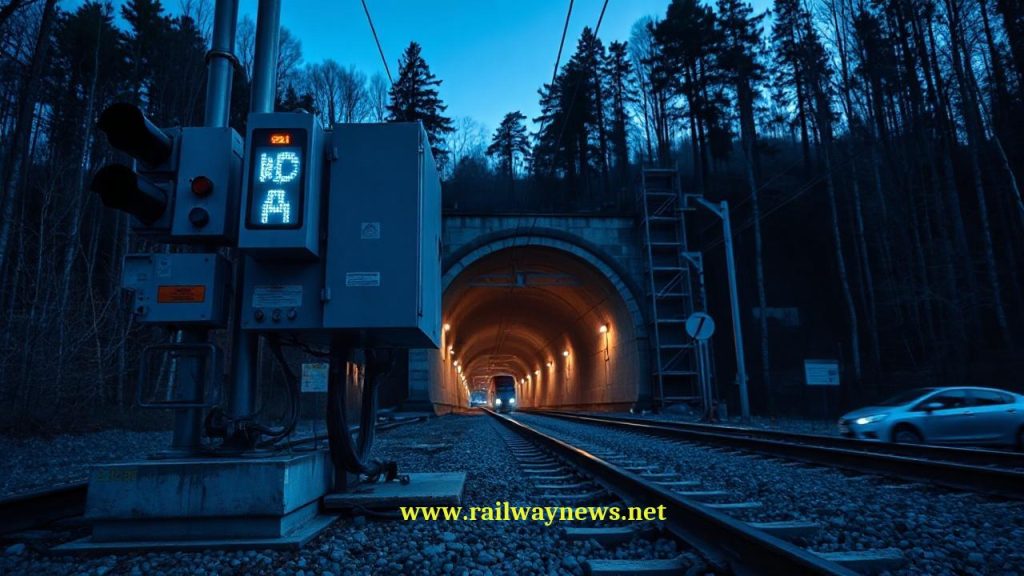
⚡ In Brief: Deutsche Bahn’s Stuttgart 21 digital rail hub commissioning is delayed to end-2031 after over 1,000 km of cables and piping were incorrectly installed, forcing a dual-system signaling retrofit.
STUTTGART, GERMANY – Deutsche Bahn (DB) has pushed full commissioning of the Stuttgart 21 underground station and digital rail hub to no earlier than the end of 2031, a five-year slip from the most recent target of 2026. An SWR investigation found more than 1,000 km of cables and conduits were installed before final technical planning for the European Train Control System (ETCS) was complete, requiring large-scale replacement. Total project costs have now exceeded EUR 11 billion, more than double the original EUR 4.5 billion estimate approved in 2001.
What Is the Full Scope of This Project?
Stuttgart 21 reorients the city’s terminus station into an underground through-station with 8 tracks, adding roughly 57 km of new tunnel and track connections to the high-speed network, while serving as Germany’s first fully digitized major rail hub under ETCS Level 2 without conventional line-side signals—a plan now partially reversed. The scope also involves releasing 109 hectares of inner-city railway land for urban development, for which the City of Stuttgart paid approximately EUR 460 million in 2001. Delivery of the digital signaling system alone now requires retrofitting dual-system capability, installing an estimated 450 additional conventional signals at a cost of about EUR 45 million, according to an expert cited by SWR. Defects were also identified in the emergency power supply and in platform and flooring construction.
Key Project Data
| Parameter | Value |
|---|---|
| Project / Contract Name | Stuttgart 21 – Neuer Hauptbahnhof (New Central Station) and digital hub |
| Total Value | Original budget EUR 4.5 billion; costs now exceed EUR 11 billion (EUR 726 million in European grants) |
| Parties Involved | Deutsche Bahn, City of Stuttgart, State of Baden-Württemberg, EU co-financing |
| Timeline / Completion | Full commissioning not before end-2031; partial opening previously targeted 2026, now impossible |
| Country / Corridor | Germany – Stuttgart urban node, Rhine-Alpine and TEN-T core corridors |
How Does This Compare to Similar Projects?
Stuttgart 21’s 12-year delay from its initial 2019 opening eclipses the timeline overruns of Germany’s other prominent infrastructure failures: Berlin Brandenburg Airport (BER) opened 9 years late in 2020. Cost escalation to more than 2.4 times the original budget is comparable to the cumulative inflation-adjusted cost growth on the Hamburg Elbphilharmonie, though Stuttgart 21’s absolute overrun of roughly EUR 6.5 billion makes it one of the costliest single-station rail projects globally. By contrast, the Crossrail project in London, in a far denser subsurface urban environment, delivered a 42 km tunnel route through the city center at a total cost of approximately £18.9 billion (EUR 22 billion) with central section delays of about 3.5 years. An independent benchmarking study by the European Court of Auditors found that EU-financed large transport infrastructure projects have an average cost overrun of 34%, placing Stuttgart 21 almost 3 times above that norm. (Source: European Court of Auditors, 2023 special report on large transport projects)
Editor’s Analysis
The dual-signaling retrofit exposes a procurement sequencing failure that will increasingly plague brownfield digitalization across Europe: physical installation outpacing final digital architecture design. This delays the release of 109 hectares of urban land and triggers mounting contractual penalties owed to the City of Stuttgart, which already has collected millions in penalty interest from DB. For the broader European ETCS rollout, Stuttgart 21 demonstrates that mixed-fleet transition planning—long acknowledged as the hardest element of ERTMS deployment—becomes exponentially more expensive when redesign occurs after cable laying begins. Germany’s signaling market is projected to be a major global growth driver through 2025, driven by government infrastructure spending on both rail and smart-city initiatives, yet Stuttgart 21 suggests a significant portion of that investment may be consumed by corrective work rather than net-new capability. (Source: IndexBox, Germany railway signalling market outlook, 2025)
FAQ
Q: Why was the full opening of Stuttgart 21 pushed to the end of 2031?
A: Over 1,000 km of cables and conduits were installed before digital signaling plans were finalized, later requiring a dual-system retrofit after DB realized freight trains without ETCS would continue operating on outer sections. This forced cable replacement and addition of 450 conventional signals, making the 2026 partial opening unviable.
Q: How much has the Stuttgart 21 budget exceeded its original estimate?
A: Costs have surpassed EUR 11 billion, more than double the EUR 4.5 billion approved in 2001. DB has not commented on the exact additional cost of the dual-system retrofit, and new figures are yet to be formally released.
Q: Who is affected by the delay beyond passengers?
A: The City of Stuttgart cannot begin development of the Rosenstein district and other new neighborhoods planned on the 109 hectares purchased for EUR 460 million; each delay also increases penalty interest payments owed by DB to the city.

Railway infrastructure, rolling stock and transport technologies specialist focused on global rail industry developments, high-speed rail systems, signaling technologies and freight transportation. Covering railway investments, public transport modernization, rail operations and international mobility projects across Europe, Asia and North America.
RELATED POSTS

October 8, 2026 1:15 pm
Alstom secured a €1bn contract to build 13 automated trains,...

October 1, 2026 7:09 am
United States regulators confirmed a September 30 deadline for the...

October 4, 2026 5:14 pm
Alstom secured a CA$4.7 billion order from VIA Rail Canada...

October 1, 2026 12:13 am
Illinois approved $1.5 billion annually for the Northern Illinois Transit...

October 5, 2026 6:12 pm
AECOM and Jacobs secured a contract in September 2026 to...

October 4, 2026 11:08 pm
Sound Transit confirmed the September 30 opening of Seattle Pinehurst...