
Platform Screen Doors (PSD): Types, How They Work & Benefits
Platform screen doors explained: full-height vs half-height PSD, how they work with CBTC and ATO, safety benefits, energy savings and which metro systems use them.
Quick Answer — Platform Screen Doors
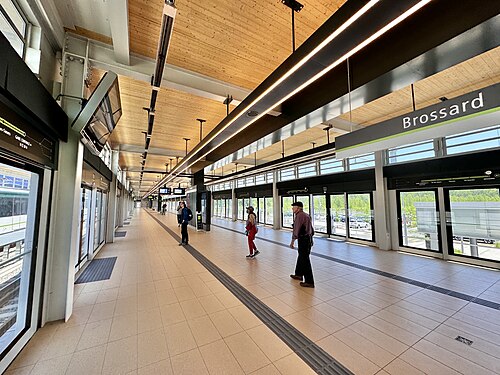
Platform Screen Doors (PSDs) are barriers installed at the edge of railway or metro station platforms that open and close in synchronisation with the doors of a stopped train. They physically separate the platform environment from the track, preventing passengers from falling or stepping onto the live rail, blocking objects from the track area, and — in underground stations — enabling platform air conditioning by creating a sealed environment. PSDs come in two main types: full-height (floor-to-ceiling, completely sealed) and half-height (waist-to-shoulder height, not sealed). They are a prerequisite for driverless (GoA4) metro operations and are increasingly being retrofitted onto existing systems worldwide to improve safety and capacity.
What is a Platform Screen Door?
A platform screen door — also called a platform edge door (PED) in its half-height form — is a sliding door panel installed along the platform edge of a railway station, aligned with the doors of the train that serves that platform. When a train arrives and its doors align with the PSD panels, both sets of doors open together; when the train is ready to depart, both sets close together before the train moves off.
The concept was first implemented at scale in 1987 on the Singapore MRT, which opened as one of the world’s first fully automated heavy metro systems with full-height PSDs from day one. Since then, PSDs have become standard on new metro systems worldwide and are progressively being retrofitted onto older networks.
PSDs are distinct from simple platform edge barriers or yellow safety lines painted on platforms — those are passive safety measures, while PSDs are active systems that physically block track access and are integrated with the train control system.
Types of Platform Screen Doors
| Type | Description | Key Benefit | Typical Use |
|---|---|---|---|
| Full-Height PSD | Floor-to-ceiling glass or steel panels, completely sealing platform from track. Fixed frame with sliding door panels aligned to train doors | Complete environment separation — enables platform HVAC, maximum safety, full noise isolation | Underground metros, driverless systems (GoA3/4), hot or cold climates |
| Half-Height PSD (PED) | Waist-to-shoulder height barriers — typically 1.2–1.5 m tall. Does not seal the environment but creates a physical barrier to the track | Lower cost, easier retrofit, still prevents falls and intrusions — suitable where full sealing is not required | Elevated or open-air stations, retrofits on existing lines, light rail |
| Automatic Platform Gates (APG) | Similar to half-height PED but with swing or retractable gate sections rather than sliding panels. More flexible configuration | Adaptable to varying door positions across different train types operating on the same line | Mixed-fleet lines where train door positions vary |
| Movable Platform Barriers (MPB) | Full-height but with individually addressable door modules that can be repositioned to match different train door configurations | Future-proofs the station for different rolling stock generations without structural changes | New stations designed to accept multiple train types over their lifetime |
How Platform Screen Doors Work: The Technology
Door Alignment and Precise Stopping
The most fundamental technical requirement for PSDs is precise train stopping. The train’s doors must align exactly with the PSD panels — typically within ±50 cm for half-height systems and ±30 cm for full-height systems. On older signalling systems, this precision was difficult to guarantee consistently, which is one reason PSDs were rarely used before modern train control systems became widespread.
Modern CBTC (Communications-Based Train Control) systems provide continuous position data accurate to within a few centimetres, making precise stopping routine. On CBTC-equipped lines, the automatic stopping system brings the train to rest within the required tolerance at every station on every stop. This relationship between CBTC and PSDs is why new metro systems almost universally adopt both technologies together.
Door Interlock System
PSDs are integrated into the train’s door control system through an interlock circuit. The sequence at every station stop is:
- Train arrives and stops within the required tolerance window
- Train door control system sends an “at station, doors release” signal to the PSD controller
- PSD controller confirms train position and unlocks PSD panels
- Train doors and PSD panels open simultaneously (or PSDs open fractionally first)
- Passengers board and alight during the dwell period
- Train door close command issued — PSD panels and train doors close together
- PSD controller confirms all panels closed and locked — sends “platform clear” signal to train
- Train receives departure clearance from the signalling system — departs
If any PSD panel fails to close and lock, the train cannot depart — the interlock prevents departure with an open gap. This fail-safe design means a PSD fault causes a delay rather than a safety incident.
Obstacle Detection
Modern PSD systems incorporate obstacle detection sensors — typically infrared light curtains or pressure-sensitive door edges — that detect if a person or object is caught in the closing door gap. If an obstacle is detected, the PSD reopens, the train is held, and the obstacle must be cleared before the sequence can restart. On automated lines, an alarm is sent to the control centre and, on GoA4 systems, a CCTV check may be automatically triggered.
Platform Screen Doors and Automation: The GoA Relationship
PSDs are directly linked to the Grade of Automation (GoA) of a metro system. The four GoA levels, defined by IEC 62290 and widely referenced in metro procurement, are:
| GoA Level | Operation | PSDs Required? | Examples |
|---|---|---|---|
| GoA 1 | Manual — driver controls traction, braking and doors | Optional | Most conventional metros |
| GoA 2 | Semi-automatic — ATO drives the train, driver supervises and manages doors and emergencies | Recommended | London Jubilee Line, Paris Metro Line 1 |
| GoA 3 | Driverless operation — no driver, but staff on train for passenger management and emergencies | Required | Copenhagen Metro, Dubai Metro |
| GoA 4 | Fully unattended — no staff on train; remotely monitored from control centre | Required | Singapore MRT (driverless lines), Paris Line 14 |
At GoA 3 and GoA 4, PSDs are essential because there is no driver at the front of the train to observe the platform before departure. The PSD interlock system replaces the driver’s visual check — the train receives its departure clearance only when the PSDs confirm all doors are closed and the platform is clear.
Benefits of Platform Screen Doors
| Benefit | Detail |
|---|---|
| Passenger safety | Eliminates falls onto the track — accidental, intentional, or caused by crowding. Singapore MRT reported a significant reduction in track intrusion incidents after PSD installation. Networks with PSDs report near-zero platform-edge fatalities. |
| Energy efficiency (full-height) | In underground stations, full-height PSDs seal the platform from the tunnel, allowing the platform HVAC system to operate without conditioning the entire tunnel volume. Studies on the Hong Kong MTR found energy savings of 15–25% on platform cooling costs after PSD installation. |
| Service reliability | Objects dropped or thrown onto the track — a frequent cause of delays — are blocked by full-height PSDs. Luggage, rubbish, and personal items cannot reach the live rail area. This reduces track intrusion incidents and the delays caused by stopping trains and clearing the track. |
| Noise reduction | Full-height PSDs significantly reduce train noise on the platform — particularly relevant for stations with high ambient noise or where platform noise has been identified as a passenger comfort issue. The sealed environment absorbs traction, wheel-rail, and braking noise from the tunnel. |
| Enables automation | As described above, PSDs are a prerequisite for GoA 3/4 operations. They eliminate the need for a driver’s visual platform check before departure, enabling fully driverless operations that can increase service frequency while reducing operating costs. |
| Piston effect management | Trains in tunnels create a piston effect — pushing a column of air ahead and creating uncomfortable pressure changes and draughts on platforms. Full-height PSDs buffer this effect, significantly improving platform comfort particularly at busy interchange stations. |
Major Metro Systems with Platform Screen Doors
| System | City | PSD Type | Coverage | Note |
|---|---|---|---|---|
| Singapore MRT | Singapore | Full-height | All stations | World pioneer — PSDs from 1987 opening |
| Hong Kong MTR | Hong Kong | Full-height | All underground stations | Major energy saving benchmark for tunnel stations |
| Paris Metro Line 14 | Paris | Full-height | All stations (GoA4) | First fully automated line in a major European metro (1998) |
| Dubai Metro | Dubai | Full-height | All stations (GoA4) | Critical for platform cooling in desert climate |
| Copenhagen Metro | Copenhagen | Full-height | All stations (GoA3/4) | Driverless from opening in 2002 |
| London Underground | London | Full-height (Jubilee, some DLR) | Jubilee line, Elizabeth line extensions, DLR | Retrofit ongoing — Piccadilly line upgrade includes PSDs |
| Tokyo Metro | Tokyo | Full-height & half-height | Majority of stations — ongoing retrofit | Largest retrofit programme in the world by station count |
| Incheon Airport Maglev | Seoul | Full-height | All stations | Integrated with maglev driverless operation |
Challenges of Retrofitting PSDs on Existing Lines
While PSDs are standard on new metro systems, retrofitting them onto older lines presents significant engineering and operational challenges:
- Mixed rolling stock: Older lines often operate multiple train generations with different door configurations — different numbers of doors, different door widths, and different door positions. A PSD panel designed for one train may not align with another. Solutions include movable platform barriers (MPBs) or — more commonly — standardising the fleet before installing PSDs.
- Platform structural capacity: Full-height PSD frames are substantial steel structures. Many older station platforms were not designed to carry this additional load and may require structural reinforcement before PSDs can be installed.
- Stopping accuracy: Legacy signalling systems often cannot guarantee the precise stopping accuracy required for PSD alignment. Upgrading to CBTC (typically done simultaneously with PSD installation) adds significant cost and complexity.
- Operational continuity: Retrofitting PSDs on a busy operational metro requires working overnight in narrow maintenance windows. Tokyo’s retrofit programme, the world’s largest, has been running for over a decade and works through stations progressively during nightly closures.
- Emergency evacuation: PSDs must have provisions for emergency passenger evacuation from the train onto the track — typically via dedicated emergency access gates or breakaway panels in each PSD bay. Emergency procedures must be updated for every station where PSDs are installed.
Frequently Asked Questions (FAQ)

Railway infrastructure, rolling stock and transport technologies specialist focused on global rail industry developments, high-speed rail systems, signaling technologies and freight transportation. Covering railway investments, public transport modernization, rail operations and international mobility projects across Europe, Asia and North America.
RELATED POSTS
August 4, 2026 1:11 pm
Hitachi Rail Canada secured a $407.7M contract to install CBTC...
August 1, 2026 7:56 am
BMZ delivered two new TEM18DM diesel shunting locos to RZD...
August 1, 2026 7:14 pm
€205 billion funding shortfall threatens the TEN-T rail network's completion...
August 4, 2026 11:12 am
MBTA confirmed a $150.8 million overhaul of the 85-year-old Green...
August 1, 2026 7:11 pm
An Ipsos survey across 29 countries found that 33% of...
August 1, 2026 8:06 pm
European Commission approved a regulation on 9 July 2026 requiring...