
HŽ Infrastruktura Signs €16M Hum-Lug Line Modernization
HŽ Infrastruktura signed a €16 million contract to modernize the 11 km Hum-Lug–Gornja Stubica regional line, work to start autumn 2026 and a 2028 finish.
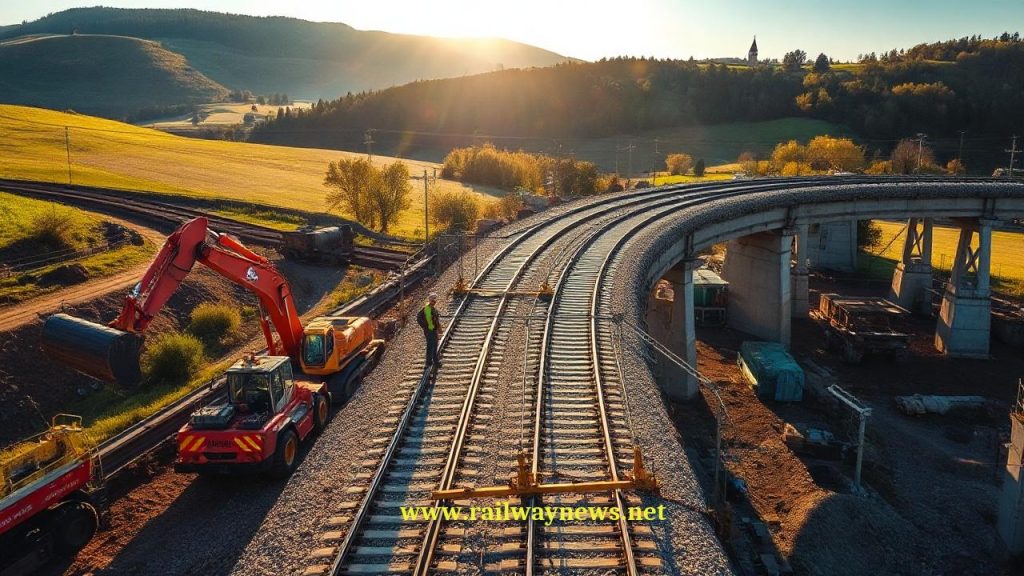
⚡ In Brief: Croatia’s HŽ Infrastruktura signed a €16 million contract with Pružne građevine to modernize the 11-kilometer Hum-Lug–Gornja Stubica regional line, with work beginning this autumn and lasting two years.
ZAGREB, Croatia – HŽ Infrastruktura, the national railway infrastructure manager, awarded a €16 million contract to local contractor Pružne građevine on 5 June 2026 for full modernization of the 11 km Hum-Lug–Gornja Stubica line in Krapina-Zagorje. The signing, attended by Transport Minister Oleg Butković, sets construction to start in autumn 2026 with completion slated for 2028.
What Is the Full Scope of This Project?
The project covers track superstructure renewal, drainage systems, station upgrades, and level crossing improvements on the entire 11-kilometer route, plus rehabilitation of four bridges and three footbridges within a €3 million dedicated envelope. Maximum operating speed will rise to 80 km/h, cutting travel times. The remaining €13 million finances the core railway upgrade; the total investment forms part of a €6 billion national railway investment programme, of which over €1.5 billion in projects are already active.
Key Project Data
| Parameter | Value |
|---|---|
| Project / Contract Name | Hum-Lug–Gornja Stubica Line Modernization |
| Total Value | €16 million |
| Parties Involved | HŽ Infrastruktura (client), Pružne građevine (contractor) |
| Timeline / Completion | Start: Autumn 2026; Duration: 2 years (2028 completion) |
| Country / Corridor | Croatia, Krapina-Zagorje regional line |
How Does This Compare to Similar Projects?
This €16 million upgrade of a regional feeder line contrasts with the €200 million allocated for the Zabok–Budinščina line elsewhere in the same Zagorje region—a project the HŽ CEO cited during the signing. Across the broader national programme, most high-value corridors are advancing through EU grants and European Investment Bank support; meanwhile, Croatia’s high-speed rail authority is separately courting private capital via public-private partnerships, including advanced talks with Momentum Alliance Partners—a consortium featuring Jacobs, Sener, and Steer—to keep escalating costs on fast inter-city links under control. (Source: Euronews, 2026; Construction News, 2026) This small-scale, publicly funded regional line highlights the state’s dual-track approach: EU-backed conventional upgrades for domestic connectivity alongside PPP-driven high-speed ambitions. The exact split between EU funds and EIB loans for the Hum-Lug–Gornja Stubica contract was not disclosed by the ministry.
Editor’s Analysis
Croatia’s simultaneous pursuit of grassroots regional modernization and solicitation of international PPP consortia for inter-city high-speed rail signals a calculated risk management strategy. By using EU structural funds for shorter, socially vital lines like this one—heavily used by students commuting to Zabok and Zagreb—the government preserves fiscal headroom while testing private appetite on premium corridors. The €1.5 billion of active projects out of a €6 billion master plan indicates the programme is entering its execution peak; contractors with proven delivery on smaller lots such as Pružne građevine may gain advantage in future tenders as the pipeline deepens. Nevertheless, the absence of disclosed private co-financing on this line underscores persistent reliance on Brussels-funded grants for non-commercially viable routes, a dynamic that will likely persist as EU cohesion funding frameworks evolve post-2027. (Source: HŽ Infrastruktura, 2026)
FAQ
Q: What will change for passengers after the modernization of the Hum-Lug–Gornja Stubica line?
A: Journey times will shorten because trains will be permitted to run at up to 80 km/h instead of the current lower limit, and station upgrades will improve waiting conditions and safety. The line primarily carries students from Gornja Stubica, Donja Stubica, and Stubičke Toplice to schools in Zabok and Zagreb.
Q: How is the €16 million contract funded—will EU money cover the entire cost?
A: The Transport Minister stated that the broad national programme relies heavily on European funds and European Investment Bank support, but HŽ Infrastruktura did not publish the grant/loan ratio for this specific contract. The €13 million for track and station works and the separate €3 million for bridges come from the overall envelope; a detailed funding source breakdown is not available.
Q: Are there other railway projects planned in the same Krapina-Zagorje region?
A: Yes, the HŽ CEO confirmed that modernization of the Zabok–Budinščina line will follow with an investment of €200 million, and authorities are also preparing upgrades on the “Kumrovec line” and the Zabok–Krapina–Đurmanec section.

Adem Kaya is a railway news editor focused on global rail operations, infrastructure developments and freight transportation trends across international railway markets.His coverage includes railway investments, rolling stock projects, metro and urban transit systems, freight rail operations and next-generation transportation infrastructure. With a strong interest in operational efficiency and railway modernization, he follows industry developments from Europe, Asia-Pacific and North America.Through RailwayNews, Adem Kaya contributes industry-focused reporting and accessible analysis designed for railway professionals, transport stakeholders and rail enthusiasts worldwide.
RELATED POSTS

October 8, 2026 1:15 pm
Alstom secured a €1bn contract to build 13 automated trains,...

October 1, 2026 7:09 am
United States regulators confirmed a September 30 deadline for the...

October 8, 2026 12:18 pm
Siemens Mobility signed an agreement with VinSpeed to supply 350...

October 4, 2026 5:14 pm
Alstom secured a CA$4.7 billion order from VIA Rail Canada...

October 5, 2026 6:12 pm
AECOM and Jacobs secured a contract in September 2026 to...
October 6, 2026 12:16 am
FTA awarded $233 million in grants to eight US rail...