
DB InfraGO Completes 165 km Hamburg-Berlin Upgrade
DB InfraGO completed a 165 km upgrade of the Hamburg-Berlin line, restoring services on 14 June 2025 after 10 months, with capacity for 30,000 daily passengers.
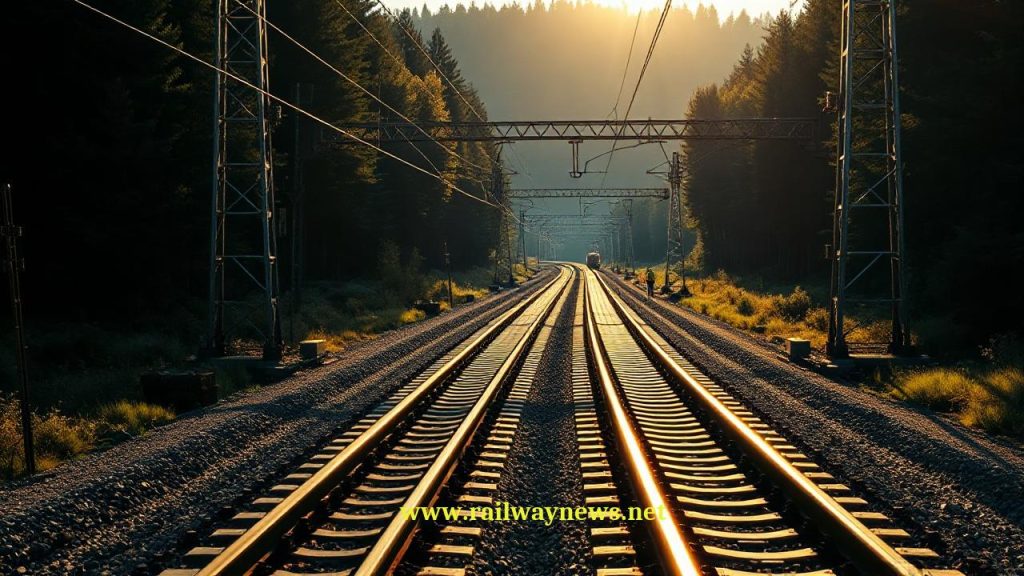
⚡ In Brief: DB InfraGO will fully reopen the Hamburg–Berlin rail corridor on June 14, 2025, after a 10‑month modernization that renewed 165 km of track and 249 switches, restoring capacity for 30,000 daily long‑distance passengers.
Germany – DB InfraGO confirmed full rail services on the Hamburg–Berlin route will resume June 14, 2025, following completion of modernization work that began August 1, 2025. The project upgraded 165 kilometers of track, 249 sets of switches, 678 signals, and 25 platforms, reinstating the line’s previous schedule of approximately 470 daily trains.
What Is the Full Scope of This Project?
The modernization delivered 165 km of new track, 249 new switches, seven additional cross‑track connections, 678 signals, and 25 rebuilt platforms along the 280‑km corridor. All 28 stations on the line received improvements, but four stations – Müssen, Nauen, Falkensee, and Albrechtshof – will temporarily lack step‑free access because weather‑related delays pushed platform works beyond the June reopening. Speed restrictions for long‑distance trains will remain on certain sections until acceptance testing of the new signalling and control systems between Hagenow Land and Berlin‑Spandau concludes.
Key Project Data
| Parameter | Value |
|---|---|
| Project / Contract Name | Hamburg–Berlin corridor general renovation |
| Total Value | Not disclosed |
| Parties Involved | DB InfraGO AG (infrastructure manager); states of Hamburg, Schleswig‑Holstein, Mecklenburg‑Vorpommern, Brandenburg, Berlin |
| Timeline / Completion | Full closure 1 August 2025; staged reopening 15 May 2025 (Hamburg–Hagenow Land/Schwerin) and 14 June 2025 (full route); residual station accessibility works ongoing |
| Country / Corridor | Germany, Hamburg–Berlin line (five federal states) |
How Does This Compare to Similar Projects?
DB InfraGO’s “concentrated rehabilitation” methodology – closing an entire corridor to deliver all upgrades in a single package – differs from the phased delivery model common in other European markets. For illustration, the UK’s East West Rail programme plans to appoint a strategic delivery partner from August 2027 to August 2039 with a budget allowance of £300 million, spreading construction and systems integration across multiple work packages rather than a single closure (Source: East West Rail Company, 2025). The German undertaking renewed assets on a 280‑km operational line; East West Rail, by contrast, is building new infrastructure and introducing new services. DB InfraGO has not published the total cost of the Hamburg–Berlin modernisation, so a direct financial comparison is not possible. The German approach prioritises minimising long‑term disruption for a corridor that carries up to 30,000 long‑distance passengers a day, while the UK framework aims for flexibility in a multi‑year greenfield programme.
Editor’s Analysis
Restoring the Hamburg–Berlin corridor to full capacity removes a critical bottleneck just as Germany’s rail freight market projects a compound annual growth rate of 5.5% through 2025 (Source: market.us, 2025). The corridor’s ability to absorb both passenger and freight traffic without the previous 45‑minute diversions strengthens DB’s case for bundling upgrades into concentrated closures. With autonomous train technology expected to expand in the next decade (Source: Fortune Business Insights, 2025), DB InfraGO’s signalling and control system renewal also lays groundwork for future automation. Until the final acceptance tests clear the Hagenow Land–Berlin‑Spandau section, the lingering speed restrictions will test DB’s preparedness for stable operations from day one.
FAQ
Q: Why were trains diverted and trip times extended during the works?
A: The entire Hamburg–Berlin line closed for general renovation from 1 August 2025. Long‑distance trains used diversionary routes, adding about 45 minutes to scheduled journeys and reducing frequency compared to the normal 470‑train‑per‑day operation.
Q: Will passengers with reduced mobility be able to board at all reopened stations?
A: No. Platforms at Müssen, Nauen, Falkensee, and Albrechtshof will lack step‑free access immediately after the reopening because weather‑related delays prevented completing those works on time. DB InfraGO advises affected passengers in Nauen, Falkensee, and Albrechtshof to contact the mobility service centre to arrange individual solutions to the nearest accessible station.
Q: When will the remaining speed restrictions for long‑distance trains end?
A: The restrictions are required only until acceptance testing of new signalling and control systems on the final section between Hagenow Land and Berlin‑Spandau is fully completed. DB InfraGO has pre‑emptively adjusted long‑distance schedules until 30 June 2025, after which the restrictions are expected to be lifted, though no official date has been confirmed.

Railway industry analyst and transport media specialist focused on railway infrastructure, rolling stock, signaling systems and global mobility developments. Covering high-speed rail projects, railway modernization, freight transportation and smart rail technologies across international markets.With a strong interest in transport innovation and sustainable mobility, he follows major railway investments, urban transit expansion projects and next-generation rail technologies shaping the future of transportation.His editorial approach combines industry-focused reporting with accessible technical analysis, delivering clear and reliable insights for railway professionals, transport stakeholders and rail enthusiasts worldwide.
RELATED POSTS

October 8, 2026 1:15 pm
Alstom secured a €1bn contract to build 13 automated trains,...

October 1, 2026 7:09 am
United States regulators confirmed a September 30 deadline for the...

October 4, 2026 5:14 pm
Alstom secured a CA$4.7 billion order from VIA Rail Canada...

October 1, 2026 12:13 am
Illinois approved $1.5 billion annually for the Northern Illinois Transit...

October 5, 2026 6:12 pm
AECOM and Jacobs secured a contract in September 2026 to...

October 4, 2026 11:08 pm
Sound Transit confirmed the September 30 opening of Seattle Pinehurst...