
Network Rail Scotland Upgrades North Clyde Electrification Glasgow
Network Rail Scotland commenced a three-year electrification renewal project on the 65-year-old North Clyde network in Glasgow.
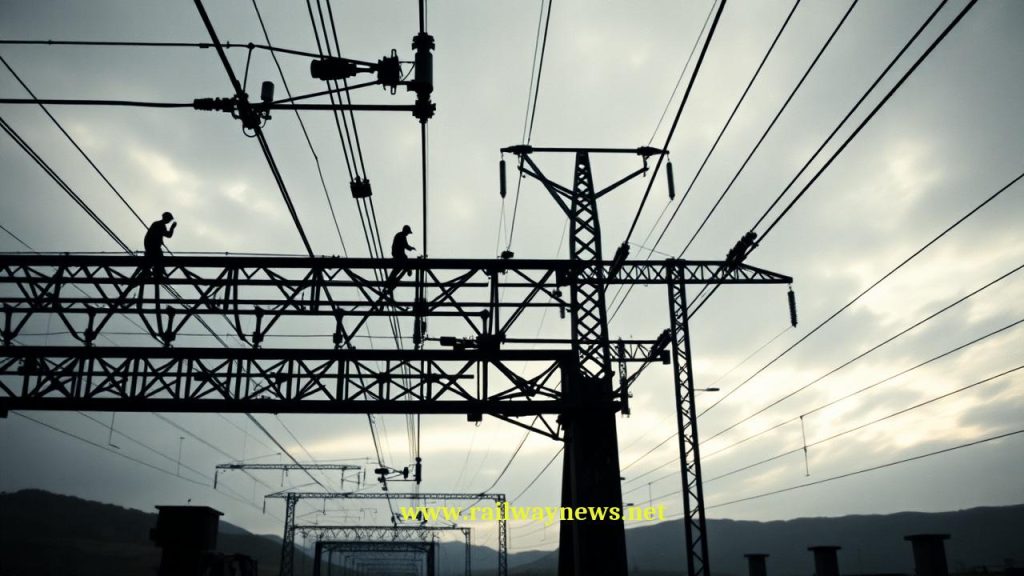
⚡ In Brief: Network Rail Scotland has commenced a three-year electrification renewal project on the 65-year-old North Clyde suburban network in Glasgow to replace aging overhead line equipment during holiday periods.
GLASGOW, SCOTLAND – Network Rail Scotland has initiated an infrastructure renewal project to overhaul the 65-year-old overhead electrification systems on the North Clyde lines. Main engineering works will take place over the Christmas and New Year holiday periods for the next three years, starting in late 2024. The upgrade targets the busiest suburban network outside London, which connects Glasgow with Helensburgh, Balloch, and Milngavie.
What Is the Full Scope of This Project?
The North Clyde electrification renewal project targets the replacement of overhead wire infrastructure originally installed in 1960 across the busiest suburban rail network in Scotland. Preparatory work is underway to refurbish supporting cantilevers and mast components before teams begin replacing the primary contact and catenary wires. The main physical replacements are scheduled during the low-demand holiday windows of Christmas and New Year over a three-year cycle to minimize passenger disruption. Network Rail has not disclosed the total capital expenditure or the specific contractor framework allocated for this renewal program.
Key Project Data
| Parameter | Value |
|---|---|
| Project / Contract Name | North Clyde Line Electrification Renewal |
| Total Value | Not disclosed |
| Parties Involved | Network Rail Scotland, ScotRail |
| Timeline / Completion | Three-year phased delivery (concluding by early 2027) |
| Country / Corridor | Scotland, United Kingdom (Helensburgh/Balloch/Milngavie to Glasgow Low Level) |
How Does This Compare to Similar Projects?
The phased renewal of Scotland’s oldest 25kV AC electrification infrastructure represents a targeted asset-life extension rather than a new-build capital program. In comparison, larger UK rail infrastructure maintenance pipelines are scaling up, such as High Speed 2 (HS2) launching market engagement for a £1.24 billion package of interim maintenance contracts with tenders expected in November 2026 (Source: Construction News, 2026). Locally, the North Clyde program follows Scotland’s rolling decarbonization program, which includes the £116 million electrification of the East Kilbride and Barrhead lines completed to modern standards (Source: Transport Scotland, 2023). While new-build projects face high capital costs, legacy lines require targeted, non-disruptive interventions to prevent widespread cascading delays across the wider Scottish network.
Editor’s Analysis
This renewal strategy highlights the growing challenge infrastructure managers face in balancing legacy grid maintenance with ambitious decarbonization expansions. By scheduling high-intensity work during low-footfall holiday periods, Network Rail Scotland minimizes immediate compensation claims from passenger operators but risks project delays if winter weather disrupts the tight holiday engineering windows. This balance of asset preservation is critical as public transit agencies globally pivot funding from megaprojects toward state-of-good-repair backlogs to secure daily operational reliability (Source: International Association of Public Transport, 2024).
FAQ
Q: Which specific lines are affected by the North Clyde renewal works?
A: The works impact the suburban routes running from Helensburgh, Balloch, and Milngavie through Glasgow’s west end and low-level stations. These lines form the busiest suburban rail network in the UK outside of London.
Q: What is the estimated total cost and budget of the electrification project?
A: The exact budget and contract values for this specific three-year renewal program have not been officially disclosed by Network Rail. Comparable regional electrification schemes in Scotland typically range from tens to hundreds of millions of pounds depending on track mileage.
Q: When will the most disruptive engineering works take place?
A: The most intensive engineering works to replace the physical overhead wires are scheduled over the Christmas and New Year periods for three consecutive years. Preparatory component refurbishment on the supporting cantilevers has already begun during normal maintenance windows.

Transport and railway industry editor covering global rail infrastructure, sustainable mobility, urban transit systems and next-generation railway technologies with a focus on accessible and industry-focused reporting.
RELATED POSTS

October 1, 2026 7:09 am
United States regulators confirmed a September 30 deadline for the...

October 1, 2026 12:13 am
Illinois approved $1.5 billion annually for the Northern Illinois Transit...

October 1, 2026 5:14 am
Siemens confirmed delivery of the first new S200 train to...

October 1, 2026 6:10 am
Amtrak approved a System Expansion Committee on July 30 to...

October 1, 2026 3:12 am
Greenbrier confirmed Brian Comstock as new president and CEO effective...

October 1, 2026 4:10 am
DART launched two public ridership dashboards in March 2026 to...