
ÖBB Tests Railjet M in Vienna Climate Wind Tunnel for 2028
ÖBB commenced extreme climatic testing of its 31 new Siemens Railjet M trains in Vienna’s wind tunnel for 2028 deployment on intra-Alpine routes.
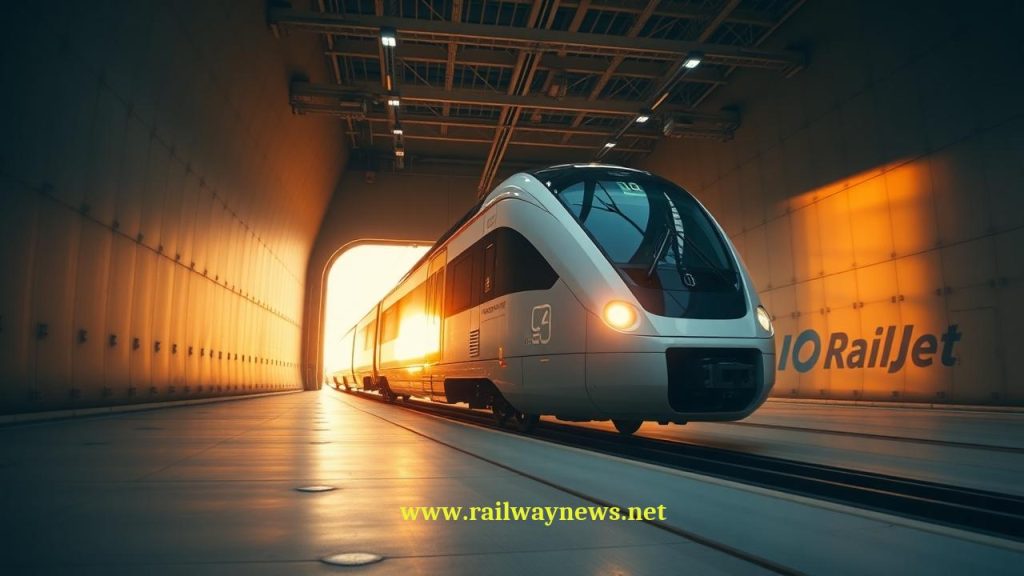
⚡ In Brief: Austrian Federal Railways (ÖBB) is testing its new Siemens-built Railjet M train in Vienna’s wind tunnel ahead of its 2028 deployment, part of a broader 31-train order to modernize intra-Alpine transit.
VIENNA, AUSTRIA – Austrian Federal Railways (ÖBB) has commenced extreme climatic testing of its new Railjet M fleet in Vienna’s specialized wind tunnel ahead of a scheduled passenger service launch in 2028. The operator ordered 31 of these 106-meter-long trains from Siemens Mobility as part of a larger €6.1 billion fleet modernization strategy. This testing phase subjects the vehicles to simulated temperatures ranging from -25°C to +45°C to ensure operational reliability across challenging Alpine routes.
What Are the Technical Specifications?
The Railjet M is a customized interregional variant of Siemens Mobility’s Mireo platform designed to withstand the severe meteorological conditions of intra-Alpine corridors. This 106-meter trainset accommodates 257 passengers across first- and second-class carriages, featuring wider car bodies and integrated storage for winter sports equipment and bicycles. Siemens has engineered the fleet with advanced real-time diagnostic systems to maximize fleet availability and reduce long-term maintenance costs. The onboard climate systems, sanitary facilities, and structural insulation are being verified under simulated freezing rain, high humidity, and heavy snowfall to ensure performance on steep, winding mountain tracks.
Key Technical Data
| Parameter | Value |
|---|---|
| Technology / System Name | Railjet M (Siemens Mireo platform) |
| Total Value | Not disclosed (Part of ÖBB’s €6.1B procurement program) |
| Parties Involved | Austrian Federal Railways (ÖBB), Siemens Mobility |
| Timeline / Completion | Testing in 2026; introduction scheduled for 2028 |
| Country / Corridor | Austria (Intra-Alpine and Interregio routes) |
Where Does This Technology Stand in the Market?
Siemens Mobility’s Mireo platform competes directly with established regional and intercity trainsets designed for demanding European topography. For example, Alstom’s Coradia Stream regional platform offers similar capacities of 250 to 300 seats but has been deployed more broadly across flatter European corridors, whereas the Railjet M is specifically reinforced for severe Alpine gradients (Source: Alstom, 2024). Additionally, Stadler Rail’s FLIRT 200 platform, which operates extensively on cross-border Alpine routes through the Gotthard region, features customized traction systems for steep 2.7% inclines and extreme winter conditions (Source: Stadler Rail, 2023). While ÖBB’s €6.1 billion investment program targets a total fleet renewal of over 300 trains by 2030, this occurs alongside massive national infrastructure upgrades, including the Semmering Base Tunnel and the Brenner Base Tunnel, which is scheduled to open in 2032 to optimize freight and passenger throughput between Innsbruck and Bolzano (Source: CNN, 2026).
Editor’s Analysis
The deployment of the Railjet M highlights a growing European trend where rolling stock design must be tightly integrated with mega-tunnel infrastructure projects to maximize trans-Alpine capacity. As operators face increasingly volatile weather patterns, investing in heavily climate-tested, diagnostic-heavy fleets like the Mireo allows ÖBB to mitigate high maintenance overheads. This strategy aligns with a broader industry shift toward long-term digital maintenance agreements, as seen in Siemens Mobility’s growing global service portfolio and HS2’s planned £1.24 billion maintenance tender in late 2026 (Source: Construction News, 2026).
FAQ
Q: What routes will the Railjet M operate on?
A: The Railjet M will operate on Austria’s intra-Alpine Interregio lines starting in 2028. These routes feature steep gradients, winding tracks, and highly variable seasonal weather.
Q: How much did the 31 Railjet M trains cost?
A: The exact contract value for the 31-train order has not been publicly disclosed. However, the purchase is funded under ÖBB’s larger €6.1 billion rolling stock investment program running through 2030.
Q: What makes the Railjet M suitable for extreme winter weather?
A: The train is undergoing rigorous testing in Vienna’s climate wind tunnel to verify component stability under temperatures as low as -25°C and freezing rain. It also features robust technical insulation and specialized diagnostic software to prevent weather-related mechanical failures.

Railway industry analyst and transport media specialist focused on railway infrastructure, rolling stock, signaling systems and global mobility developments. Covering high-speed rail projects, railway modernization, freight transportation and smart rail technologies across international markets.With a strong interest in transport innovation and sustainable mobility, he follows major railway investments, urban transit expansion projects and next-generation rail technologies shaping the future of transportation.His editorial approach combines industry-focused reporting with accessible technical analysis, delivering clear and reliable insights for railway professionals, transport stakeholders and rail enthusiasts worldwide.
RELATED POSTS
July 4, 2026 11:41 pm
Eurostar cancelled all direct London–Amsterdam trains through July 2 after...
July 1, 2026 1:37 pm
NRHS awarded $187K to 34 U.S. rail heritage projects in...
July 1, 2026 1:42 am
UK government launched a £30bn Better Connected plan, allocating £15.6bn...
July 1, 2026 6:37 am
Amtrak launched a small-plate dining program for Acela First Class...
July 4, 2026 11:02 pm
Eurostar suspends all direct London–Dutch trains through 2 July after...
July 1, 2026 8:49 am
The Short Line Training Center launched FRA-funded online DSLE and...