
Network Rail Completes Kirk Hill Bridge Reconstruction East Midlands
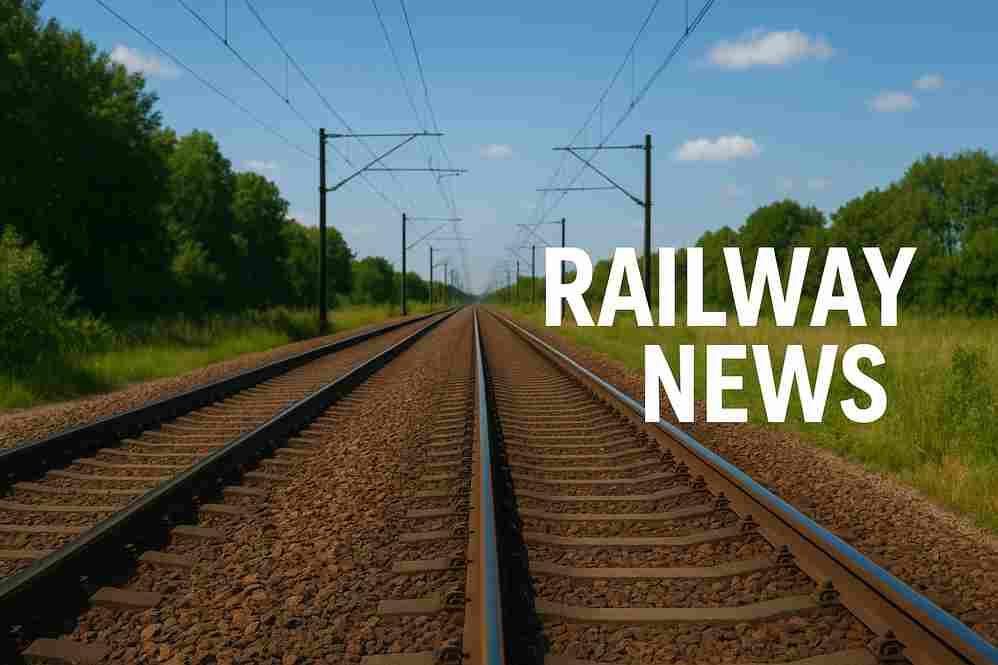
⚡ In Brief: Network Rail has completed the Kirk Hill bridge reconstruction in Nottinghamshire, unlocking critical high-gauge freight paths across the East Midlands and offering a direct route for larger containers between Birmingham and Peterborough without requiring new capital investment.
NOTTINGHAMSHIRE, UK – Network Rail has completed the reconstruction of the Kirk Hill bridge at Sutton Bonington, establishing an enhanced clearance route for larger freight containers across the East Midlands as of April 2026. The infrastructure manager delivered the bridge deck installation during weekend possessions in February and March 2026, bypassing the broader summer 2025 government pause on the Midland Main Line electrification scheme. This targeted clearance project now enables high-cube container services to run directly between the East Midlands Gateway and East Coast Ports.
What Is the Full Scope of This Project?
The Kirk Hill bridge replacement represents a low-cost, high-yield tactical intervention to bypass physical clearance constraints on one of the UK’s most critical cross-country freight corridors. The project involved demolishing the old, low-clearance structure during the Christmas 2025 rail shutdown and lifting a pre-fabricated replacement deck into place in early 2026. By raising the bridge height, Network Rail has achieved dual benefits: accommodating larger-gauge container trains and securing vertical clearance for future 25kV overhead line equipment should electrification resume.
Beyond the physical reconstruction at Kirk Hill, Network Rail utilized advanced gauging analysis to clear additional strategic sections without the need for new capital works. These newly opened high-gauge routes include Trent High Level (covering Ratcliffe Junction-Toton and Attenborough Junction-Toton) and the Trent-Nottingham-Boultham Junction line to Lincoln. Unlocking these sections provides a critical diversionary path for intermodal traffic and avoids routing larger container trains through congested London corridors.
Key Project Data
| Parameter | Value |
|---|---|
| Project / Contract Name | Midland Main Line Freight Gauge Upgrade (Kirk Hill Bridge) |
| Total Value | Not disclosed |
| Parties Involved | Network Rail, UK Department for Transport, freight operators |
| Timeline / Completion | Bridge deck completed March 2026; services commenced April 2026 |
| Country / Corridor | United Kingdom / Midland Main Line (East Midlands) |
How Does This Compare to Similar Projects?
Network Rail’s approach of unlocking incremental capacity through gauging analysis and localized asset replacement contrasts with the systemic delivery challenges highlighted in the wider UK infrastructure sector. Major UK infrastructure schemes frequently face high overheads and delivery delays; for instance, the planned Lower Thames Crossing road scheme has recently allocated £20m just for a technical consultancy framework to navigate its developmental phases (Source: National Highways, 2026). A landmark report by the Competition and Markets Authority (CMA) indicates that systemic inefficiency in UK construction and infrastructure delivery increases costs, prompting recommendations that could save the public purse up to £5bn annually through coordinated planning (Source: CMA, 2026).
In contrast, the Kirk Hill intervention demonstrates how targeted, non-capital-intensive asset modifications can yield immediate operational benefits. The UK rail freight market is projected to grow by 1.25% annually as industrial activity picks up, making quick-win clearance projects highly valuable to operators (Source: IANA, 2026). The exact capital cost of the Kirk Hill bridge reconstruction, however, was not disclosed by Network Rail, preventing a direct cost-per-mile comparison with standard overbridge replacements.
State authorities have been directing substantial investment towards improving California’s public transit and freight rail capabilities. This effort includes major allocations, such as the $848 million designated for projects aiding BART and the Port of Long Beach. Full coverage
Editor’s Analysis
The successful clearance of the Midland corridor reflects a necessary shift toward tactical asset optimization in an era of constrained public spending. While the summer 2025 pause on Midland Main Line electrification highlights ongoing fiscal volatility in UK rail planning, this project secures immediate productivity gains for freight operators. It aligns with a broader post-pandemic trend where freight networks must self-fund or justify upgrades through rapid, tangible carbon-reduction and road-congestion benefits (Source: IANA, 2026).
FAQ
Q: Which freight routes have been upgraded for larger containers?
A: The upgrades have cleared the Midland Main Line at Sutton Bonington, alongside the Trent High Level sections (Ratcliffe-Toton and Attenborough-Toton) and the Trent-Nottingham-Boultham Junction route to Lincoln. These lines can now accommodate larger W12-gauge container trains.
Q: How does the Kirk Hill bridge project support future electrification?
A: Although the Midland Main Line electrification was paused by the UK government in summer 2025, the new Kirk Hill bridge deck was constructed with a raised profile. This design provides sufficient physical clearance for overhead line equipment or bi-mode trains if the electrification programme is restarted.
Q: What was the total cost of the Kirk Hill bridge replacement?
A: The exact capital expenditure for the Kirk Hill bridge reconstruction and the associated gauging analysis has not been officially disclosed by Network Rail.

Railway infrastructure, rolling stock and transport technologies specialist focused on global rail industry developments, high-speed rail systems, signaling technologies and freight transportation. Covering railway investments, public transport modernization, rail operations and international mobility projects across Europe, Asia and North America.
RELATED POSTS
September 6, 2026 5:19 am
Hitachi delivered Taiwan's first N700ST high-speed train from Japan in...

September 5, 2026 4:19 pm
CPK launched formal tender talks with four consortia to design...

September 5, 2026 7:14 pm
HS2 Ltd signed renegotiated civils contracts with EKFB and Align...

September 6, 2026 4:12 am
Alstom delivered the first of 100 new G Class trams...
September 6, 2026 6:17 am
Hungary ordered a national ban on most freight trains from...
September 6, 2026 1:17 am
Hitachi Toshiba Supreme Consortium confirmed the first of 12 N700ST...