
UTA Expands S-Line By Fall 2027 Salt Lake City
The Utah Transit Authority launched a 0.25-mile S-Line streetcar extension and critical grade crossing rebuilds in Salt Lake City, with completion by Fall 2027.
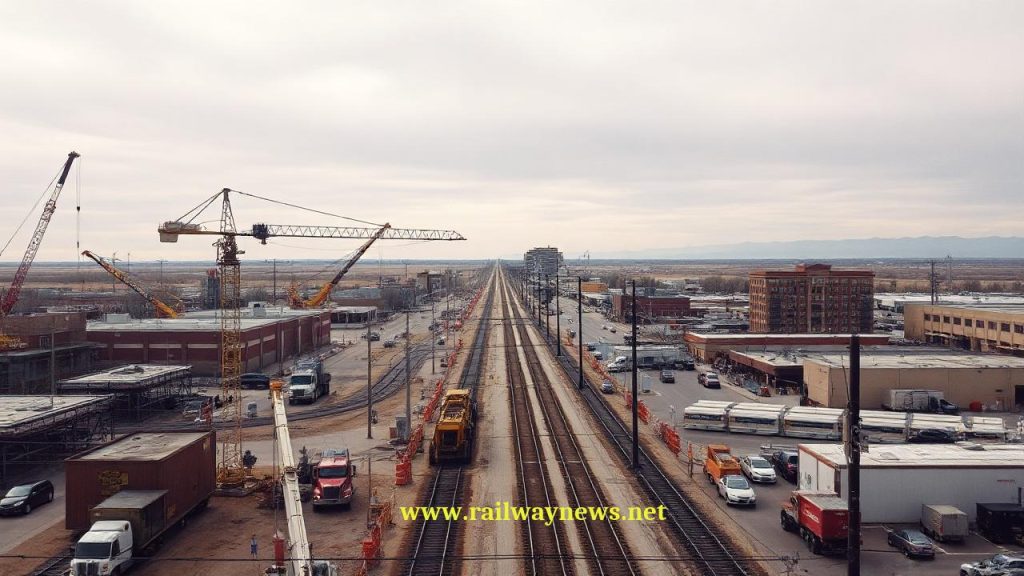
⚡ In Brief: The Utah Transit Authority has launched a 0.25-mile extension of the S-Line streetcar in Salt Lake City, alongside critical summer grade crossing rebuilds scheduled for completion by fall 2027.
SALT LAKE CITY, UNITED STATES – The Utah Transit Authority (UTA) commenced construction in May 2026 on a 0.25-mile extension of the S-Line streetcar and a series of summer grade crossing reconstructions. Work on the primary 2100 South grade crossing is scheduled for completion by June 20, 2026, while the entire extension project is slated for completion in fall 2027. The project aims to integrate transit infrastructure with local urban development plans near the University of Utah.
What Is the Full Scope of This Project?
The Utah Transit Authority infrastructure program combines a physical line extension with extensive track and grade crossing renewals across Salt Lake City. The S-Line streetcar will expand by approximately a quarter-mile across Highland Drive, introducing a new passenger station at the intersection of Highland Drive and Simpson Avenue. Concurrently, track crews will execute a one-month shutdown of the 2100 South grade crossing for rail replacement and infrastructure upgrades, utilizing bus bridges to maintain passenger mobility. Starting in July 2026, the program shifts to rebuilding the 600 South grade crossing, cleaning ballast, replacing worn rails, and realigning track at the East Ninth Avenue curves. This transit initiative aligns with regional Master Plans to convert the University of Utah campus from a commuter-heavy institution into a centralized college town featuring enhanced pedestrian and biking corridors (Source: Daily Utah Chronicle, 2026).
Key Project Data
| Parameter | Value |
|---|---|
| Project / Contract Name | UTA S-Line Extension and Grade Crossing Rebuilds |
| Total Value | Not disclosed |
| Parties Involved | Utah Transit Authority (UTA) |
| Timeline / Completion | Fall 2027 (Extension); June 20, 2026 (2100 South crossing) |
| Country / Corridor | United States / S-Line Corridor (Salt Lake City) |
How Does This Compare to Similar Projects?
The incremental, localized transit expansion model favored by the Utah Transit Authority contrasts sharply with the high-capital, high-risk passenger rail developments occurring across the United States. While UTA utilizes targeted, short-segment streetcar extensions to foster transit-oriented development, private operators like Brightline are facing severe financial headwinds, struggling under heavy debt burdens and slower-than-projected ridership growth on intercity corridors (Source: Wall Street Journal, 2026). On the public sector side, larger-scale regional projects require massive, ongoing state interventions, such as California’s high-speed rail network, which recently secured $1 billion annually in dedicated cap-and-trade funding to sustain its construction pipeline (Source: San Francisco Chronicle, 2026). Furthermore, while UTA focuses on standard light-rail engineering, alternative transit concepts are emerging elsewhere, such as Caltrans exploring the viability of 140 mph high-speed bus corridors to connect major urban centers (Source: San Francisco Chronicle, 2026).
Editor’s Analysis
UTA’s S-Line project exemplifies a low-risk, incremental approach to urban transit that prioritizes local real estate integration over expensive regional high-speed infrastructure. By linking minor track extensions directly to pedestrian-friendly developments, the agency minimizes the financial exposures currently plaguing highly leveraged private rail operators (Source: Wall Street Journal, 2026). This strategy suggests that mid-sized American cities may find greater success in micro-transit investments rather than pursuing sweeping, multi-billion-dollar transit megaprojects.
FAQ
Q: Will S-Line streetcar service be suspended during the 2026 summer construction?
A: No, S-Line streetcar service will continue to operate during the overall construction phase. However, during the one-month closure of the 2100 South grade crossing ending June 20, 2026, UTA will deploy bus bridges to bypass the suspended rail segments.
Q: What is the total cost of the UTA S-Line extension project?
A: The total capital expenditure for the S-Line extension and the associated grade crossing rebuilds has not been officially disclosed by the Utah Transit Authority. Funding details and specific contractor awards remain unavailable at the time of publication.
Q: How does the S-Line project impact the University of Utah campus area?
A: The infrastructure upgrades support a broader master plan to transform the University of Utah from a commuter school into a centralized college town. The extension integrates with new student housing, retail spaces, and upgraded pedestrian and bicycle lanes to reduce single-occupancy vehicle reliance.

Railway infrastructure, rolling stock and transport technologies specialist focused on global rail industry developments, high-speed rail systems, signaling technologies and freight transportation. Covering railway investments, public transport modernization, rail operations and international mobility projects across Europe, Asia and North America.
RELATED POSTS

September 6, 2026 5:19 am
Hitachi delivered Taiwan's first N700ST high-speed train from Japan in...

September 5, 2026 4:19 pm
CPK launched formal tender talks with four consortia to design...

September 6, 2026 4:12 am
Alstom delivered the first of 100 new G Class trams...
September 5, 2026 7:14 pm
HS2 Ltd signed renegotiated civils contracts with EKFB and Align...

September 6, 2026 1:17 am
Hitachi Toshiba Supreme Consortium confirmed the first of 12 N700ST...

September 6, 2026 6:17 am
Hungary ordered a national ban on most freight trains from...