
Constanta Port Connects Middle Corridor Asia-Europe Rail
Romania secured a two-year agreement to connect Constanta Port to the Middle Corridor for Asia-Europe rail freight via USER and ETR IA.
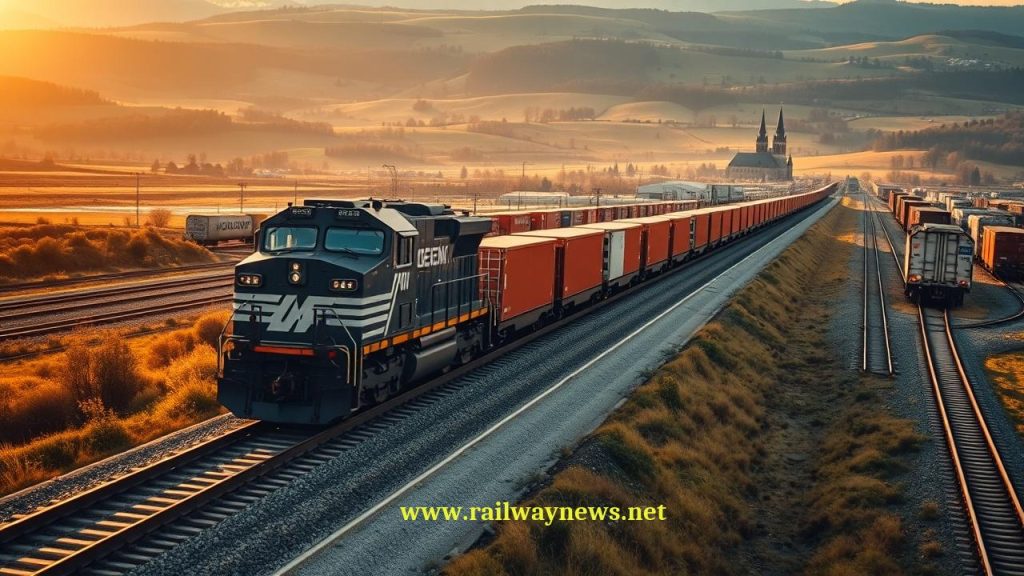
⚡ In Brief: The Romanian Freight Forwarders Association and the Eurasian Transport Route International Association signed a two-year memorandum of understanding in Bucharest to route Asia-Europe freight flows through the Port of Constanța via the Middle Corridor.
BUCHAREST, ROMANIA – The Romanian Freight Forwarders Association (USER) and the Eurasian Transport Route International Association (ETR IA) signed a bilateral Memorandum of Understanding in Bucharest to optimize Asia-Europe freight transit. The agreement, signed during the SEEFF & FIATA REU European Congress, aims to expand containerized rail and maritime connections through Romania’s Port of Constanța, which handled 67.6 million tons of cargo in 2025. This partnership establishes a structured framework to integrate Black Sea shipping lines with European rail networks over an initial two-year period.
What Is the Full Scope of This Project?
The bilateral cooperation focuses on establishing a regular container feeder service between Caspian Sea ports and Romania to divert Eurasian land-bridge traffic away from congested Western European corridors.
The agreement outlines technical negotiations to expand container rail connections from the Port of Constanța into Central and Eastern European markets. The parties will exchange statistical data on potential cargo flows along the Middle Corridor to improve transit times, which currently average 12 to 18 days by rail compared to 30 to 45 days by ocean route. Additionally, the initiative aims to leverage Constanța’s strategic location on the Rhine-Danube Corridor to facilitate multimodal transport involving river, rail, and sea logistics. However, the exact financial commitments and specific infrastructure budgets for the proposed feeder line and rail expansion were not disclosed by either organisation.
Key Project Data
| Parameter | Value |
|---|---|
| Project / Contract Name | USER-ETR IA Middle Corridor Integration Initiative |
| Total Value | Not disclosed |
| Parties Involved | Union of Romanian Freight Forwarding Companies (USER), Eurasian Transport Route International Association (ETR IA) |
| Timeline / Completion | 2 years (with 1-year automatic renewal option) |
| Country / Corridor | Romania and Azerbaijan / Middle Corridor (Asia-Europe) |
How Does This Compare to Similar Projects?
The integration of Romania’s Black Sea infrastructure into regional short-sea and rail networks aligns with a broader European push to decarbonize maritime trade routes.
According to a study by Kongsberg Maritime, high-frequency, short-distance maritime routes show high potential for the deployment of zero-emission vessels, which directly supports Romania’s strategic efforts to transition its short-sea shipping links to sustainable energy sources (Source: Kongsberg Maritime, 2024). Within the domestic market, the Romanian rail freight sector is experiencing growth driven by industrial recovery, particularly in steel and logistics, alongside an increasing trend toward reshoring supply chains to avoid global disruptions (Source: IndexBox, 2025). This domestic growth contrasts with wider European intermodal trends, where organizations like the Intermodal Association of North America (IANA) reported fluctuating volumes in traditional transport corridors due to shifting global trade dynamics (Source: IANA, 2024). Compared to northern European rail corridors that face persistent capacity bottlenecks, the Middle Corridor via Constanța offers a faster transit alternative for high-value goods like automotive components and electronics.
Editor’s Analysis
The strategic alignment between USER and ETR IA represents a calculated effort to capitalize on the geopolitical realignment of Eurasian supply chains away from northern overland routes. By positioning the Port of Constanța as the primary gateway to Central Europe, Romania can absorb spillover cargo volumes from congested Western ports. However, the long-term viability of this corridor will depend on stabilizing fluctuating transit tariffs and securing capital investments for regional rail infrastructure, which remains vulnerable to regional geopolitical tensions (Source: Industry Analysts, 2025).
FAQ
Q: What is the main objective of the agreement between USER and ETR IA?
A: The agreement aims to optimize transit freight transport along the Middle Corridor by establishing regular container feeder lines and expanding rail connections through Romanian ports. It seeks to capture high-value cargo flows transitioning from maritime routes to faster rail corridors.
Q: What is the timeline and total financial investment for this project?
A: The Memorandum of Understanding is valid for a period of two years with an option for a one-year automatic renewal. The specific financial investments and funding allocations for the infrastructure upgrades have not been disclosed.
Q: How does the Port of Constanța fit into this regional trade corridor?
A: Constanța serves as a multimodal hub connecting Black Sea maritime routes with the Rhine-Danube Corridor and European rail networks. The port boasts an annual handling capacity of over 100 million tons, making it a critical distribution point for Central and Eastern Europe.

Railway infrastructure, rolling stock and transport technologies specialist focused on global rail industry developments, high-speed rail systems, signaling technologies and freight transportation. Covering railway investments, public transport modernization, rail operations and international mobility projects across Europe, Asia and North America.
RELATED POSTS
August 4, 2026 1:11 pm
Hitachi Rail Canada secured a $407.7M contract to install CBTC...
August 11, 2026 11:13 am
Hungary confirmed the €2.5B Hungarian rail upgrade will not see...

August 4, 2026 11:12 am
MBTA confirmed a $150.8 million overhaul of the 85-year-old Green...
August 1, 2026 7:14 pm
€205 billion funding shortfall threatens the TEN-T rail network's completion...
August 1, 2026 7:56 am
BMZ delivered two new TEM18DM diesel shunting locos to RZD...
August 5, 2026 7:11 pm
JR Central secured Shizuoka governor approval July 7, 2026 for...