
PKP Intercity Expands Training to Seven Locations in Poland
Four new EU200 Griffin simulators, costing over 2.1 million zlotys, expanded PKP Intercity’s driver training to seven sites in Poland.
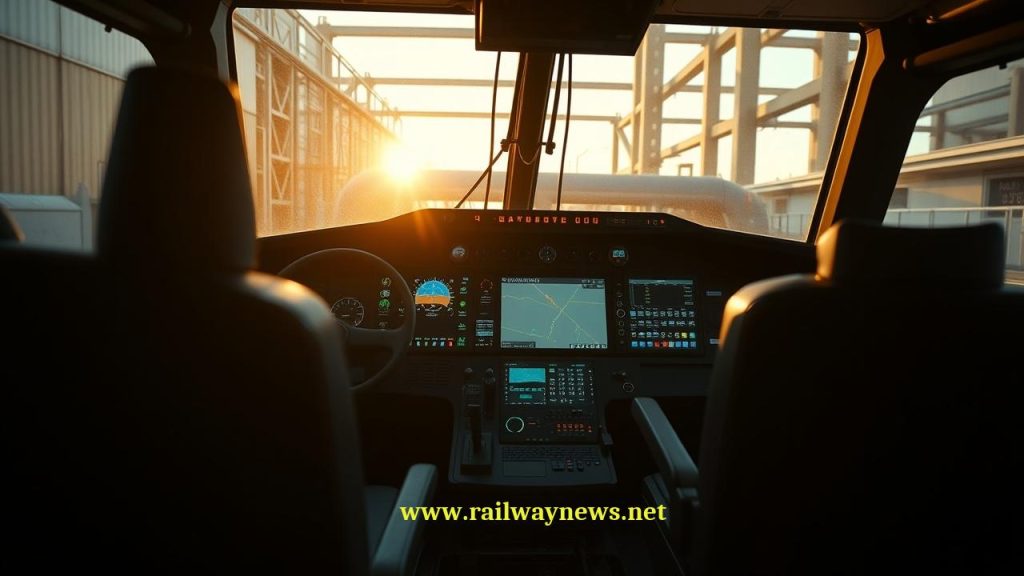
⚡ In Brief: PKP Intercity has expanded its driver training capabilities by installing four new static Griffin EU200 locomotive simulators in Poland for over 2.1 million zlotys, bringing its total network to seven training locations for its 1,600+ drivers and 360 candidates.
WARSAW, POLAND – Poland’s national long-distance operator, PKP Intercity, has installed four new train driver simulators in Kraków, Katowice, Wrocław, and Poznań. The contract, valued at over 2.1 million zlotys gross, expands the operator’s total simulator fleet to seven. The new systems will be used by over 900 current drivers and trainees as part of the company’s Engineer’s Academy program.
What Are the Technical Specifications?
The newly installed systems are static, 1:1 scale replicas of the EU200 Griffin locomotive driver’s cab. The software platform includes approximately 8,000 km of virtual routes based on actual sections of the Polish railway network, complete with signals, platforms, and surrounding environmental features. Instructors can inject a variety of pre-programmed scenarios, including adverse weather conditions, unexpected equipment malfunctions, and emergency events such as obstacles at level crossings. The manufacturer of the simulator systems was not disclosed in the operator’s announcement.
Key Technical Data
| Parameter | Value |
|---|---|
| Technology / System Name | EU200 Griffin Static Driver Simulator |
| Total Value | Over 2.1 million zlotys gross (approx. €485,000) |
| Parties Involved | PKP Intercity (Operator), Manufacturer Not Disclosed |
| Timeline / Completion | Installations completed 2024-2025 |
| Country / Corridor | Poland (New locations: Kraków, Katowice, Wrocław, Poznań) |
Where Does This Technology Stand in the Market?
PKP Intercity’s investment in static simulators represents a cost-effective approach to standardized training, contrasting with more expensive full-motion systems used for complex dynamic scenarios. While effective for procedural and emergency training, this technology differs from the higher-end solutions offered by major European suppliers. For example, Knorr-Bremse’s subsidiary, Sydac, offers modular systems ranging from desktop trainers to full-motion simulators on six-axis platforms, which provide a higher degree of immersion for training on vehicle dynamics and handling (Source: Knorr-Bremse, 2024). Similarly, Alstom integrates simulation into its broader HealthHub digital services, allowing training not just for driving but also for predictive maintenance and fault diagnosis, a feature not specified in this procurement (Source: Alstom, 2024). The decision to deploy multiple static units across the country prioritizes accessibility and frequency of training over the high-fidelity physical realism of full-motion platforms, allowing the operator to decentralize training and reduce travel time for its staff.
Editor’s Analysis
This expansion of PKP Intercity’s training infrastructure is a foundational investment to support Poland’s broader rail network modernization and accommodate rising international passenger volumes. By standardizing driver competency and emergency preparedness across a growing workforce, the operator is building the human capital required to ensure safety and service reliability. This focus on in-house skills development aligns with a wider European trend of operators taking greater control of their training pipelines to address skilled labor shortages and meet the demands of network expansion (Source: Tourism-Review.com, 2025).
FAQ
Q: What specific locomotive is the new simulator based on?
A: The four new simulators are 1:1 scale replicas of the driver’s cab and control panel of the PESA Gama Marathon, designated as EU160 Griffin by PKP. This ensures that training is directly applicable to one of the modern electric locomotives in the operator’s fleet.
Q: How many drivers will use these new simulators?
A: The simulators will be used by a pool of over 900 train drivers and candidates for the train driver position. PKP Intercity currently employs over 1,600 drivers and is actively training more than 360 candidates to meet future demand.
Q: Is simulator training a substitute for real-world driving experience?
A: No, it is a mandatory supplement to the nearly two-month training program. Candidates must complete at least 480 hours of supervised practical training on the network before this stage of simulator-based training can be undertaken.

Railway infrastructure, rolling stock and transport technologies specialist focused on global rail industry developments, high-speed rail systems, signaling technologies and freight transportation. Covering railway investments, public transport modernization, rail operations and international mobility projects across Europe, Asia and North America.
RELATED POSTS

September 6, 2026 5:19 am
Hitachi delivered Taiwan's first N700ST high-speed train from Japan in...

September 5, 2026 4:19 pm
CPK launched formal tender talks with four consortia to design...

September 5, 2026 7:14 pm
HS2 Ltd signed renegotiated civils contracts with EKFB and Align...

September 6, 2026 4:12 am
Alstom delivered the first of 100 new G Class trams...

September 6, 2026 6:17 am
Hungary ordered a national ban on most freight trains from...

September 6, 2026 1:17 am
Hitachi Toshiba Supreme Consortium confirmed the first of 12 N700ST...