
Île-de-France Mobilités Invests €2.5 Billion Paris RER B
Île-de-France Mobilités invested €2.5 billion to order 146 Alstom/CAF MI20 trains for Paris’s RER B line, entering service by 2028.
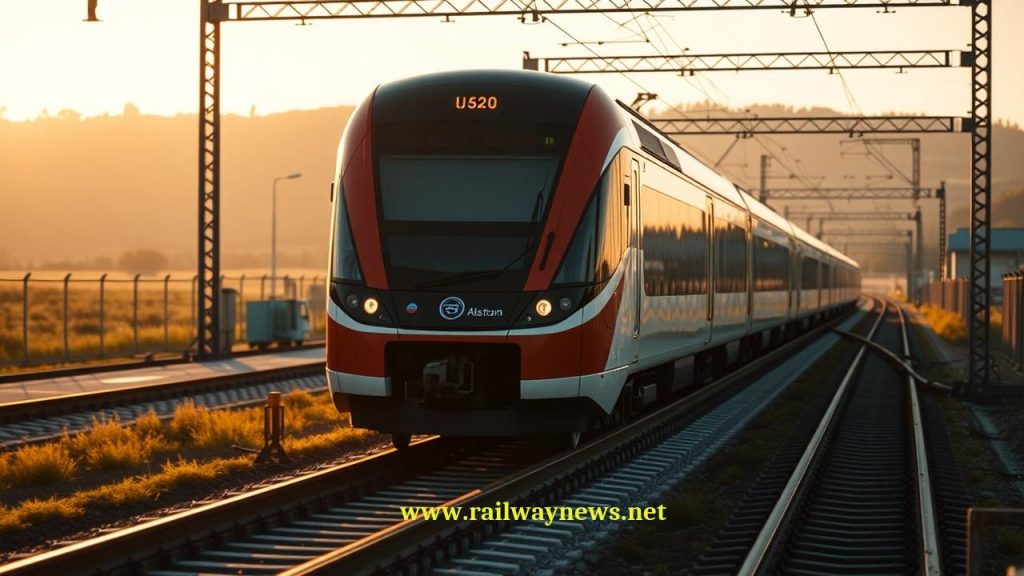
⚡ In Brief: Île-de-France Mobilités is investing EUR 2.5 billion in 146 new Alstom/CAF MI20 multiple units for Paris’s RER B line, with the first train completing its initial test run at the Crespin plant ahead of a planned 2028 service entry.
CRESPIN, FRANCE – The first MI20 multiple unit, the new train for Paris’s RER B line, has completed its first test run at the Alstom manufacturing facility in northern France. The EUR 2.5 billion order for 146 trains, funded by Île-de-France Mobilités, is a central part of a broader upgrade for one of Europe’s busiest urban rail lines, which serves approximately 1 million passengers daily.
What Is the Full Scope of This Project?
The project covers the design, manufacture, and delivery of 146 new MI20 trains to replace the aging MI79 and MI84 fleets. The rolling stock procurement is part of a detailed, nearly EUR 5 billion modernization program for the RER B line scheduled through 2030. This wider initiative also includes the construction of a unified control center for the RER B and D lines and the implementation of the NExTEO automated driving system to improve service frequency and reliability.
Key Project Data
| Parameter | Value |
|---|---|
| Project / Contract Name | RER B Line Rolling Stock Renewal (MI20) |
| Total Value | EUR 2.5 billion (rolling stock); ~EUR 5 billion (total line upgrade) |
| Parties Involved | Île-de-France Mobilités, Alstom/CAF, RATP, SNCF Voyageurs |
| Timeline / Completion | First service entry planned for late 2028 |
| Country / Corridor | France / RER B Line (Paris) |
How Does This Compare to Similar Projects?
The Paris RER B upgrade focuses on renewing rolling stock and systems on a high-density legacy corridor, contrasting with projects like the recently unveiled D Line subway extension in Los Angeles, which involves constructing new infrastructure to expand network reach. While both aim to improve urban mobility, the Paris project prioritizes increasing capacity and efficiency on an existing critical artery, whereas the LA project adds new coverage. The MI20 procurement also aligns with a broader French national strategy, supported by initiatives like the EU-cleared EUR 380 million French cleantech manufacturing scheme, which encourages sustainable and modern industrial production. (Source: Renewables Now, 2024). The use of 25% recycled materials in the MI20 trains directly reflects this national push toward greener manufacturing in the transport sector. A detailed cost-per-train breakdown was not disclosed by the procurement authority.
Editor’s Analysis
The MI20’s unusual hybrid single- and double-deck architecture is a pragmatic solution engineered for the RER B line’s uniquely diverse passenger flow, which includes airport travelers with luggage, long-distance commuters, and short-trip urban riders. This design avoids the accessibility and dwell-time compromises of a fully double-deck train while still maximizing seating capacity, a critical factor for the line’s chronic overcrowding. This project demonstrates a key trend in mature European transit networks: investing in highly customized rolling stock and advanced signalling to extract more capacity from existing infrastructure, which is often more politically and financially viable than building entirely new lines through dense urban cores.
FAQ
Q: Why are the new RER B trains a mix of single and double-deck cars?
A: The design is tailored to the line’s diverse users. Single-level areas near the 14 doors on each side provide level boarding for passengers with luggage, strollers, or limited mobility, while the double-deck sections maximize seating for longer-distance commuters.
Q: What is the total investment in the RER B line’s modernization?
A: The 146 new MI20 trains cost EUR 2.5 billion. This is part of a larger, nearly EUR 5 billion program for the line’s complete modernization through 2030, which also includes a new control center and an automated train operation system.
Q: When will all the old MI79 and MI84 trains be replaced?
A: The first MI20 trains are scheduled to enter service by the end of 2028. The full fleet replacement will occur gradually as new units are delivered, but a final date for the complete withdrawal of the older stock has not been officially confirmed.

Railway infrastructure, rolling stock and transport technologies specialist focused on global rail industry developments, high-speed rail systems, signaling technologies and freight transportation. Covering railway investments, public transport modernization, rail operations and international mobility projects across Europe, Asia and North America.
RELATED POSTS

September 6, 2026 5:19 am
Hitachi delivered Taiwan's first N700ST high-speed train from Japan in...

September 5, 2026 4:19 pm
CPK launched formal tender talks with four consortia to design...

September 5, 2026 7:14 pm
HS2 Ltd signed renegotiated civils contracts with EKFB and Align...

September 6, 2026 4:12 am
Alstom delivered the first of 100 new G Class trams...
September 6, 2026 6:17 am
Hungary ordered a national ban on most freight trains from...

September 6, 2026 1:17 am
Hitachi Toshiba Supreme Consortium confirmed the first of 12 N700ST...