
U.S. DOT Launches Two-Tier Drone Rule Critical Infrastructure
The U.S. Department of Transportation proposes a rule allowing railroads to request two-tier drone restrictions around critical infrastructure, with public comment due through July 5, establishing a framework for aviation safety and national security protection over designated sites.
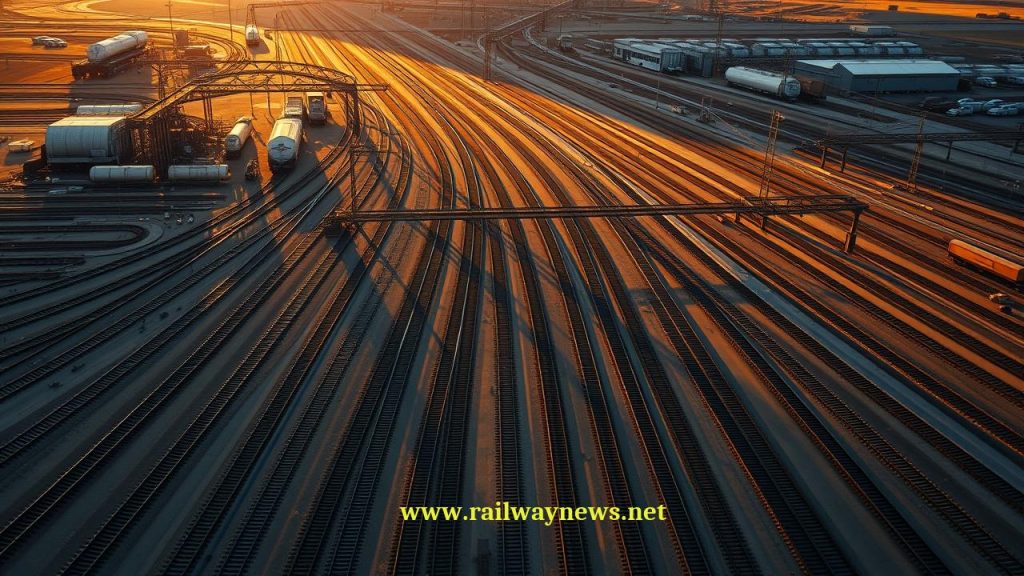
⚡ In Brief: The U.S. Department of Transportation has proposed a rule allowing railroads to apply for two-tier drone restrictions around critical infrastructure, with a public comment period open through July 5.
WASHINGTON D.C. – The U.S. Department of Transportation (DOT) has issued a proposed rule that would establish a formal process for railway operators and other companies to request restrictions on drone operations over their critical infrastructure. The proposal outlines a two-tier system for creating protected airspace zones. The public can submit comments on the proposed regulation through July 5.
What Does This Regulation Cover?
The proposed rule creates a framework for companies to apply for protected airspace over specific, designated sites. Applicants must demonstrate to the agency that a restriction is necessary for aviation safety, national security, or the protection of people and property on the ground. The regulation would establish two levels of control: a Tier 1 zone requiring drone operators to meet specific safety and security standards, and a more stringent Tier 2 zone barring any unauthorized drone usage. If approved, the DOT will launch a website to manage applications from infrastructure owners, including railroads that use their own drones for inspections and wish to secure the airspace from external devices.
Key Regulatory Data
| Parameter | Value |
|---|---|
| Regulation / Policy Name | Proposed Rule on Drone Operations Over Critical Infrastructure |
| Total Value | Not applicable |
| Parties Involved | U.S. Department of Transportation, U.S. Railroads, Drone Operators |
| Timeline / Completion | Public comments due by July 5; final rule date not disclosed |
| Country / Corridor | United States |
How Does This Compare to Global Standards?
The proposed U.S. framework is comparable to regulations already established by the European Union Aviation Safety Agency (EASA). Under EASA Regulation (EU) 2019/947, member states are empowered to designate UAS geographical zones, including no-fly zones, around critical infrastructure like airports, industrial plants, and key railway corridors. The U.S. proposal for a two-tier system mirrors the EU’s approach of having different levels of restriction based on the sensitivity of the site. A key difference is that the U.S. rule puts the initial burden on individual companies to apply for and justify the restrictions, whereas the EU framework is driven more by national-level designations. (Source: EASA, 2019).
Editor’s Analysis
This proposal formalizes a critical security need for the rail industry, addressing threats from unauthorized drone surveillance or disruption at key network points like yards and bridges. While providing a necessary layer of protection, the rule also creates a new administrative process for operators who must now proactively apply for these designations. This focus on securing existing assets reflects a broader industry trend toward operational resilience, contrasting with the funding challenges faced by major expansion projects like the UK’s East West Rail Link. (Source: Construction News, 2026).
Union Pacific completed significant repairs to its historic Lincoln, Nebraska, freight bridge after fire damage. The 127-year-old structure was restored in just over a week. Full coverage
FAQ
Q: What types of railway infrastructure could be covered by this rule?
A: The rule would apply to “critical infrastructure sites,” which could include major intermodal terminals, classification yards, critical bridges, tunnels, and dispatching centers. The precise definition of eligible sites will be clarified if the rule is finalized.
Q: How does the comment deadline compare to other regulatory processes?
A: The comment period ending July 5 provides approximately two months for public input, which is a standard duration. For comparison, the Indiana Department of State Revenue also set a July 5 deadline for comments on its proposed tax amnesty program rules.
Q: Can a railroad that uses its own drones for inspections still operate in a restricted zone?
A: Yes, the rule is intended to prevent interference from unauthorized, external drones. A railroad could apply for a restricted zone specifically to ensure its own authorized drone operations, such as track or bridge inspections, can proceed without risk of collision or interference.

Railway infrastructure, rolling stock and transport technologies specialist focused on global rail industry developments, high-speed rail systems, signaling technologies and freight transportation. Covering railway investments, public transport modernization, rail operations and international mobility projects across Europe, Asia and North America.
RELATED POSTS

October 1, 2026 7:09 am
United States regulators confirmed a September 30 deadline for the...

October 4, 2026 5:14 pm
Alstom secured a CA$4.7 billion order from VIA Rail Canada...
October 1, 2026 10:14 am
HS2 installed a 55-metre steel span in Birmingham, completing phase...

October 1, 2026 11:14 pm
CATS confirmed a six-mile streetcar route in Charlotte to add...
October 1, 2026 11:13 am
Norfolk Southern expanded its 3B Corridor in Alabama in 2025,...
October 1, 2026 1:12 pm
CSX expanded Queensgate Yard in Cincinnati by installing 42 power...