
TÜRASAŞ Invests 4.5 Million kWh Solar Sivas Railcar Production
TÜRASAŞ invested 4.5 million kWh in a solar plant at its Sivas facility to power freight railcar production, including military models, in Türkiye.
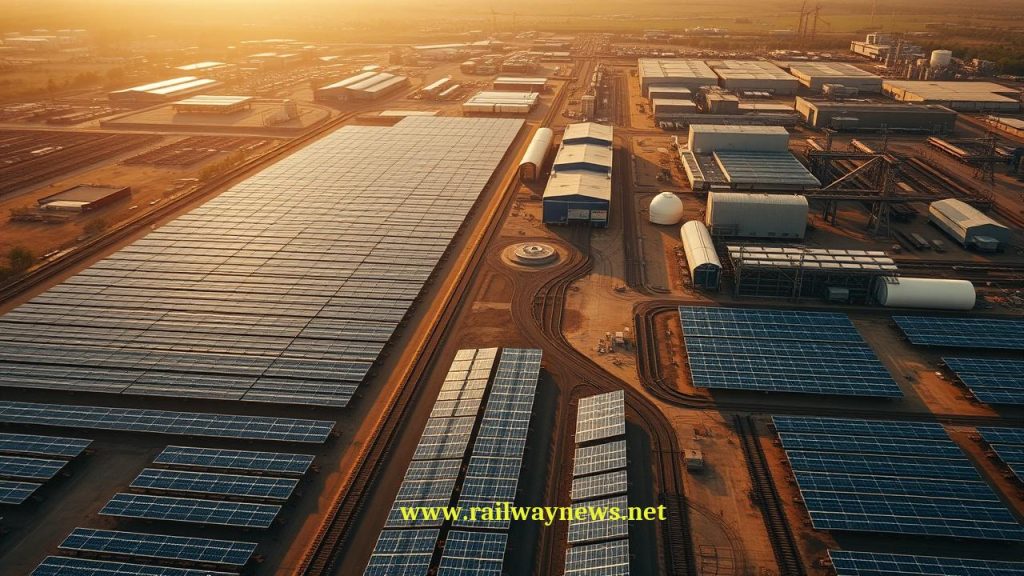
⚡ In Brief: Türkiye’s state-owned TÜRASAŞ will install a 4.5 million kWh solar plant at its Sivas facility to power the production of freight railcars, including military models, as part of a national push for renewable energy in its manufacturing sector.
SIVAS, TÜRKİYE – The Turkish government has announced a significant investment in renewable energy for its railway manufacturing sector, with a new photovoltaic plant set to power the TÜRASAŞ production facility in Sivas. According to the Minister of Transport and Infrastructure, the solar plant will generate 4.5 million kWh of electricity annually. This energy will be used to manufacture freight railcars, including strategic units for military tank transport and refueling.
What Is the Full Scope of This Project?
The initiative encompasses new and existing solar power installations at two key TÜRASAŞ manufacturing sites, Sivas and Sakarya, with a combined projected output of 7.85 million kWh per year. The Sivas plant is designed to meet 100% of the facility’s electricity needs, while the existing 3.35 million kWh plant in Sakarya already powers the production of the National High-Speed Train and Gaziray commuter trains. This investment aligns with Türkiye’s national goal of achieving climate neutrality by 2053 and comes amid a period of industrial transition in the region, as automotive supplier Autoliv plans to cease its Turkish manufacturing operations by 2028 (Source: The Manila Times, 2026).
Key Project Data
| Parameter | Value |
|---|---|
| Project / Contract Name | TÜRASAŞ Sivas & Sakarya Solar Power Plants |
| Total Value | Not disclosed |
| Parties Involved | TÜRASAŞ (Türkiye Rail System Vehicles Industry Corporation), Ministry of Transport and Infrastructure |
| Timeline / Completion | Not disclosed |
| Country / Corridor | Türkiye |
How Does This Compare to Similar Projects?
While Türkiye’s plant-specific investments focus on operational self-sufficiency, they are part of a wider European trend towards industrial decarbonisation funded at a much larger scale. For comparison, Germany has allocated a €5 billion fund to help its heavy industries reduce carbon emissions (Source: Reuters, 2026), and the EU recently approved a €380 million French scheme to support cleantech manufacturing (Source: Renewables Now, 2026). On a corporate level, the UK’s Archwood Group has demonstrated rapid progress by cutting its Scope 1 and 2 emissions by 73% since 2021, showcasing the potential for aggressive carbon reduction in manufacturing (Source: The Manufacturer, 2026).
Editor’s Analysis
TÜRASAŞ’s investment in self-generated solar power is a strategic hedge against energy price volatility, directly addressing a key operational cost for heavy manufacturing. This move aims to increase the competitiveness of its rolling stock, including strategic military assets, in a global market where North American rail freight demand recently fell 17.5% (Source: FleetOwner, 2026). By lowering production costs and improving its environmental credentials, Türkiye positions its rail industry to better compete with international manufacturers, particularly those in markets with different economic and regulatory pressures.
FAQ
Q: What specific types of railcars will be built using this solar power?
A: The solar energy will power the production of various strategic freight railcars, including specialized cars for transporting military tanks and fuel supply cars, at the TÜRASAŞ facility in Sivas. The sister facility in Sakarya already uses solar power for manufacturing the National High-Speed Train and Gaziray trains.
Q: What is the total energy output of TÜRASAŞ’s solar projects?
A: The new Sivas plant will generate 4.5 million kWh annually, while the existing Sakarya plant produces 3.35 million kWh. The combined annual output from both facilities is approximately 7.85 million kWh, equivalent to the energy needs of about 1,670 households.
Q: Is the TÜRASAŞ facility in Sivas affected by other industrial closures in the region?
A: The Turkish government has announced this new solar investment at the state-owned TÜRASAŞ Sivas plant. Separately, automotive supplier Autoliv is ceasing its manufacturing operations in Türkiye by 2028, but it has not been officially confirmed if this directly affects the TÜRASAŞ campus or is a separate industrial site in the same region.

Railway infrastructure, rolling stock and transport technologies specialist focused on global rail industry developments, high-speed rail systems, signaling technologies and freight transportation. Covering railway investments, public transport modernization, rail operations and international mobility projects across Europe, Asia and North America.
RELATED POSTS

October 1, 2026 7:09 am
United States regulators confirmed a September 30 deadline for the...

October 1, 2026 12:13 am
Illinois approved $1.5 billion annually for the Northern Illinois Transit...

October 1, 2026 6:10 am
Amtrak approved a System Expansion Committee on July 30 to...

October 1, 2026 4:10 am
DART launched two public ridership dashboards in March 2026 to...
October 1, 2026 3:12 am
Greenbrier confirmed Brian Comstock as new president and CEO effective...
October 1, 2026 5:14 am
Siemens confirmed delivery of the first new S200 train to...