
Network Rail Upgrades 11.5 km Track Huddersfield-Leeds
Network Rail commenced 11.5 km of track renewal between Huddersfield and Leeds in May 2024 as part of the Transpennine Route Upgrade.
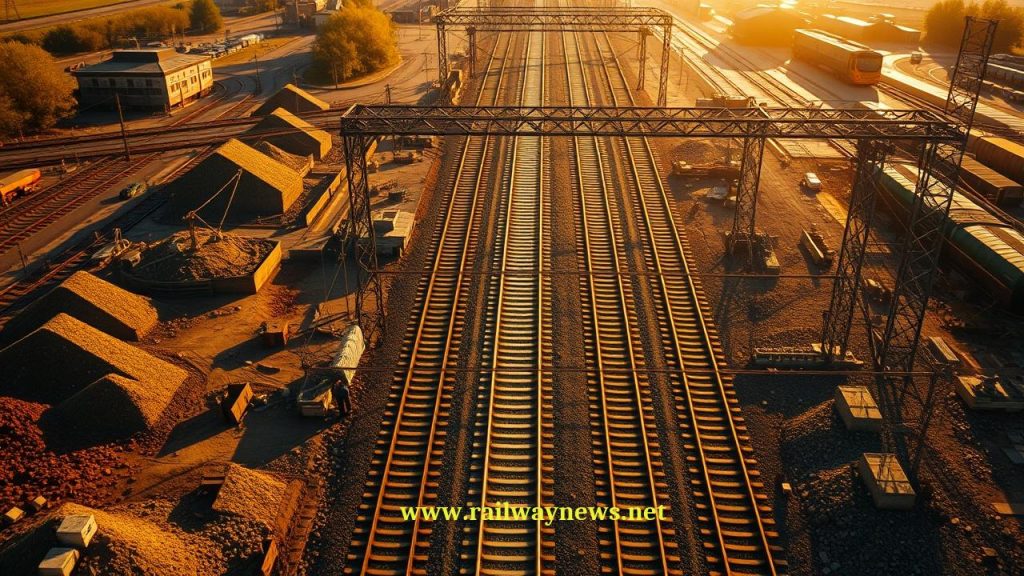
⚡ In Brief: Network Rail will renew 11.5 km of track and lay 50,000 tonnes of ballast between Huddersfield and Leeds starting in May as part of the Transpennine Route Upgrade, a project confirmed by Rail Business Daily to advance electrification and capacity in northern England.
LEEDS, UK – Network Rail will commence major infrastructure works in May on the Transpennine route between Huddersfield and Leeds. The works, part of the multi-year Transpennine Route Upgrade (TRU), will involve renewing 11.5 km of track, laying 50,000 tonnes of ballast, and installing 118 structures for future electrification over a two-month period.
What Is the Full Scope of This Project?
This phase of the Transpennine Route Upgrade focuses on track renewal, station modernisation, and preparation for full electrification. The combined works in May and June include the installation of over 5,500 new sleepers, significant drainage improvements, and the erection of foundations and masts for overhead line equipment. Station upgrades are a key component, with Batley station receiving barrier-free access and 150-metre platforms, while platforms at Dewsbury will be extended to 200 metres to accommodate longer trains. The project aims to enable faster, more frequent services and is projected to save up to 87,000 tonnes of carbon emissions annually once electric trains are operational across the route.
Key Project Data
| Parameter | Value |
|---|---|
| Project / Contract Name | Transpennine Route Upgrade (TRU) – Huddersfield to Leeds Section |
| Total Value | Not disclosed for this phase |
| Parties Involved | Network Rail |
| Timeline / Completion | May-June 2024 (main works); Huddersfield Station completion early 2027 |
| Country / Corridor | UK / Manchester-York |
How Does This Compare to Similar Projects?
The scale of the TRU works reflects a national priority for upgrading Victorian-era infrastructure, but such projects are frequently subject to external pressures. For comparison, the planned multi-billion-pound renewal of the UK Houses of Parliament faces significant procurement delays and cost escalations if parliamentary debates are not scheduled before the summer recess. This highlights a critical risk factor for major public projects: dependency on political timetabling, which can add millions in costs (Source: Construction News, 2026). The TRU project’s progress through this intensive phase indicates that, for now, it has navigated these administrative hurdles more effectively than the Parliament restoration scheme.
Editor’s Analysis
The emphasis on creating capacity for up to 15 additional daily freight trains is a critical component of the TRU’s business case, aligning with the UK’s net-zero targets by aiming to remove over 1,000 trucks from roads each day. This investment in rail freight infrastructure reflects a broader global recognition of its environmental benefits, although market performance varies significantly by region. For instance, U.S. rail intermodal volumes showed only marginal annual gains in early 2024, indicating that infrastructure investment alone does not guarantee immediate traffic growth (Source: Association of American Railroads, 2024). The success of the TRU’s freight ambitions will depend heavily on post-completion market conditions and commercial agreements.
FAQ
Q: What is the total budget for the entire Transpennine Route Upgrade?
A: The total funding for the entire multi-year Transpennine Route Upgrade has been projected by the UK Government to be between £9 billion and £11.5 billion. The cost for the specific works between Huddersfield and Leeds was not detailed in the announcement.
Q: How will passenger services be affected during the works?
A: During the week, trains between Huddersfield and Leeds will be diverted via Wakefield. On weekends, services will run as close to the worksites as possible, with replacement buses covering the affected sections and Brighouse station acting as a primary transfer hub.
Q: What are the main long-term benefits for passengers?
A: The primary long-term benefits include faster and more frequent trains, increased seating capacity from longer platforms, and improved reliability. The introduction of electric trains is also expected to provide a quieter and smoother journey, while station upgrades like the one at Batley will improve accessibility.

Railway infrastructure, rolling stock and transport technologies specialist focused on global rail industry developments, high-speed rail systems, signaling technologies and freight transportation. Covering railway investments, public transport modernization, rail operations and international mobility projects across Europe, Asia and North America.
RELATED POSTS

September 6, 2026 5:19 am
Hitachi delivered Taiwan's first N700ST high-speed train from Japan in...

September 5, 2026 4:19 pm
CPK launched formal tender talks with four consortia to design...

September 6, 2026 1:17 am
Hitachi Toshiba Supreme Consortium confirmed the first of 12 N700ST...

September 6, 2026 6:17 am
Hungary ordered a national ban on most freight trains from...

September 6, 2026 4:12 am
Alstom delivered the first of 100 new G Class trams...

September 5, 2026 7:14 pm
HS2 Ltd signed renegotiated civils contracts with EKFB and Align...