
Alstom Delivers First of 374 Multilevel III Railcars to NJ Transit
NJ Transit ordered 374 Multilevel III railcars from Alstom for its New Jersey commuter rail network.
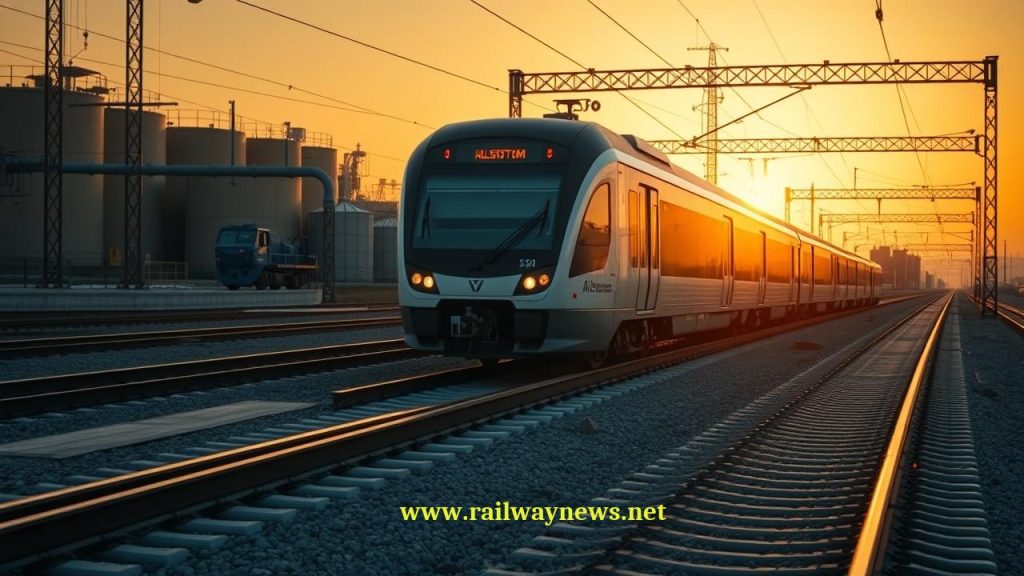
⚡ In Brief: Alstom delivered the first of 374 Multilevel III railcars to NJ Transit in New Jersey, a key component of a multi-billion dollar plan to modernize one of the largest commuter rail networks in the United States.
KEARNY, USA – Alstom has delivered the first new-generation Multilevel III railcar to NJ Transit’s Meadows Maintenance Complex. The vehicle is the first of a 374-car order designed to replace a 40-year-old fleet. The initial unit will now undergo several months of commissioning before entering passenger service later this year.
What Are the Technical Specifications?
The Alstom Multilevel III fleet consists of self-propelled electric multiple units (EMUs), eliminating the need for separate locomotives. The full order for NJ Transit comprises 112 powered motor cars, 100 control cars with driver cabs, and 162 unpowered trailer cars. This modular design allows NJ Transit to adjust train lengths based on passenger demand, providing significant operational flexibility.
Key Technical Data
| Parameter | Value |
|---|---|
| Technology / System Name | Alstom Multilevel III EMU |
| Total Value | Not disclosed in source material |
| Parties Involved | Alstom, NJ Transit |
| Timeline / Completion | First units in service late 2024; full delivery schedule not disclosed |
| Country / Corridor | USA / New Jersey |
Where Does This Technology Stand in the Market?
The delivery is a central piece of NJ Transit’s $45 billion Capital Plan for 2026–2035, which aims to detailedly upgrade its rail and bus services. While the Multilevel III’s bi-level EMU design boosts capacity on constrained corridors, it faces established competitors in the North American market. Stadler’s KISS bi-level EMUs, for example, are a direct competitor and have been adopted by Caltrain in California for its electrification project, offering high capacity and rapid acceleration. In contrast, major nearby operators like New York’s Long Island Rail Road have focused on modern single-level EMUs like the Kawasaki M9 fleet, which prioritizes faster boarding times over maximum seating per car. The Alstom platform is an evolution of the Bombardier Multilevel coach, which is already a workhorse for both NJ Transit and SEPTA in Philadelphia, giving Alstom an incumbency advantage.
Editor’s Analysis
This fleet renewal represents a critical strategic shift for NJ Transit towards distributed power EMU trainsets, which offer superior acceleration and energy efficiency compared to its legacy locomotive-hauled consists. This performance is essential for improving schedule reliability and increasing capacity through the new Portal North Bridge and into New York’s Penn Station. As the broader freight rail market signals tightening capacity and rising costs, NJ Transit’s investment in higher-capacity, more efficient passenger rolling stock is a necessary move to secure its operational future in the congested Northeast Corridor. (Source: DAT iQ, March 2024).
FAQ
Q: How many new train cars is NJ Transit receiving?
A: NJ Transit has ordered a total of 374 Multilevel III cars from Alstom. The order includes 112 powered motor cars, 100 control cars, and 162 unpowered trailer cars.
Q: How much faster are the new trains?
A: The new Multilevel III cars are capable of speeds up to 110 mph (180 km/h). This is approximately 30 mph (50 km/h) faster than the 40-year-old single-level cars they are replacing.
Q: Will this purchase affect passenger fares?
A: This fleet modernization is part of NJ Transit’s broader Capital Plan, which is funded through various sources that include planned fare increases. NJ Transit has outlined fare hikes that will reach $4 by 2029 to support system-wide upgrades.

Railway infrastructure, rolling stock and transport technologies specialist focused on global rail industry developments, high-speed rail systems, signaling technologies and freight transportation. Covering railway investments, public transport modernization, rail operations and international mobility projects across Europe, Asia and North America.
RELATED POSTS
September 6, 2026 5:19 am
Hitachi delivered Taiwan's first N700ST high-speed train from Japan in...

September 5, 2026 4:19 pm
CPK launched formal tender talks with four consortia to design...

September 6, 2026 4:12 am
Alstom delivered the first of 100 new G Class trams...
September 6, 2026 6:17 am
Hungary ordered a national ban on most freight trains from...
September 6, 2026 1:17 am
Hitachi Toshiba Supreme Consortium confirmed the first of 12 N700ST...
September 7, 2026 8:16 am
Midea, Gree and TCL shipped air conditioners via China Railway...