
CAF USA Secures 15 Battery-Powered Urbos Trams Portland Streetcar
CAF USA secured 15 battery-powered Urbos trams for Portland, Oregon’s Streetcar network extension operating by 2030.
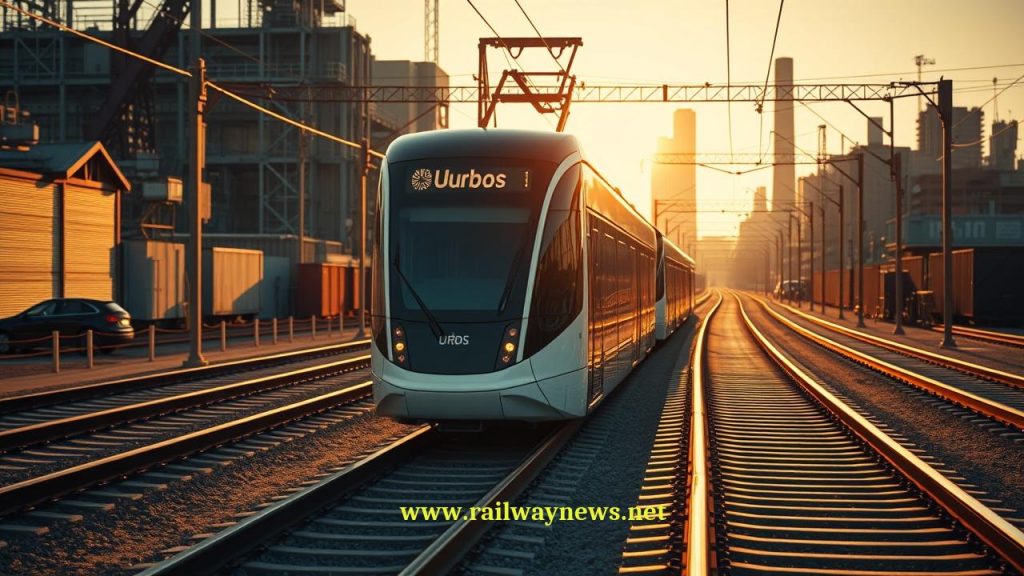
⚡ In Brief: CAF USA has been selected to supply 15 battery-powered Urbos trams for the Portland Streetcar system in Oregon, supporting a new wire-free network extension scheduled for commercial operation by 2030.
PORTLAND, USA – The Portland Transportation Bureau has chosen CAF USA to manufacture and deliver 15 new Urbos trams for its streetcar network. The vehicles will be equipped with hybrid batteries to operate on a planned overhead-wire-free extension. This procurement will replace the system’s original fleet, which has been in service for over two decades.
What Does This Contract Cover?
The agreement covers the supply of 15 battery-powered Urbos light rail vehicles, which will be manufactured at CAF USA’s facility in Elmira, New York. A key technical feature is the inclusion of on-board battery storage, enabling wireless operation on a new extension of the NS line to Montgomery Park. The contract also facilitates the retirement of the system’s original trams, built in the Czech Republic and in service since 2001. Final costs, delivery schedules, and detailed vehicle specifications have not yet been finalized and will be determined in upcoming negotiations between the parties.
Key Contract Data
| Parameter | Value |
|---|---|
| Contract Name | Portland Streetcar Urbos Tram Procurement |
| Total Value | Not disclosed (Pending negotiation) |
| Parties Involved | Portland Transportation Bureau, Portland Streetcar, CAF USA |
| Timeline / Completion | Construction from 2028; Commercial operation by 2030 |
| Country / Corridor | USA / Portland, Oregon (NS Line Extension) |
How Does This Compare to Similar Contracts?
This targeted, 15-vehicle procurement for a municipal streetcar system illustrates a trend of successful, incremental rail investment at the city level in the United States. It stands in sharp contrast to the financial and political difficulties encountered by larger-scale US rail projects. For example, California’s high-speed rail initiative, once estimated at $33 billion, has seen its projected cost increase to $126 billion amid significant delays and public criticism for its lack of progress (Source: Fox News, 2025). The Portland project’s defined scope and clear operational target for 2030 present a more manageable and achievable model for public transit expansion.
Editor’s Analysis
The selection of CAF for Portland’s fleet renewal underscores a pragmatic approach to US passenger rail development, focusing on tangible urban mobility improvements rather than national “mega-projects.” This deal highlights the growing market for battery-equipped light rail vehicles, which offer increased operational flexibility and reduced visual impact from overhead lines in historic or dense city centers. While intercity high-speed rail projects in the U.S. continue to face major setbacks, transit authorities in cities like Portland are demonstrating a path forward through focused, technology-driven fleet upgrades and modest network expansions (Source: CBS News, 2025).
FAQ
Q: Why does the Portland Streetcar need battery-powered trams?
A: The new trams require battery power to operate on a new section of the NS line to Montgomery Park, which is being designed without overhead electrical wires. This technology also enhances operational reliability across the entire network.
Q: What is the total cost of this contract with CAF USA?
A: The final contract value has not been made public. The City of Portland and CAF USA are scheduled to begin negotiations on costs, final vehicle specifications, and delivery timelines in the coming weeks.
Q: Which vehicles are the new Urbos trams replacing?
A: The 15 new CAF trams will replace the original fleet that entered service in 2001. Those vehicles were manufactured in the Czech Republic and are now considered to be near the end of their 25-year service life.

Railway infrastructure, rolling stock and transport technologies specialist focused on global rail industry developments, high-speed rail systems, signaling technologies and freight transportation. Covering railway investments, public transport modernization, rail operations and international mobility projects across Europe, Asia and North America.
RELATED POSTS
September 6, 2026 5:19 am
Hitachi delivered Taiwan's first N700ST high-speed train from Japan in...

September 5, 2026 4:19 pm
CPK launched formal tender talks with four consortia to design...
September 5, 2026 7:14 pm
HS2 Ltd signed renegotiated civils contracts with EKFB and Align...
September 6, 2026 4:12 am
Alstom delivered the first of 100 new G Class trams...
September 6, 2026 1:17 am
Hitachi Toshiba Supreme Consortium confirmed the first of 12 N700ST...
September 6, 2026 6:17 am
Hungary ordered a national ban on most freight trains from...