
Northern Sweden Launches €347M Tender for 20 Regional Trains
Northern Sweden launched a €347 million tender for 20 regional trains for 2032 delivery to double passenger capacity.
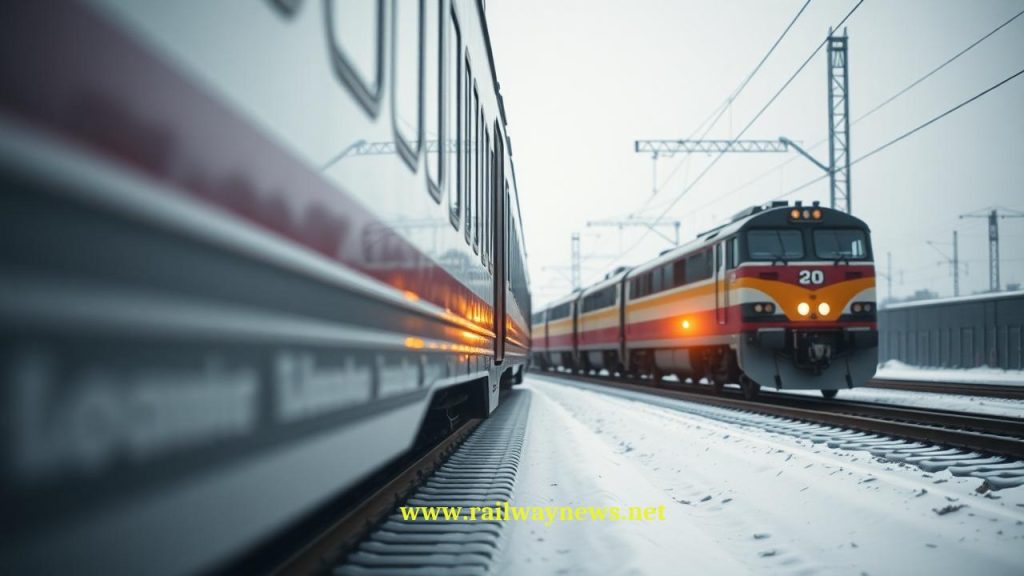
⚡ In Brief: A consortium of public transport authorities in northern Sweden has launched a SEK 3.8 billion (€347 million) tender for 20 new regional trains, with delivery expected by 2032 to accommodate a projected doubling of passenger traffic on its 1,500 km network.
STOCKHOLM, SWEDEN – The procurement process for 20 new regional trains has formally commenced in northern Sweden, backed by guarantees from four public entities. The total investment is capped at 3.8 billion Swedish kronor (approximately €347 million). Deliveries are scheduled for 2031–2032 to replace life-expired rolling stock and expand services.
What Does This Contract Cover?
The procurement covers the design, manufacture, and delivery of 20 regional train sets specifically adapted for severe winter conditions. The investment, which includes the rolling stock, essential components, and associated project costs, aims to more than double the region’s transport capacity, targeting a projected 3.5 to 5 million annual passengers by 2040, up from 1.6 million today. The trains are intended to support both daily commuting and longer-distance intercity travel, and their introduction is timed to coincide with the completion of a new coastal railway line currently under construction.
Key Contract Data
| Parameter | Value |
|---|---|
| Contract Name | Northern Sweden Regional Train Procurement |
| Total Value | SEK 3.8 billion (approx. €347 million) |
| Parties Involved | Four unnamed regional authorities; one jointly owned procurement company. |
| Timeline / Completion | Tender launched; delivery estimated for 2031–2032. |
| Country / Corridor | Northern Sweden; existing 1,500 km network and new lines. |
How Does This Compare to Similar Contracts?
The contract’s value of approximately €17.4 million per train set is at the higher end for regional rolling stock, reflecting the specialized requirements for harsh climates and bundled project costs. By comparison, recent European tenders for standard regional multiple units, such as the Alstom Coradia or Siemens Mireo platforms, typically range from €8 million to €15 million per unit, depending on configuration and order volume (Source: Industry analysis, 2024). The premium in the Swedish contract is attributable to winterization packages, which include enhanced insulation, specialized heating for critical components, and robust designs to withstand extreme cold and snow. The specific bidders for the contract were not disclosed, but the market for such specialized rolling stock is dominated by established European manufacturers.
Editor’s Analysis
This procurement is a strategic enabler for economic growth in northern Sweden, not merely a fleet replacement cycle. The investment is tightly coupled with major infrastructure expansion, demonstrating a long-term commitment to shifting passenger and freight traffic to rail. This move aligns with Sweden’s broader national transport strategy, which has emphasized rail development and green financing to achieve sustainability goals and improve connectivity outside of major urban hubs (Source: Swedish National Transport Plan).
FAQ
Q: Who will manufacture the new trains?
A: The manufacturer has not been selected, as the formal tender process has just begun. Major European rolling stock suppliers such as Alstom, Siemens, and Stadler are likely candidates to bid on a contract with these specific technical requirements.
Q: Why is the delivery date so far in the future, in 2031-2032?
A: The long lead time incorporates a multi-year tender and award process, followed by a typical 4-5 year period for bespoke design, manufacturing, testing, and certification of new trains. The schedule is also strategically aligned with the planned completion of new railway infrastructure in the region.
Q: What is the purpose of the jointly owned procurement company?
A: This model allows multiple regional public transport authorities to pool their resources and purchasing power, securing better financing terms and standardized rolling stock across their networks. This approach is common in Sweden for managing large-scale rolling stock assets efficiently.

Railway infrastructure, rolling stock and transport technologies specialist focused on global rail industry developments, high-speed rail systems, signaling technologies and freight transportation. Covering railway investments, public transport modernization, rail operations and international mobility projects across Europe, Asia and North America.
RELATED POSTS

October 1, 2026 7:09 am
United States regulators confirmed a September 30 deadline for the...

October 8, 2026 1:15 pm
Alstom secured a €1bn contract to build 13 automated trains,...

October 4, 2026 5:14 pm
Alstom secured a CA$4.7 billion order from VIA Rail Canada...

October 1, 2026 12:13 am
Illinois approved $1.5 billion annually for the Northern Illinois Transit...

October 6, 2026 2:14 am
Union Pacific launched export rail shipments with Ferromex to deliver...

October 1, 2026 6:10 am
Amtrak approved a System Expansion Committee on July 30 to...