
PKP Launches Anti-Trafficking Campaign Across 30 Stations in Poland
PKP launched a multilingual anti-human trafficking awareness campaign across 30 stations in Poland, training frontline staff.
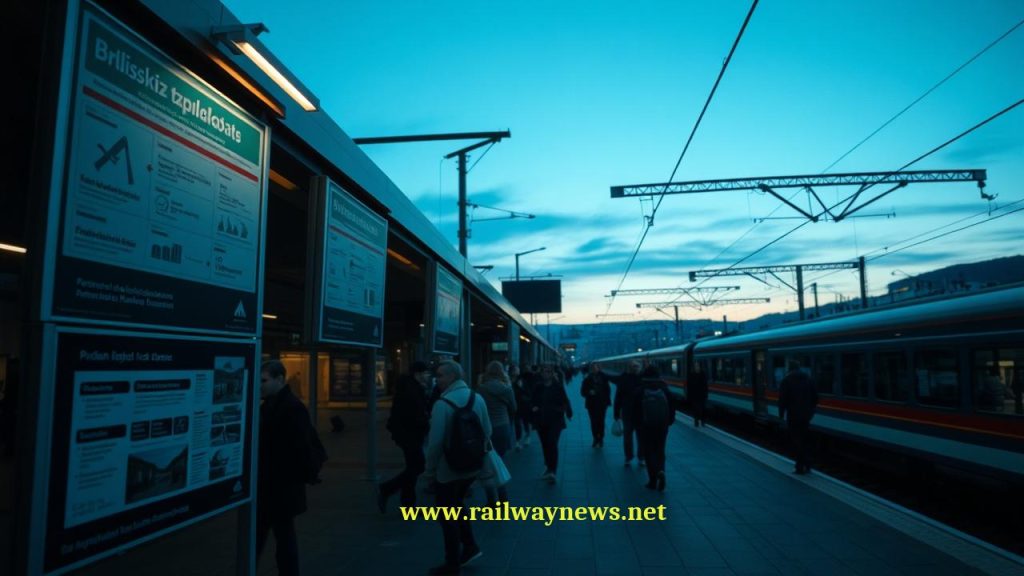
⚡ In Brief: Polish State Railways (PKP) has partnered with the OSCE and the Polish government to launch a multilingual anti-human trafficking awareness campaign across more than 30 major railway stations, targeting vulnerable travelers and training frontline staff.
WARSAW, POLAND – Polish State Railways (PKP) has joined a national initiative to combat human trafficking, deploying an awareness campaign at over 30 train stations. The program is a collaboration with the Organization for Security and co-operation in Europe (OSCE) and Poland’s Ministry of the Interior and Administration. The campaign specifically targets vulnerable groups, including displaced persons, using multilingual informational materials.
What Does This Initiative Cover?
The campaign’s primary focus is on public information and prevention within high-traffic transport hubs. Informational posters and materials have been installed in station concourses and on platforms in four languages: Polish, English, Ukrainian, and Spanish. These resources detail how to identify potential signs of human trafficking and provide contact information for support services, including the #BeSafe platform. A key component of the initiative involved specialized workshops for railway employees who have direct contact with the public, training them to recognize and respond to suspicious situations.
Key Initiative Data
| Parameter | Value |
|---|---|
| Initiative Name | Anti-Human Trafficking Awareness Campaign |
| Total Value | Not disclosed |
| Parties Involved | PKP, Organization for Security and Co-operation in Europe (OSCE), Polish Ministry of the Interior and Administration |
| Timeline / Completion | Not disclosed |
| Country / Corridor | Poland (nationwide, approx. 30 stations including Warsaw, Gdańsk, Katowice) |
How Does This Compare to Global Standards?
This initiative aligns with a growing international trend where transport operators actively participate in anti-trafficking efforts. In the United States, Amtrak has a long-standing partnership with the Department of Homeland Security’s Blue Campaign, which includes training over 30,000 employees to spot human trafficking indicators (Source: DHS, 2023). Similarly, the UK’s British Transport Police runs Operation Guardian and works with rail operators on the “Safeguarding on Transport” program, which includes public awareness campaigns and staff training to protect vulnerable people. PKP’s multi-language approach, specifically including Ukrainian and Spanish, reflects a targeted response to current migration patterns affecting the region.
Editor’s Analysis
PKP’s engagement is not merely a corporate social responsibility exercise but a necessary security measure that aligns with Poland’s strategic infrastructure expansion. As the country proceeds with massive investments like the Centralny Port Komunikacyjny (CPK) high-speed rail hub, scheduled for completion in 2032, passenger volumes are set to increase dramatically (Source: Budimex, 2024). This heightened traffic will inevitably make the network a more attractive corridor for criminal networks, turning proactive security and awareness initiatives from a supplemental activity into a core operational requirement for maintaining network safety.
FAQ
Q: Which specific groups is this campaign targeting?
A: The campaign is aimed at all travelers but places a specific focus on vulnerable groups in Poland, particularly displaced persons from Ukraine and Latin America, with materials provided in their native languages.
Q: How long will this campaign run?
A: The duration of the campaign was not disclosed in the announcement. Such initiatives are often ongoing or run for extended periods to maximize public exposure.
Q: What is the direct impact on railway staff?
A: Employees in direct contact with the public, such as train conductors and station staff, participated in workshops led by anti-trafficking experts. This training equips them to better identify and report suspicious activities observed at railway facilities.

Railway infrastructure, rolling stock and transport technologies specialist focused on global rail industry developments, high-speed rail systems, signaling technologies and freight transportation. Covering railway investments, public transport modernization, rail operations and international mobility projects across Europe, Asia and North America.
RELATED POSTS

September 6, 2026 5:19 am
Hitachi delivered Taiwan's first N700ST high-speed train from Japan in...

September 5, 2026 4:19 pm
CPK launched formal tender talks with four consortia to design...
September 5, 2026 7:14 pm
HS2 Ltd signed renegotiated civils contracts with EKFB and Align...
September 6, 2026 6:17 am
Hungary ordered a national ban on most freight trains from...

September 6, 2026 1:17 am
Hitachi Toshiba Supreme Consortium confirmed the first of 12 N700ST...
September 6, 2026 8:17 am
DB InfraGO reopened the Nuremberg-Regensburg line in Bavaria on 31...