
European Commission Approves 90% Rolling Stock Loan Guarantees EU
European Commission approved 90% public loan guarantees for EU smaller rail operators to finance rolling stock for 15 years.
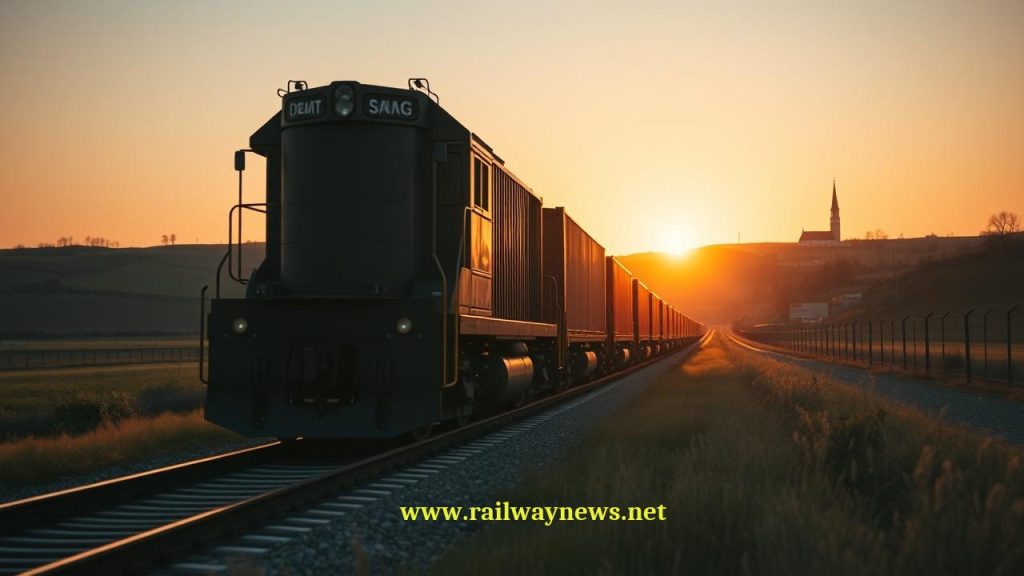
⚡ In Brief: The European Commission has updated its state aid guidelines, allowing public loan guarantees of up to 90% for a maximum of 15 years to help smaller rail operators and new market entrants finance the acquisition of modern rolling stock across the European Union.
BRUSSELS, BELGIUM – The European Commission has formalized its new Guidelines on State Aid for Land and Multimodal Transport (LMT Guidelines), establishing a framework to support the renewal of the EU’s aging rolling stock fleet. The policy enables Member States to offer public loan guarantees covering up to 90% of a loan’s principal value for a maximum of 15 years. This measure is specifically designed to assist Small and Medium-sized Enterprises (SMEs) and new entrants who face significant barriers in securing private financing for new or used vehicles.
What Does This Regulation Cover?
The updated LMT Guidelines create a legal framework for public support aimed at modernizing rail fleets and encouraging a modal shift from road to rail. The regulation expands the scope of eligible beneficiaries beyond licensed railway undertakings to include any company involved in the logistics chain, such as rolling stock owners, freight forwarders, and multimodal operators, provided they are investing in rail transport assets. The core mechanism is a public loan guarantee, which is capped at 90% of the loan principal and has a maximum duration of 15 years. Eligible costs include the purchase price of new or used vehicles as well as directly associated expenses for delivery, design, and engineering services not covered by other aid.
Key Regulatory Data
| Parameter | Value |
|---|---|
| Regulation / Policy Name | Guidelines on State Aid for Land and Multimodal Transport (LMT Guidelines) |
| Maximum Guarantee | 90% of principal loan amount |
| Parties Involved | European Commission, EU Member States, SMEs, new market entrants, rolling stock owners, logistics operators |
| Maximum Duration | 15 years |
| Country / Corridor | European Union |
How Does This Compare to Global Standards?
The EU’s approach of providing direct financial guarantees for rolling stock acquisition contrasts significantly with other major rail markets. In the United States, the freight rail market is dominated by privately-owned Class I railroads that finance their own fleets, with federal support from bodies like the Federal Railroad Administration (FRA) typically focused on infrastructure grants rather than direct aid for private rolling stock. In India, the government takes a more direct procurement role; for instance, Indian Railways recently contracted for the supply and maintenance of 12,000 Real-Time Train Information System (RTIS) devices to modernize its state-owned fleet (Source: Developing Telecoms, 2025). The EU’s policy is tailored to its liberalized but fragmented market, aiming to level the playing field for smaller competitors against large, often state-backed, incumbents.
Editor’s Analysis
This regulatory update is a direct intervention to address a core structural weakness in the EU’s liberalized rail market: prohibitive capital costs for new and smaller operators. By de-risking loans, the Commission aims to stimulate fleet renewal, improve interoperability, and accelerate the modal shift critical to its Green Deal objectives. This focus on enabling smaller players aligns with broader logistics trends, such as the growing integration of intermodal services to counter road freight pressures, a development highlighted in Uber Freight’s Q1 2025 market report.
FAQ
Q: Who is eligible for this state aid?
A: Eligibility has been expanded beyond just railway undertakings to include SMEs, new market entrants, rolling stock owners, freight forwarders, and multimodal operators who are investing in rail vehicles.
Q: Is this support limited to new trains only?
A: No, the guarantees can be applied to new loans for the purchase of either new or used rolling stock. The eligible costs can also include associated expenses like delivery and design services.
Q: What is the main goal of this policy?
A: The primary objective is to make it easier for smaller and newer rail companies to access financing for modern, energy-efficient rolling stock. This is intended to increase the competitiveness of rail transport and support the EU’s goal of shifting more freight and passenger traffic from road to rail.

Railway infrastructure, rolling stock and transport technologies specialist focused on global rail industry developments, high-speed rail systems, signaling technologies and freight transportation. Covering railway investments, public transport modernization, rail operations and international mobility projects across Europe, Asia and North America.
RELATED POSTS
September 6, 2026 5:19 am
Hitachi delivered Taiwan's first N700ST high-speed train from Japan in...

September 5, 2026 4:19 pm
CPK launched formal tender talks with four consortia to design...
September 5, 2026 7:14 pm
HS2 Ltd signed renegotiated civils contracts with EKFB and Align...
September 6, 2026 4:12 am
Alstom delivered the first of 100 new G Class trams...
September 6, 2026 1:17 am
Hitachi Toshiba Supreme Consortium confirmed the first of 12 N700ST...
September 6, 2026 6:17 am
Hungary ordered a national ban on most freight trains from...